Judge Royal Furgeson: A Truly Great American – Updated

[fusion_builder_container hundred_percent=”yes” overflow=”visible”][fusion_builder_row][fusion_builder_column type=”1_4″ last=”no” spacing=”yes” center_content=”no” hide_on_mobile=”no” background_color=”” background_image=”” background_repeat=”no-repeat” background_position=”left top” hover_type=”none” link=”” border_position=”all” border_size=”0px” border_color=”” border_style=”” padding=”” margin_top=”” margin_bottom=”” animation_type=”” animation_direction=”” animation_speed=”0.1″ animation_offset=”” class=”” id=””][fusion_imageframe lightbox=”no” lightbox_image=”” style_type=”none” hover_type=”none” bordercolor=”” bordersize=”0px” borderradius=”0″ stylecolor=”” align=”none” link=”” linktarget=”_self” animation_type=”0″ animation_direction=”down” animation_speed=”0.1″ animation_offset=”” hide_on_mobile=”no” class=”” id=””] [/fusion_imageframe][/fusion_builder_column][fusion_builder_column type=”3_4″ last=”yes” spacing=”yes” center_content=”no” hide_on_mobile=”no” background_color=”” background_image=”” background_repeat=”no-repeat” background_position=”left top” hover_type=”none” link=”” border_position=”all” border_size=”0px” border_color=”” border_style=”” padding=”” margin_top=”” margin_bottom=”” animation_type=”” animation_direction=”” animation_speed=”0.1″ animation_offset=”” class=”” id=””][fusion_text]By Mark Curriden

(Feb. 13) – During his four and a half decades as a lawyer, Royal Furgeson has had some great jobs. He spent a quarter a century as a trial attorney and two decades as a federal district court judge. Now, he is dean of the University of North Texas College of Law.

Furgeson is also the unofficial lead cheerleader for the legal profession.

“I’m as excited about the law today as I was 45 years ago,” he says.

Furgeson is a fierce supporter of the American jury system. He publicly praises prosecutors who work tirelessly to uncover political corruption and corporate fraud. He salutes public defenders and criminal defense lawyers for defending those who are the scourge of society.

He promotes corporate lawyers who sacrifice their time and resources to support pro bono services. And he heaps accolades on judges and educators who step away from highly compensated jobs to do their duty for God and country.

For decades, he’s been telling others and now it is time for the legal profession to return the favor.

“Royal is a truly great American,” says Paula Hinton, a partner at Winston & Strawn in Houston and a leader in the Litigation Section of the State Bar of Texas. “Royal is more than a lawyer or judge, he’s a leader of the legal profession.

The oldest of four children, Furgeson grew up in Lubbock. His father, a child of the depression, was the only one of 11 siblings to graduate from college and was elected District Clerk of Lubbock County for 20 years.

Furgeson’s mother did not work outside the home, except for the four years his father was in the Army during World War II, when she took over her husband’s job as District Clerk.

As a boy, Furgeson saw lawyers and judges on a regular basis.

“Lawyers and judges were in and out of our home as I grew up and I really liked being around them,” he says. “I thought that they were interesting and fun. Because my father so admired lawyers, I decided to go to law school.”
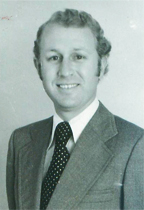
jrfurgeson1Furgeson went to college at Texas Tech because of his father’s fondness for the school. Tech did not have a law school at the time, so he went to the University of Texas School of Law.

“State-supported education was incredibly affordable during those years (1960-67),” he says. “I graduated with seven years of higher education in Texas without any debt.”

Furgeson’s father moved from the District Clerk’s Office to the County Auditor’s office and retired in that position after another 20 years.

After graduating in 1967 from UT School of Law, Furgeson served in the U.S. Army for nearly three years, including one year in Vietnam, where he rose to the rank of captain.

“Being in Vietnam was really intense,” he says. “My best friend didn’t come back.”

After one year as an assistant county attorney in Lubbock, Furgeson clerked for U.S. District Judge Halbert Woodward of the Northern District of Texas.

“As a judicial clerk, I watched 30 jury trials and I knew right away that is what I wanted to do,” he says.

In 1970, he joined the El Paso law firm Kemp Smith.

Furgeson’s first jury trial came in early 1971 when he was appointed to represent Fredric Brown, who was charged with robbery. The trial lasted two-and-a-half days.

“My client had a rap sheet that was two arms long,” he says. “The district attorney said I made a real horse race out of the trial, which was a great compliment.”

Furgeson says the jury “did the right thing” by finding Brown guilty and sentencing him to a lengthy prison sentence.

“I loved being in court,” he says. “Because I wanted to get into court as much as possible, I asked my firm if I could handle all criminal appointments coming to lawyers in the firm. They agreed and I ended up handling several hundred appointments over the next several years.

“The overall experience was a reality check for me, because I saw how often the criminal justice system falls disproportionately hard on the poor and disadvantaged,” he says. “That is another reason that I got heavily involved in activities like the United Way, because I understood there was such need for services in El Paso’s poorer communities.”

Furgeson’s first big case came in 1975 when he represented Arlington-based American Excelsior Co., a subsidiary of Texstar, in a lengthy and highly complex antitrust lawsuit brought by International Air Industries and Vebco, a New Mexico-based distributor of heating and air conditioning equipment, including cooler pads.

Vebco sued in El Paso seeking several hundred thousand dollars.

Furgeson handled most of the direct and cross-examination of witnesses during the trial, which ended with a verdict in his client’s favor.

The plaintiffs appealed to the U.S. Court of Appeals for the Fifth Circuit. Furgeson handled the briefing for the three-judge panel, which upheld the lower court’s decision.

Throughout the 1980s and early 1990s, the courtroom victories for Furgeson kept rolling in. He won an $800,000 jury verdict in a breach of contract case and obtained a huge defense win for the FDIC against a bank that had been involved in “some stupid decision-making,” including investing in a fraudulent scheme.

“Truthfully, we were prepared for a big loss, but the jury returned with a defense verdict after five hours of deliberations,” he says. “It taught me that juries can turn on a dime.”

In 1994, President Bill Clinton appointed Furgeson to fill a newly created federal judgeship in the U.S. District Court in the Western Division of Texas.

Furgeson handled hundreds of criminal and civil cases during his two decades on the federal bench, but the case that stands out most is Ernest Ray Willis v. Texas Department of Criminal Justice.

Willis was charged by Pecos County officials in 1987 with setting fire to a house in Iraan, Texas that killed Elizabeth Belue and Gail Allison, who died of smoke inhalation. During the trial, Willis testified that he was sleeping on the couch in the living room when he was awaken by the smell of smoke.

Prosecutors claimed that Willis poured a liquid accelerant on the floor of the house and set it on fire.

The jury found Willis guilty of murder and sentenced him to death. The Texas Court of Criminal Appeals upheld the verdict and the Supreme Court of the United States denied certiorari.

The case finally made it to Judge Furgeson when Willis’ lawyers filed a federal habeas petition.

“I worked on the case for three years,” he says. “I sweated bullets on this one. It was pretty clear to me that justice was not done.”

In a 100-page opinion issued on Aug. 9, 2004, Judge Furgeson found that Texas officials had administered antipsychotic drugs to Willis during the trial without informing the defense counsel or the jury.

During closing arguments and the sentencing phase of the trial, “the prosecution seized upon Willis’s demeanor… asking the jury to draw inferences of guilt and future dangerousness from Willis’s lack of apparent feeling or emotion.”

“Defense counsel never learned that the State was administering high doses of antipsychotic medication to Willis during his incarceration in the Pecos County jail both before and during the trial,” Judge Furgeson wrote.

Judge Furgeson also found that the state’s theory was flawed regarding how the fire started and Willis’s conduct the night of the fire. He also found that prosecutors withheld key evidence from defense lawyers and that Willis received ineffective assistance of counsel.

“I wrote the decision as carefully as anything I have ever done,” he says. “I was worried that the state would try to find some flaw in appealing the opinion to the Fifth Circuit.”

Judge Furgeson’s worries were unfounded. His decision was so solid that prosecutors didn’t even appeal.

In 2013, the judge moved into phase three of his career when he announced his retirement from the federal bench and agreed to be the first dean of the newly created University of North Texas School of Law, which is intended to be a low cost alternative to the traditional legal education.

“This is a whole new challenge, but we can do really great work here and have a major impact on the practice of law and our communities in North Texas,” he says.

Dean Furgeson built UNT Law School from scratch. He hired deans for academics, admissions and students, faculty for the classrooms, librarians and support staff. He promotes the law school, raises funds and recruits students and faculty.

“This law school has the opportunity to do so much good,” he says. “It is a lot of work, but I am loving every minute of it.”

Judge Furgeson says the legal profession has changed significantly during his years as a lawyer.

“We don’t try lawsuits anymore. That is one of the giant changes. We are lesser for it because of it,” he says. “I have great respect for juries and I think it is the best way to resolve disputes. With juries, you get verdicts, appeals and development of the law. The jury is the democracy of our whole judicial system and it starts the development.”

Lawyers have taken good care of the law, but young attorneys face many great challenges, he says. One of them is diversity.

“We are the whitest profession in America,” Judge Furgeson says. “Last census [shows that] 90 percent of lawyers are white – 81 perfect in Texas are white. Forty-four of our population is white. It goes against the American dream. We have a great challenge. We have to figure that out.”

[/fusion_text][/fusion_builder_column][/fusion_builder_row][/fusion_builder_container]
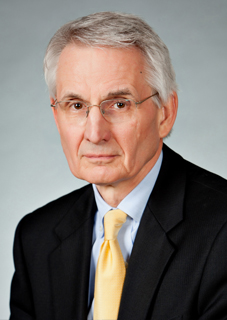
Bill Dawson: ‘Trials are a lot like life itself’ – Updated

[fusion_builder_container hundred_percent=”yes” overflow=”visible”][fusion_builder_row][fusion_builder_column type=”1_4″ last=”no” spacing=”yes” center_content=”no” hide_on_mobile=”no” background_color=”” background_image=”” background_repeat=”no-repeat” background_position=”left top” hover_type=”none” link=”” border_position=”all” border_size=”0px” border_color=”” border_style=”” padding=”” margin_top=”” margin_bottom=”” animation_type=”” animation_direction=”” animation_speed=”0.1″ animation_offset=”” class=”” id=””][fusion_imageframe lightbox=”no” lightbox_image=”” style_type=”none” hover_type=”none” bordercolor=”” bordersize=”0px” borderradius=”0″ stylecolor=”” align=”none” link=”” linktarget=”_self” animation_type=”0″ animation_direction=”down” animation_speed=”0.1″ animation_offset=”” hide_on_mobile=”no” class=”” id=””] [/fusion_imageframe][/fusion_builder_column][fusion_builder_column type=”3_4″ last=”yes” spacing=”yes” center_content=”no” hide_on_mobile=”no” background_color=”” background_image=”” background_repeat=”no-repeat” background_position=”left top” hover_type=”none” link=”” border_position=”all” border_size=”0px” border_color=”” border_style=”” padding=”” margin_top=”” margin_bottom=”” animation_type=”” animation_direction=”” animation_speed=”0.1″ animation_offset=”” class=”” id=””][fusion_text]By Mark Curriden

When the City of Dallas and Southwest Airlines went to federal court in 2016 to banish Delta Airlines from operating five flights a day at Love Field, the Atlanta-based carrier hired Bill Dawson to do battle in hostile territory against the two hometown favorites.

Southwest claimed Delta had the ability to operate as many flights as it wants at Dallas-Fort Worth International Airport while Southwest was limited to the 20 gates at Love Field. Southwest also argued that Delta was technically trespassing.

Dawson, during a heated multiday hearing in federal court in Dallas, argued that Southwest had underutilized the gates at Love Field for several years, which he said violated a key provision in its deal with the City of Dallas.

“It was use it or lose it,” Dawson told U.S. District Judge Ed Kinkeade. “Use it or share it. These gates are not owned by the airlines. They’re owned by Dallas and its citizens.”

Judge Kinkeade followed Dawson’s argument and ruled that removing Delta from Love Field would be an unfair disruption for the public.

“Trials are a lot like life itself,” Dawson says. “There are key moments in each. How we handle those key moments is crucial in the outcome – be it a trial or our careers.”

Dawson, a partner at Gibson, Dunn & Crutcher in Dallas, is celebrating four decades as a trial lawyer. He’s been involved in some of the biggest environmental lawsuits, patent infringement cases, oil and gas disputes, defamation allegations and securities and fraud cases.

He’s represented Energy Future Holdings, Monitronics International, Google and Dr. Phil McGraw. He successfully sued big accounting firms, which were so impressed with his skills that they later hired him to represent them in subsequent trials.

“Of all the great trial lawyers I’ve encountered, Bill is just special,” says Rob Walters, a partner with Dawson at Gibson, Dunn & Crutcher in Dallas. “He themes cases like no one else can. He finds the pony every time.”

Even with all the highly complex and large-dollar cases and trials, Dawson says he cannot forget the first trial he witnessed as a summer associate at Fulbright & Jaworski in Houston in 1974 – a full year before he became a licensed lawyer.

“It was a one-day, $20,000 auto insurance trial,” Dawson says. “Basically, I carried David Beck’s briefcase. We started the trial in the morning, and it was over by late afternoon.”

The plaintiff was a wheelchair-bound woman who suffered a spine injury that made her a paraplegic. She was extremely sympathetic as the victim of an apparent hit-and-run crash.

The issue at trial was whether there was actual contact with the car that ran the plaintiff off the road and down a ravine where she suffered her injuries. No contact, no insurance coverage.

“David called to the witness stand the police officer who investigated the accident and he testified that the plaintiff’s car was destroyed such that there was no way to tell by looking at the wreckage if the hit-and-run driver had actually struck the plaintiff’s car with his car,” Dawson says. “The policeman explained how he concluded no contact.”

The jury found there was no contact and thus ruled in favor of the insurance company, “even though all the sympathy in the world was with the plaintiff,” he says.

“I still can see her sitting in the courtroom that day in her wheelchair,” Dawson says. “When the verdict was announced David looked down and then looked at me with a really sad look on his face and said, ‘let’s get out of here.’ The jury did the right thing, but it was a [depressing] victory for David.”

Dawson says the case left its mark on him two ways. First, he was able to see the great David Beck in action. Beck zeroed in on the key facts in the case and didn’t let the emotions around it divert him from his job.

“But I also witnessed the impact that a case can have on people and lawyers – the human side of it,” he says.

A 1975 graduate of Texas Tech School of Law, Dawson started his legal career as an associate at Carrington Coleman in Dallas working for Jim Coleman.

“Jim was the ultimate mentor because he wasn’t afraid to give us young lawyers a case and tell us to go handle it,” Dawson says. “A lot of the success in my career has been pure luck. I was lucky that a college professor at Texas Tech encouraged me to go to law school. And I was very lucky to get to work for Jim Coleman. Those are two huge career-defining moments for me.”

At a CLE program hosted by the SMU Dedman School of Law in 2016 featuring several of the Lions of the Texas Bar, Dawson said he remembered Coleman calling him into his office only a few months after he had started work at the firm.

“A client was on the phone complaining about the bill,” he says. “I was brand new. Jim put it on the speakerphone for me to hear. It made me very nervous because I did most of the work of which he was complaining about. So, I thought this could be my last day working there.

“At the end of the call, Jim said, ‘Sam, why don’t you just write a check for whatever it is you think it is worth and I will accept it for the work.’ And I thought, this is my last day.’”

Then the client said he wanted to discuss another case.

“Jim said, ‘No sir, there is no other case. If you don’t pay, we don’t work.’ The client agreed to pay the full amount. I thought, I’m still employed.”

Dawson’s first trial as a licensed lawyer came 10 months after he started practicing law. He represented a homebuilder who accused two neighborhood children – ages 11 and 13 – of being part of a group of kids that vandalized his property in The Colony. Dawson sued the parents as well, just for good measure.

The jury trial took place in Denton and lasted a week.

“I remember the 11-year-old, sweet-looking girl wearing a white dress looking like an angel floated into the courtroom,” he says. “I had previously asked the jurors during voir dire if any of them would have a problem awarding damages against two children. The jurors’ hands shot up. It was like they were doing the wave.”

Like the trial he had witnessed two years earlier, Dawson relied heavily on the testimony of a police officer in the case.

The jury returned a verdict for the plaintiff and ordered the children to pay actual and punitive damages. The jury, however, found for the parents.

In 1994, Carrolton, Texas-based FoxMeyer Drug Stores hired Dawson to represent the company in a $500 million financial fraud litigation in state and federal courts consolidated in Pittsburgh that involved a failed drug store chain in the Midwest.

Dawson, using Dr. Phil McGraw as his jury consultant, successfully negotiated a settlement agreement before jury selection was finished. He then joined the trial team for another plaintiff in the same case. The jury found actual fraud.

The most personally difficult case he’s ever handled, according to Dawson, was a $50 million stock option backdating lawsuit in which he represented a close friend, who was the CEO of a company who was under attack by his own business and shareholders.

“The case was very complex, as there were cases filed in state and federal courts in Texas and Delaware,” Dawson says. “I was truly worried and this case took a lot out of me because it involved a friend. Throughout it all, my friend was as cool as a cucumber.”

Dawson’s client was fully vindicated in the civil litigation and the U.S. Securities & Exchange Commission dropped its investigation without bringing charges.

In 2014, Energy Future Holdings General Counsel Stacey Doré turned to Dawson to defend the energy company in a lawsuit brought by the Sierra Club, which alleged that coal-fired plants owned and operated by EFH were in violation of the Clean Air Act.

After an intense bench trial in federal court in Waco, EFH walked away with a take-nothing judgment and the trial team was awarded legal fees.[/fusion_text][/fusion_builder_column][/fusion_builder_row][/fusion_builder_container]

Rod Phelan: A Lawyer for Lawyers

[fusion_builder_container hundred_percent=”yes” overflow=”visible”][fusion_builder_row][fusion_builder_column type=”1_4″ last=”no” spacing=”yes” center_content=”no” hide_on_mobile=”no” background_color=”” background_image=”” background_repeat=”no-repeat” background_position=”left top” hover_type=”none” link=”” border_position=”all” border_size=”0px” border_color=”” border_style=”” padding=”” margin_top=”” margin_bottom=”” animation_type=”” animation_direction=”” animation_speed=”0.1″ animation_offset=”” class=”” id=””][fusion_imageframe lightbox=”no” lightbox_image=”” style_type=”none” hover_type=”none” bordercolor=”” bordersize=”0px” borderradius=”0″ stylecolor=”” align=”none” link=”” linktarget=”_self” animation_type=”0″ animation_direction=”down” animation_speed=”0.1″ animation_offset=”” hide_on_mobile=”no” class=”” id=””] [/fusion_imageframe][/fusion_builder_column][fusion_builder_column type=”3_4″ last=”yes” spacing=”yes” center_content=”no” hide_on_mobile=”no” background_color=”” background_image=”” background_repeat=”no-repeat” background_position=”left top” hover_type=”none” link=”” border_position=”all” border_size=”0px” border_color=”” border_style=”” padding=”” margin_top=”” margin_bottom=”” animation_type=”” animation_direction=”” animation_speed=”0.1″ animation_offset=”” class=”” id=””][fusion_text]By Mark Curriden

(Jan. 25) – Rod Phelan remembers his early days practicing law.

“My billable rate was $35 an hour and I made $1,200 a month,” he says. “I brought my lunch to work just about everyday to save money.”

Carrington Coleman hired Phelan when he graduated from Duke Law School in 1973. He worked with some of Dallas’ best trial lawyers: Jim Coleman, Fletcher Yarborough, Bill Dawson, Dick Sayles, Barbara Lynn, Mark Werbner and George Kryder.

“Jim Coleman put together an amazing group of talented lawyers,” Phelan says. “And Jim encouraged us to be in the courtroom and to try cases and to trust juries.”

More than four decades later, Phelan – now a senior litigation partner in the Dallas office of Baker Botts – has not lost his passion for trials.

“I would rather watch a closing argument than a Cowboys game or Duke basketball,” Phelan said last year when the Dallas Bar Association named him its 2015 Trial Lawyer of the Year.

Born and raised in a small town in southwestern Oklahoma, Phelan grew up driving tractors, fixing fences and herding cattle on his father’s farm.

“Rod has an ability to see things as they are and not be fooled by flamboyance and hype,” John Phelan told the Dallas Bar Association during a ceremony celebrating his older brother’s award in 2015.

John Phelan said Rod’s “willingness to take on responsibility” and his “energy and self-disciplined to see things through and to leave no stone unturned” made him a good person and undoubtedly a great lawyer.

“His absolute honesty in all ways and all things has been his anchor,” he said.

rphelan2Phelan remembers one of his first jury trials, when he represented First National Bank of Bowie, Texas, which was suing an insurance company over a $10,000 dispute.

Midway through the trial, the judge called the lawyers into chambers.

“Mr. Phelan,” the judge started, “you are a bright, young attorney with lots of potential, but if you don’t get control of your faces and if you don’t stop shaking your head in disagreement and stop rolling your eyes, you may never win another case.”

Phelan listened, took notes and became better.

“I’ve learned a lot by losing – more by losing than winning,” Phelan told the Dallas Bar last year. “As Yogi Berra said, ‘You can observe a lot by watching.’”

An early lesson in Phelan’s career came when he had been out of law school for a little more than a year. U.S. District Judge Bob Hill appointed him to represent a Dallas jail inmate in a civil rights lawsuit against the City of Dallas and a handful of city workers.

Phelan’s client robbed a Kroger store, took a hostage and was shot twice in the process. The inmate claimed that after his arrest, Dallas jailers violated his Eighth Amendment right to be free from cruel and unusual punishment.

“They didn’t even give him an aspirin as he lay there, writhing in pain,” Phelan argued.

The good news was that Phelan’s client had collaborating witnesses to his claims. The bad news is that the witnesses were a felony drunken driver, a rapist and the inmate’s “big-haired, very large, stretch-pants-wearing wife.”

“My client was a bad guy, scary – scarred, rough, mean,” Phelan says. “But by the end of the trial, I was drinking the Kool-Aid. I believed.”

Phelan told the jury that his client “grew up on the wrong side of the tracks and did not have the privileges some of us enjoy.

“But he is a human being, and an American, protected by the Constitution we all respect,” he argued.

The jury deliberated for about three hours the first day and went home without delivering a verdict, which Phelan thought was encouraging. Things went south fast the next morning when the jury, after deliberating for an additional five minutes, returned with a verdict against the jail inmate.

“I learned two things,” Phelan says. “First, jurors got another day off and another $20 by delaying their verdict overnight.  Second, don’t drink the Kool-Aid. That second lesson didn’t stick. I still think I’m right just about every time, still expect to win every case. I can’t explain it or help it.”

During the past 42 years, Phelan has been involved in some fascinating cases. He’s represented some of the biggest names in the Dallas legal community against claims of malpractice: Haynes and Boone, Russell Budd and Bickel & Brewer.

Boulle Diamonds hired Phelan in a trademark infringement case. Temple-Inland chose him to represent the company in a securities lawsuit. He defended banking billionaire Andy Beal in the nasty divorce proceedings involving Beal’s wife, Simona. And he successfully represented software maker Lotus Corp. in a $40 million breach of contract trial.

In the twilight of his career, Phelan says the practice of law has changed dramatically in recent years.

“Fees, profits and income are up. Trials are down. Competition for business is up,” he says. “Electronic data is a burden in multiple ways; it may be the single biggest reason trials are down. ‘Work hard and do good work’ is no longer enough. ‘Good work comes to good lawyers’ is no longer the mantra.

“Our profession is now a business,” he says. “We are managed, tracked and measured. That has a lot of effects, some (like profitability) are welcome; others (like internal competition) are not.”

Phelan says he recently saw 91-year-old Kleber Miller, a senior partner in the Fort Worth office of Shannon Gracey, give a closing argument in a mock trial CLE.

“He was magnificent,” Phelan says. “I asked him what he ate and he said, ‘It’s what I drink: single-malt scotch.’ There aren’t going to be more Kleber Millers. Maybe there has always been only one, but as a young lawyer, I watched greatness all the time, such as Jim Coleman, Jack Hauer and Lou Bickel.

“Those guys and others like them tried hundreds of cases,” he says. “Now a big-firm commercial trial lawyer is lucky to have tried 10. The stakes are high, the cost is higher, clients are scared to roll the dice, and more and more cases settle.”

Phelan accepted the DBA’s Trial Lawyer of the Year honor by making a simple statement to the profession he loves.

“When winning and doing right collide, winning has to lose,” he said.[/fusion_text][/fusion_builder_column][/fusion_builder_row][/fusion_builder_container]

‘Don’t Call Me Professor – Call Me Bill’: Dorsaneo’s Impact in Texas Immeasurable

[fusion_builder_container hundred_percent=”yes” overflow=”visible”][fusion_builder_row][fusion_builder_column type=”1_4″ last=”no” spacing=”yes” center_content=”no” hide_on_mobile=”no” background_color=”” background_image=”” background_repeat=”no-repeat” background_position=”left top” hover_type=”none” link=”” border_position=”all” border_size=”0px” border_color=”” border_style=”” padding=”” margin_top=”” margin_bottom=”” animation_type=”” animation_direction=”” animation_speed=”0.1″ animation_offset=”” class=”” id=””][fusion_imageframe lightbox=”no” lightbox_image=”” style_type=”none” hover_type=”none” bordercolor=”” bordersize=”0px” borderradius=”0″ stylecolor=”” align=”none” link=”” linktarget=”_self” animation_type=”0″ animation_direction=”down” animation_speed=”0.1″ animation_offset=”” hide_on_mobile=”no” class=”” id=””] [/fusion_imageframe][/fusion_builder_column][fusion_builder_column type=”3_4″ last=”yes” spacing=”yes” center_content=”no” hide_on_mobile=”no” background_color=”” background_image=”” background_repeat=”no-repeat” background_position=”left top” hover_type=”none” link=”” border_position=”all” border_size=”0px” border_color=”” border_style=”” padding=”” margin_top=”” margin_bottom=”” animation_type=”” animation_direction=”” animation_speed=”0.1″ animation_offset=”” class=”” id=””][fusion_text]By Mark Curriden
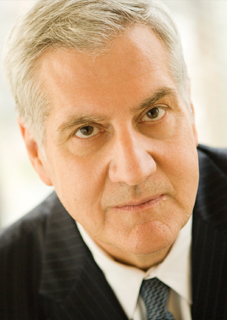
(March 17) – Bill Dorsaneo garnered the name “Wild Bill” during his four decades of teaching civil litigation, but his first big case was in 1962. He was arguing before the city council at Valley Forge, Penn., that a proposed curfew on young people was “unconstitutional and unfair.”

Dorsaneo was only 17 at the time and president of the student council of his high school.

“I had no substance in my argument, but there were lawyers present who told me I did a good job and they encouraged me to become a lawyer,” he says. “I found the experience of standing up and arguing for a cause to be exhilarating.”

A graduate of the University of Texas School of Law, Dorsaneo has had more impact on the Texas civil justice system than any other lawyer who has not served on the Texas Supreme Court.

“The nature of the kind of work [lawyers do] has changed a pretty good bit,” says Dorsaneo, who has taught more than 8,000 law students during his 41 years as a professor at Southern Methodist University’s Dedman School of Law.

“When I graduated from UT in 1970, I would say that half of the graduates went into some sort of physical harm work – personal injury, worker’s compensation and so forth,” he says. “There were a lot of opportunities for that kind of work.”

Thanks to tort reform, board specialization certifications and other efforts, those legal practices nearly disappeared and it became much harder for young lawyers entering the profession to be successful.

William V. Dorsaneo III has authored scores of law journal articles, books and treatises. He has served as a regular instructor of advanced legal educational training for appellate judges across the country.

The Texas Supreme Court appointed Dorsaneo as a member of its Advisory Committee in 1982, and the Texas Supreme Court’s Task Force on Revision of the Texas Rules of Civil Procedure in 1991. He also served as a member and as the reporter to the Combined Committee that drafted the Texas Rules of Appellate Procedure that was promulgated by the Texas Supreme Court and the Court of Criminal Appeals in 1984. Dorsaneo has served as a member of the Texas Supreme Court’s Advisory Committee since 1982 as a result of consecutive reappointments since 1982.

Dorsaneo is perhaps known best as the principal architect and the principal author of a 26-volume treatise entitled the Texas Litigation Guide first published by Matthew Bender & Company in 1976. He also co-authored a five-volume Texas Civil Trial Guide and three casebooks entitled Texas Trial and Appellate Litigation, Cases and Materials on Civil Procedure and Texas Pre-trial Litigation

Students consistently rank Dorsaneo as one of the best law professors at SMU. They especially love his classroom quotes, which combine humor and sarcasm with highly instructional points. Many of his purported quotes can be found on various online websites, including:

  • “Law tends to be very legalistic.”
  • “You guys laugh about being sued for $2,000, but I’ll bet if you were actually sued for that you’d be upset.
  • “You guys are smarter than pigs, but not by much.”
  • “Do you have days where you just don’t remember what you did? All of 1968 is like that for me.”

While Dorsaneo is considered a leading academic voice in Texas on civil litigation, he thinks of himself more as a lawyer than an academic.

“Don’t call me professor – call me Bill,” he says. “The word ‘professor’ is not in my name – it is what I do. I really hate it when people call me professor.”

Dorsaneo says he did not expect to be an academic.

“I wanted to be a trial lawyer and I went to work with Bill Brice and Joe Geary who were some of the best lawyers in North Texas at the time,” he says.

Dorsaneo’s name first appears in case law in a matter called George Reed v. Mark Enright, which was tried in 1970. The three-week trial focused on the ownership of a 1603 painting by Michael Angelo Amerigio Caravaggio called “The Entombment of Christ,” which was found in a Mexican church in 1965.

“Entrepreneurs took the painting around the country selling ownership interests to wealthy families, including the Getty family,” he says.

A dispute arose when various parties claimed they owned more than others, which resulted in a three-week jury trial before state District Judge D. Brown Walker.

“I was a rookie lawyer, but it was a great experience to watch Bill Brice in action,” he says.

A year later, Dorsaneo was the lead lawyer representing an insurance company who had hired football coaches to serve as part-time agents selling policies. The litigation arose after the coaches, who received cash advances, quit the insurance company to join a competitor for more money.

The insurance company sued the coaches and a weeklong trial ensued.

“We won and the jury awarded us $5,000, which was a lot of money back then,” he says.

By 1975, Dorsaneo decided to reinvent himself and changed course.

“I was burned out,” he says. “I didn’t know anything about SMU and not much about legal education, but I thought I would look into it.

Following the lead of his academic mentors, Alan Bromberg and Joseph Webb McKnight, he embraced the opportunity to design and prepare a set of law books explaining the entire litigation process in multiple subject areas – from pretrial to final appeals in multiple subject areas.

Each chapter of the Texas Litigation Guide gives specific step-by step guidance about how to prosecute and defend particular kinds of cases. It includes legal background information, practice and drafting guides, forms of pleadings, motions and other documents paired with comments on how to prepare and use the forms and research guides containing references to primary and secondary sources.

“At first, I kind of stumbled into work on the book,” he says. “It was something to write to get tenure. As time passed, the Texas Litigation Guide became my main business.”

In 1977, Matthew Bender & Co. published Texas Litigation Guide by William V. Dorsaneo. Twenty-five subsequent volumes followed, and the book became the industry’s standard. Lawyers, judges and legal academics identify the guide as simply “Dorsaneo.”

“An understanding of the of civil procedure comes when you begin to understand how the rules interact, and how they can be used fairly resolve disputes and to achieve legitimate goals,” Dorsaneo writes. “At a deeper level, a sophisticated knowledge of civil procedure is the key to the successful operation of the civil justice system to better serve the interests of justice under the rules of law.

Dorsaneo says he is concerned about the future of the civil justice system. The number of jury trials in Texas and across the country has plummeted for a number of reasons, including some misguided efforts at tort reform, binding mandatory arbitration and a perceptible tendency of some appellate courts in Texas and elsewhere to minimize the pivotal role of jurors in the litigation process.

In 2001, Dorsaneo authored a powerful law review article that directly challenged appellate judges to resist the urge to second-guess jury decisions.

“There is nothing to prevent … invasion of the jury’s province except the self-restraint of the judges themselves,” he said. “It is simply an institutional risk. Despite the fact that the subject of evidentiary review of jury findings by appellate courts has received scant attention in academic literature, there is probably no single legal subject that is more important to the administration of justice than the standards of judicial review of verdicts, judgments, and other orders based on the sufficiency of the evidence presented at a hearing or trial.

“The Supreme Court has recognized the pivotal role of the jury’s right to draw inferences from the evidence,” Dorsaneo continued. “This right cannot be set aside by a reviewing court merely because the reviewers regard a competing inference as equally probable or more convincing.”

Dorsaneo ended the law review article with this challenge:

“If we have lost faith in the ability of the common man to make a reasonable decision in civil cases, we should have the fortitude to say so,” he wrote. “Perhaps the reluctance stems from the implications such an admission would have on the other decisions we entrust to ordinary citizens, such as electing our government.

“The founding fathers’ reason for preserving the right to trial by jury is still the best reason for guarding that right today – it protects us from the tyranny, or potential tyranny, of the judiciary, most of whom are legally or practically insulated from public accountability,” Dorsaneo stated.

Amen.[/fusion_text][/fusion_builder_column][/fusion_builder_row][/fusion_builder_container]

Dick Sayles: Dog Bite Case to Airplane Crashes – Updated

[fusion_builder_container hundred_percent=”yes” overflow=”visible”][fusion_builder_row][fusion_builder_column type=”1_4″ last=”no” spacing=”yes” center_content=”no” hide_on_mobile=”no” background_color=”” background_image=”” background_repeat=”no-repeat” background_position=”left top” hover_type=”none” link=”” border_position=”all” border_size=”0px” border_color=”” border_style=”” padding=”” margin_top=”” margin_bottom=”” animation_type=”” animation_direction=”” animation_speed=”0.1″ animation_offset=”” class=”” id=””][fusion_imageframe lightbox=”no” lightbox_image=”” style_type=”none” hover_type=”none” bordercolor=”” bordersize=”0px” borderradius=”0″ stylecolor=”” align=”none” link=”” linktarget=”_self” animation_type=”0″ animation_direction=”down” animation_speed=”0.1″ animation_offset=”” hide_on_mobile=”no” class=”” id=””] [/fusion_imageframe][/fusion_builder_column][fusion_builder_column type=”3_4″ last=”yes” spacing=”yes” center_content=”no” hide_on_mobile=”no” background_color=”” background_image=”” background_repeat=”no-repeat” background_position=”left top” hover_type=”none” link=”” border_position=”all” border_size=”0px” border_color=”” border_style=”” padding=”” margin_top=”” margin_bottom=”” animation_type=”” animation_direction=”” animation_speed=”0.1″ animation_offset=”” class=”” id=””][fusion_text]By Mark Curriden
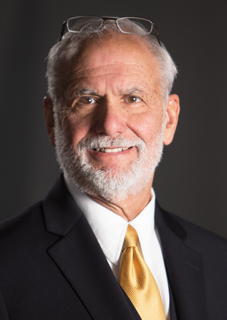
Exis Capital Management, a New York-based hedge fund, was facing trial in 2011 after being sued by Fairfax Financial for allegedly shorting the stock of a Canadian insurance company and spreading a false negative tip about the firm. The case, charging racketeering, commercial disparagement and tortious interferences, clearly wasn’t going well.

Facing a potential verdict of tens-of-millions of dollars, Exis Capital officials hired Dick Sayles and his law firm to take over the defense just weeks before the case was set to go to trial in Morristown, NJ.

“The case was fully developed when the client hired us on the eve of trial,” Sayles says.

The New Jersey trial judge seemingly granted the plaintiff’s lawyers every motion and kept pushing Exis Capital to settle.

“We rented 20 hotel rooms near the courthouse for 30 nights because we fully expected to go to trial,” Sayles says. “But the judge kept putting off the start of the trial. Finally, I asked the judge in open court when he was going to call in the jury.”

The judge then stunned the courtroom when he announced he was granting Sayles’ motion to dismiss the case.

“We were stunned and thrilled,” Sayles says. “And it shows that you always need to keep fighting, even when you think all is lost.”

A 1974 graduate of the University of Houston Law Center, Sayles has taken more than 150 cases to trial and won more than a dozen jury verdicts of a million dollars or more, including a $63.8 million victory for Texas-based Commil in a patent infringement case against computer networking giant Cisco Systems Inc.

Sayles’ first job was at Carrington, Coleman, Slomen & Blumenthal where he worked directly for legendary lawyer Jim Coleman.

“Best decision of my career,” Sayles says. “Jim encouraged us to develop and try cases. I was so proud to go to court and be identified as one of ‘Jimmy’s boys.’

“Jim Coleman believed if you are a good trial lawyer, you could try anything from a dog bite case to an airplane crash case,” he says. “This may be an era of legal specialization, but we still have the same rules of evidence and procedure, the same juries and the same judges. By the way, I have tried everything from a dog bite case to an airplane case.”

Sayles’ first jury trial came in early 1975 – just a few months out of law school. He represented John Deere Corp. in a breach of contract case against one of its dealers, who had falsified documents.

The trial lasted three days. The jury ruled for John Deere and awarded $7,000 in damages.

“Jim assigned me seven cases, including the Deere case, and they all went to trial,” Sayles says. “I won all seven trials. I thought I had the secret to success and would never lose a case.”

In 1979, he defended Deere in a products liability case in which a cotton farmer in the Texas Panhandle was killed while trying to fix broken Deere equipment.

The jury found for the plaintiff and awarded more than $1 million in damages.

“I discovered losing hurts and that I hated losing,” he says. “$1 million was a lot of money, too. “

Sayles became a partner at Carrington Coleman in 1981. During the next several years, he and Coleman tried several cases together. They represented Hudson Oil in a lawsuit brought by an individual who helped the oil and gas company buy a refinery and wanted a commission for his work.

The plaintiff demanded tens-of-millions of dollars in a five-day trial before U.S. District Judge Barefoot Sanders. The jury deliberated only a couple hours before finding in favor of Hudson Oil.

In 1994, Sayles decided to leave Carrington Coleman to start his own law firm with two other Dallas lawyers. Two years later, Mark Werbner joined Sayles.

“It was the most bitter-sweet moment of my life,” Sayles says. “I called Jim on a Saturday. It was just Jim and me. I told him I was going to chart my own course and start my own firm and that I planned to take three lawyers with me.

“I hope you’re not disappointed in me,” Sayles told his mentor.

“Dick,” Coleman responded, “the only way I would ever be disappointed in you is if you don’t aim for the stars and make it.”

“The class and integrity and dignity of Jim Coleman has never wavered,” Sayles says. “He is one of the bravest warriors you could ever imagine.”

Sayles used his own savings to help fund the new firm. He says he was fortunate to land a personal injury case soon after opening. The firm worked the case aggressively, and achieved a good settlement for the client.

In 2002, John Deere hired Sayles to defend the company in two separate products liability trials. In both cases, plaintiffs were users of Deere products who claimed that the products caused them serious injuries. Both plaintiffs demanded millions of dollars in damages.

Each trial lasted four days and both resulted in defense verdicts. One jury took just 22 minutes to rule for Deere.

In 2004, the City of Dallas hired Sayles to represent the city in a series of federal lawsuits filed by individuals who had been framed by Dallas police who planted pool chalk on them and claimed it was cocaine.

“I wanted to be fair, so I offered an agreement to the victims that I would stipulate liability if they would agree to cap any damage award to less than $400,000,” he says.

The lawyer for Erubiel Cruz agreed and took the cash. But lawyers for Victor DeLeon rejected the offer, risking instead going to trial in hopes of winning a larger verdict.

“Sadly, the jury ruled in my favor and the poor plaintiff got nothing,” Sayles says. “His lawyer would not let him settle. I felt bad for him.”

In 2009, Centocor Inc., a division of Johnson & Johnson, hired Sayles to be co-counsel in a patent infringement case involving a popular arthritis medication, Humira.

Sayles handled jury selection, presented the plaintiff’s damage expert and gave the final closing argument to the jury.

The jury’s verdict at the end of the eight-day trial: $1.67 billion, which is the largest patent verdict in U.S. history.

“When the judge read the verdict, it was an out-of-body experience,” Sayles says. “I don’t think my feet touched the ground for blocks.”[/fusion_text][/fusion_builder_column][/fusion_builder_row][/fusion_builder_container]

Buck Files: The Matlock of East Texas

[fusion_builder_container hundred_percent=”yes” overflow=”visible”][fusion_builder_row][fusion_builder_column type=”1_4″ last=”no” spacing=”yes” center_content=”no” hide_on_mobile=”no” background_color=”” background_image=”” background_repeat=”no-repeat” background_position=”left top” hover_type=”none” link=”” border_position=”all” border_size=”0px” border_color=”” border_style=”” padding=”” margin_top=”” margin_bottom=”” animation_type=”” animation_direction=”” animation_speed=”0.1″ animation_offset=”” class=”” id=””][fusion_imageframe lightbox=”no” lightbox_image=”” style_type=”none” hover_type=”none” bordercolor=”” bordersize=”0px” borderradius=”0″ stylecolor=”” align=”none” link=”” linktarget=”_self” animation_type=”0″ animation_direction=”down” animation_speed=”0.1″ animation_offset=”” hide_on_mobile=”no” class=”” id=””] [/fusion_imageframe][/fusion_builder_column][fusion_builder_column type=”3_4″ last=”yes” spacing=”yes” center_content=”no” hide_on_mobile=”no” background_color=”” background_image=”” background_repeat=”no-repeat” background_position=”left top” hover_type=”none” link=”” border_position=”all” border_size=”0px” border_color=”” border_style=”” padding=”” margin_top=”” margin_bottom=”” animation_type=”” animation_direction=”” animation_speed=”0.1″ animation_offset=”” class=”” id=””][fusion_text]By Mark Curriden
(Jan. 12) – Lawyers in small towns and rural areas are usually generalists. They have to know multiple kinds of law. They defend drug dealers one day and sue businesses for products liability or slip-and-fall cases the next. They operate in criminal court in the morning and bankruptcy court that same afternoon.

Lawyers, judges and corporate general counsel say the lawyer to see in East Texas no matter the predicament, is F.R. “Buck” Files. .

A 1963 alum of the Southern Methodist University Dedman School of Law, Files has won just about every legal honor the profession has to offer. The Criminal Justice Section of the State Bar of Texas named him Lawyer of the Year in 2004 and gave him the Lifetime Achievement Award in 2012. The Texas Criminal Defense Lawyers Association inducted Files into its Hall of Fame in 2011.

During his five decades in the law, Files has represented hundreds and hundreds of individuals and corporations in cases before juries and judges. Wearing his signature three-piece blue suit, he has taken cases from Justices of the Peace to the Supreme Court of the United States.

He has represented clients charged with white-collar fraud and drug conspiracies to those involved in the possession of child pornography. Corporate counsel have hired him to represent them in criminal regulatory matters against OSHA, EPA, USDA and INS.

Court TV featured several of Files’ high-profile trials.

“I have loved both aspects of practicing law – being an advocate for clients involved in disputes and being a counselor to help clients avoid disputes,” he says. “I have always had the philosophy that I should learn what led my clients to be in the criminal justice system. Most of the time, the reason is drugs or alcohol. So, I try to get them the help they need to address the root causes of their problems.”

In one of his highest profile cases, Files represented Randy Paroline, who was convicted of possessing child pornography. His client agreed to plead guilty, but one of the victims pictured in the pornography asked the federal trial judge to order Paroline to pay $3.5 million in restitution to cover the victim’s lost income and future counseling costs.

Files won the case at the U.S. District Court, but it was reversed at the U.S. Court of Appeals for the Fifth Circuit. Files brought Houston attorney Stan Schneider into the case. The pair filed the appeal to the Supreme Court and Schneider argued the case to the justices on Jan. 22, 2014 with Files seated beside him.

In a majority opinion written by Justice Anthony Kennedy, the Supreme Court adopted the argument by Files and Schneider that there must be a strong connection between the conduct of the victim and the negative impact of the victim and that such a connection did not exist in the Paroline case.

Files grew up in Kilgore, where his father owned a small trucking business. His dad also served as a non-lawyer judge in Rusk County.

Files received his Bachelor of Arts degree from Austin College in 1960, where he continues to give anti-hazing seminars to students at the university.

Three years later, he received his law degree from SMU Dedman.

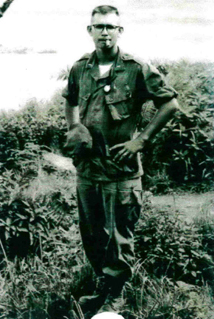
During his third year at SMU, Files earned his commission as a 2nd Lieutenant in the U.S. Marine Corp on Sept. 1, 1962. He began active duty on Dec. 28, 1963, and served at duty stations in Virginia, Hawaii, Okinawa and the Republic of Vietnam until August 14, 1967. He attained the rank of Captain.

Buck as a Marine Corps lawyer in Vietnam in 1965

“It was an amazing experience,” he says. “I was prosecuting cases one day and defending cases the next.”

In Vietnam, Marine Corps lawyers were not JAG officers, but were unrestricted line officers assigned primarily legal duties. Files was based near DaNang but moved in and out of all but three Marine line battalions in Vietnam, where he interviewed witnesses and provided legal assistance to troops in the field.

“I realized right away, during my first case, that I loved everything about being in trial,” he says.

Files represented a Marine in October 1964 who, acting in defense of his wife, attacked three Army soldiers with a knife. The Marine faced multiple counts of assault. After a daylong trial in which Files argued self-defense, the military court found his client not guilty.

“Every lawyer remembers his first not guilty and that was mine,” he says

Less than a year later, Files prosecuted the first general court martial in Vietnam for the Marine Corps in August 1965. A young Marine killed a fellow Marine with a .45-caliber weapon. Opposing counsel was a major who had a decade of trial experience.

It took only a couple days for Files to obtain a conviction.

When Files retired from the military, he accepted a position as a prosecutor in the Smith County Criminal District Attorney’s Office in Tyler, where he worked for more than three years.

“It was an amazing experience, because I was able to spend so much time in court actually trying cases,” he says. “There is no job that gives a lawyer more experience in the courtroom. Nearly everyday, I was arguing motions, picking juries, cross-examining witnesses and presenting evidence to juries.”

In 1970, Files became a criminal defense lawyer and later expanded his practice to handle civil rights cases and some regulatory matters. In fact, he had barely set up his law office on his first day on the job when a judge appointed him to defend a capital murder defendant.

“My client was found guilty,” Files says, “but he wasn’t executed, and he considered that a victory.”

Some cases, he says, are simply tougher or more challenging.

In 2004, Files defended Deanna Laney, a 39-year-old mother who killed her two sons – ages eight and six – and seriously injured a third son, who was 15-months-old by smashing them in the head with a rock on Mother’s Day. The state charged her with two counts of murder and one count of attempted murder.

“It is impossible for the average person to comprehend how a mother could do this,” Files says. “She was a faithful member of her church and she started hearing voices. God was telling her to do things.”

Files announced he would argue that Laney was insane.

“Every Sunday, I would take a handkerchief to the jail and she would cry and cry throughout our meetings,” he says. “She was a client who was hurting. I was her lawyer, but I also was there to listen to her and help her.”

During the trial, Smith County District Attorney Matt Bingham told jurors that Laney knew what she was doing when she bludgeoned the heads of her three sons.

“The last thing that Joshua and Luke Laney ever saw on this Earth was their Mama holding a rock over her head,” he said. “And the last thing they felt was that rock crashing down on them.”

Files knew he had to address his client’s delusions with the jury. He said Laney believed that God told her the world was going to end and “she had to get her house in order,” which included killing her children.

“You will hear that she was a sick person on a quest to be closer to her Lord,” he told the jurors. “The dilemma she faced is a terrible one for a mother. Does she follow what she believes to be God’s will, or does she turn her back on God? It destroyed her ability to discern the wrongness of her act.”

Files says there were two basketball referees on the jury and they proved crucial in the verdict.

“The referees told the other jurors that they had to put aside their own emotions and follow the rules the judge provided them, and that meant they had to find her not guilty by reason of insanity,” Files says. “No doubt, it was the toughest case of my life.”[/fusion_text][/fusion_builder_column][/fusion_builder_row][/fusion_builder_container]

Don Godwin – From Bagging Groceries to Winning the Biggest Environmental Lawsuit in U.S. History – Updated

[fusion_builder_container hundred_percent=”yes” overflow=”visible”][fusion_builder_row][fusion_builder_column type=”1_4″ last=”no” spacing=”yes” center_content=”no” hide_on_mobile=”no” background_color=”” background_image=”” background_repeat=”no-repeat” background_position=”left top” hover_type=”none” link=”” border_position=”all” border_size=”0px” border_color=”” border_style=”” padding=”” margin_top=”” margin_bottom=”” animation_type=”” animation_direction=”” animation_speed=”0.1″ animation_offset=”” class=”” id=””][fusion_imageframe lightbox=”no” lightbox_image=”” style_type=”none” hover_type=”none” bordercolor=”” bordersize=”0px” borderradius=”0″ stylecolor=”” align=”none” link=”” linktarget=”_self” animation_type=”0″ animation_direction=”down” animation_speed=”0.1″ animation_offset=”” hide_on_mobile=”no” class=”” id=””] [/fusion_imageframe][/fusion_builder_column][fusion_builder_column type=”3_4″ last=”yes” spacing=”yes” center_content=”no” hide_on_mobile=”no” background_color=”” background_image=”” background_repeat=”no-repeat” background_position=”left top” hover_type=”none” link=”” border_position=”all” border_size=”0px” border_color=”” border_style=”” padding=”” margin_top=”” margin_bottom=”” animation_type=”” animation_direction=”” animation_speed=”0.1″ animation_offset=”” class=”” id=””][fusion_text]By Mark Curriden
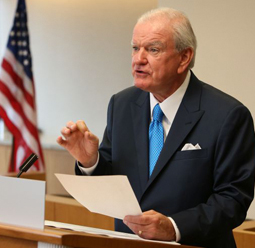
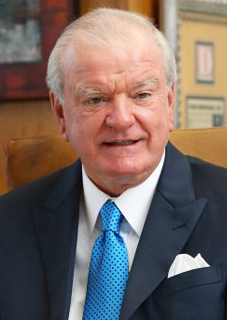
Jan. 9, 2017 – Don Godwin was on his way to watch the Kentucky Derby in May 2010 when the general counsel of Halliburton called.

Just days earlier, the BP Deepwater Horizon had exploded, killing 11 people, injuring 17 others and pouring an estimated 210 million gallons of oil into the Gulf of Mexico about 41 miles off the Louisiana coast.

Lawsuits were already being filed against BP, which owned the Macondo well 5,100 feet below the water’s surface on the Outer Continental Shelf. Other defendants were ocean drilling contractor Transocean and Halliburton, which provided the project’s cement around the well.

Thousands of fishermen and shrimp boat operators, hotels and restaurants, banks and real estate companies filed complaints that the oil spill caused them a loss of business. Even teacher pension funds and a handful of Mexican state governments sued.

In addition, the most powerful entity on the face of the planet, the United States federal government, sued the three corporate conglomerates for violations of the Clean Water Act and the Oil Pollution Act. Five states – Alabama, Florida, Louisiana, Mississippi and Texas – later joined the lawsuits, claiming the oil spill cost them billions of dollars in lost tax revenues.

The U.S. Judicial Panel on Multidistrict Litigation consolidated nearly all of those cases pending in the federal courts to U.S. District Judge Carl Barbier in New Orleans.

The Houston oil services company faced tens-of-billions of dollars in possible damages and penalties.

“I’ve been involved in some big cases, but the Deepwater Horizon is the largest multi-district litigation ever consolidated into one trial,” says Godwin, who is the founding partner of Dallas-based Godwin Bowman & Martinez. “This case is unprecedented, both in terms of the size of the litigation and the amount of money at stake. The best lawyers in the U.S. were involved.

“The Exxon Valdez lawsuit was huge, but it pales in comparison to the Deepwater Horizon,” he says. “I’ve never seen anything like it. Nobody has.”

Godwin and his team spent more than 15,000 hours on the case, taking more than 200 depositions and examining millions of pages of documents.

Not only did the federal government and the other plaintiffs sue Halliburton for damages, BP tried to shift some of its blame toward the Houston oil field services company by claiming the company provided faulty cement.

“My client was attacked from all sides,” Godwin says. “We knew from the start that this would require a massive effort and an aggressive trial strategy.”

Humble Beginnings

Godwin’s road to being among the elite trial lawyers in Texas was far from traditional and completely unexpected – even by him.
His father was a North Carolina farmer who became a Pontiac car salesman. Basketball great Michael Jordan’s father, James Jordan, was a regular customer.

Godwin worked his way through high school stocking shelves at Winn Dixie. He quickly excelled, becoming manager of the produce section and later managing the whole store.

“I actually thought my career job was managing our local Winn-Dixie,” he says. “Law school was nowhere in the plans.”

The food store chain provided Godwin with a work scholarship to attend the University of North Carolina at Wilmington. He graduated with a bachelor’s degree in accounting and suddenly received another scholarship to get a master’s degree at Memphis State University.

“My new goal at that point was to become an accountant, but the dean of the business school pushed me to go to law school to specialize in tax law,” he says. “At that point in my life, I didn’t even know any lawyers.”

Southern Methodist University’s Dedman School of Law awarded Godwin a scholarship. He graduated in 1973. That year, he joined Lyne, Klein, French & Wombie as an associate handling various client matters involving wills, estates, trusts and taxes.

dgodwinLB1“Nine months into the job, a partner asked me to help him in a case going to trial,” he says. “I had never been in a courtroom before, but I immediately loved it and knew that’s what I wanted to do.”
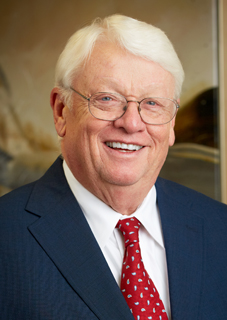
Godwin, speaking at a CLE program at SMU in 2016, said his billable hourly rate was about $45 during those early years.

“There was nothing like being in court and in front of jury fighting for your client,” Godwin told the SMU Dedman audience. “I loved it when I was a baby lawyer and I love it four decades later.”

In 1980, Godwin started his own law firm with George Carlton called Godwin & Carlton.

Godwin’s first big courtroom successes came in 1980 when he was hired by Fina Oil & Chemicals, which is now Total Petrochemicals, to sue individuals who stole fuel from its storage for years to fill up their 18-wheeler trucks.

In the first of the cases to go to trial, Godwin popped the defendants for $2 million. Then he sued five more individuals the next year. This time, he won a $4 million jury verdict for Fina.

Big Clients Came Calling

In 1984, Clayton Williams hired Godwin to handle all litigation for his oil and gas company. Gas pipeline company Tenneco Inc. hired Godwin to defend the company against a series of contract enforcement lawsuits valued at hundreds of millions of dollars each.

As the courtroom successes mounted, more A-list clients – Ray Hunt, Ross Perot, Norman Brinker and Jerry Jones – turned to Godwin to be their lawyer when times got tough. Even famed Houston trial lawyer John O’Quinn hired Godwin to represent him in a case after Godwin had kicked his ass in a billion-dollar jury trial.

Halliburton’s decision to hire Godwin to defend the Houston oilfield services company should not have been surprising.  The corporation hired Godwin to represented it several times in some major billion-dollar litigation.

Godwin successfully negotiated a $4 billion settlement resolving 382,000 potentially devastating asbestos lawsuits facing Halliburton.

In 2004, the company hired Godwin to defend it in a billion-dollar contract dispute involving an oil field in Kazakhstan.

“Everything that could go against my client did in that trial,” he says. “It seemed just about every day, the judge issued a negative ruling against us. Halliburton was getting horrible press. I woke up every morning of the trial wondering how the judge would hammer us that day.”

The jury deliberated a day and a half before finding that Halliburton had committed no fraud and no breach of fiduciary duty. The case later settled for a small fraction of the amount the plaintiff wanted.

Godwin says the decline in the number of jury trials during the past two decades has been harmful to the legal profession.

“You can go to all the CLE seminars you want, but you can only learn the art of trying a case by actually going to the courthouse and picking a jury,” he says.

As a young lawyer, Godwin says his first law firm would make him and his fellow associates available to clients to help them with smaller legal cases for a significantly reduced fee or no fee at all.

“These were disputes of $20,000 or $40,000 and we got our teeth knocked in a lot, but we got the experience and we learned from it,” he says. “It provided young associates with an opportunity to try cases every month. We were always at the courthouse and we had no choice but to get to know each other.”

Godwin says law firms pay younger lawyers too much today to let them work for free, but he says the vanishing jury trial is having a negative impact on the legal profession.

“How are our younger lawyers going to try 20 or 30 cases that they need to get board certified (as a trial lawyer) if there are no trials?” he asks.

Monumental Victory

In the Deepwater Horizon case, Godwin scored a major legal victory even before the trial started. He convinced Judge Barbier to rule that Halliburton’s contract with BP required BP to pay all compensatory damages, which included money to victims for losses. Halliburton would have to pay money only if Judge Barbier ruled that the company acted with gross negligence or wanton reckless behavior.

After several months of trial and testimony from scores of witnesses, Judge Barbier announced his decision in September 2014. The judge wrote that “BP’s conduct was reckless” while Halliburton’s conduct was merely negligent. The judge declared that Halliburton’s comparative fault as a percentage of total liability was only three percent, compared to BP’s 67 percent and Transocean’s 30 percent.

“I’m extremely proud of the work we did in this case,” Godwin says. “Our client faced $10 billion or more in damages but walked away with no liability.”

He says he has no plans for retirement, as he continues to enjoy his work.

“I love practicing law and being a lawyer,” Godwin says. “I’ve had to retool my practice a few times and, because of changes in technology and client demands, we may have to continue making changes. The law business is a lot more competitive and that means we need to work harder and think smarter.

“For a kid who dreamed of running a grocery store, it has been an amazing ride,” he says.

[/fusion_text][/fusion_builder_column][/fusion_builder_row][/fusion_builder_container]

T. John Ward has the Patent on Trials and Judging

[fusion_builder_container hundred_percent=”yes” overflow=”visible”][fusion_builder_row][fusion_builder_column type=”1_4″ last=”no” spacing=”yes” center_content=”no” hide_on_mobile=”no” background_color=”” background_image=”” background_repeat=”no-repeat” background_position=”left top” border_position=”all” border_size=”0px” border_color=”” border_style=”” padding=”” margin_top=”” margin_bottom=”” animation_type=”” animation_direction=”” animation_speed=”0.1″ class=”” id=””][fusion_imageframe lightbox=”no” lightbox_image=”” style_type=”none” hover_type=”none” bordercolor=”” bordersize=”0px” borderradius=”0″ stylecolor=”” align=”none” link=”” linktarget=”_self” animation_type=”0″ animation_direction=”down” animation_speed=”0.1″ hide_on_mobile=”no” class=”” id=””] [/fusion_imageframe][/fusion_builder_column][fusion_builder_column type=”3_4″ last=”yes” spacing=”yes” center_content=”no” hide_on_mobile=”no” background_color=”” background_image=”” background_repeat=”no-repeat” background_position=”left top” border_position=”all” border_size=”0px” border_color=”” border_style=”” padding=”” margin_top=”” margin_bottom=”” animation_type=”” animation_direction=”” animation_speed=”0.1″ class=”” id=””][fusion_text]By Mark Curriden
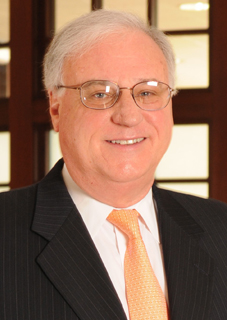
In 1998, Korean conglomerate Hyundai Electronics hired Longview lawyer T. John Ward, a three-decade-long veteran trial lawyer, to defend it against allegations of patent infringement brought by Texas Instruments.

A partner at Brown McCarroll & Oaks Hartline, Ward specialized in products liability law and malpractice litigation. Intellectual property law was as foreign to him as Israeli family law. Yet, he suddenly found himself entrenched in a patent lawsuit in which tens-of-millions of dollars were at stake.

“I’ll be honest with you, I had no idea what a Markman hearing was,” Ward says.

Hyundai lost the case when a jury awarded TI $25 million, but the complex intellectual property litigation left Ward scratching his head about mountains of paperwork, the dreadfully slow pace getting cases to trial and the constant delays.

Eighteen years later, there is no lawyer in the United States more associated with patent litigation than Ward. With apologies to Ben Franklin, no other individual in American history has had a bigger impact on the enforcement of patents.

President Bill Clinton nominated Ward to a judicial opening on the U.S. District Court in the Eastern District of Texas in 1999. From the bench in Marshall, Ward rewrote the rules and procedures lawyers and parties must follow in patent disputes – from the required documentation when a lawsuit is filed, to limiting the discovery process and pushing cases to trial more quickly.

“The Founding Fathers may have created the intellectual property clause in the U.S. Constitution, but T. John Ward made the process for enforcing patents real for individuals and businesses,” says Judge Patrick Higginbotham of the U.S. Court of Appeals for the Fifth Circuit.

“He may be the most prominent figure in the development of patent law,” Judge Higginbotham says. “Oh, and by the way, he’s a damn good trial lawyer, too.”

The American Inns of Court in 2006 named its East Texas chapter the Honorable T. John Ward American Inn of Court. In 2009, the American Board of Trial Advocates named Ward its Trial Judge of the Year.

Ward retired as a federal judge in 2011 and returned to practice law with his son at the firm Ward, Smith & Hill in Longview. He was part of the legal team that won a $175 million jury verdict in a False Claims Act case in 2014, which is one of the largest judgments in East Texas history.

“I have loved every minute of being a lawyer,” Ward says. “Lawyers have the ability to do so much good in our communities. I fear that the practice of law has become too much business and less and less a profession. Part of the reason is that there is so much money involved today.”

Born in Bonham, Texas during World War II, Ward received a bachelor’s degree in chemistry from Texas Tech University in 1964 and a law degree from Baylor University in 1967.

Ward’s first case came on his first day practicing law as a prosecutor in January 1968.

“I showed up for my first day at 8:30 a.m. and was still trying to learn my way around when a secretary walked up to me a few minutes after 9 a.m. and handed me a file,” he says. “The executive director of the YMCA in Lubbock was charged with making alcohol available to minors. She told me that I needed to get to court right away or the justice of the peace was going to dismiss the case. I met my witnesses for the first time a few minutes later.”

Clifford Brown, Lubbock’s best-known criminal defense lawyer, defended the accused.

Ward says Brown’s cross-examination of the state’s witnesses taught him that he had a lot to learn about being a trial lawyer.

“I was proud that the jury took four hours before finding the defendant ‘not guilty,’ ” he says.

“You remember the cases you lose because you feel you are letting down your clients,” Ward says. “I never forgot getting my butt kicked in court, especially when it was against a great lawyer, such as Scotty Baldwin.”

But Ward’s passion was civil litigation, so he joined a law firm that would come to be known as Sharp, Ward, Price & Searcy. He did mostly plaintiff’s work, representing individuals who claimed they had been injured in various products liability, malpractice, fraud or negligence cases.

One of the biggest cases of his career came in 1983, when Ward represented a woman who was seriously injured and whose husband was killed when they were skiing near the Millwood Dam in Arkansas. Cathy Butler slipped and fell into the water. Her husband jumped into the water to help her.

Because the U.S. Corp of Engineers was discharging water at a higher than normal rate, the strong current was overwhelming. The husband died and Butler sustained serious injuries.

A trial judge awarded Butler $1 million for the wrongful death of her husband, but then ruled that the Flood Control Act of 1928 provided the government and its employees sovereign immunity.

Ward appealed to the Supreme Court of the United States, which agreed to hear the case. Ward argued the case on April 21, 1986. He lost the case six to three, but his argument clearly touched Justice John Paul Stevens, who authored an impassioned dissent that was joined by Justices Thurgood Marshall and Sandra Day O’Connor.

“It would be regrettable but obligatory for this Court to construe the immunity provision to bar personal injury claims if such was the intent of Congress,” Justice Stevens wrote. “It defies belief – and ascribes to the Members of Congress a perverse, even barbaric, intent – to think that they spent days debating the measure of extra-constitutional compensation they would provide riparian landowners but intended – without a single word of dissent – to condemn the widows, orphans, and injured victims of negligent operation of flood control projects to an irrational exclusion from the protection of the subsequently enacted Tort Claims Act.”

In later interviews, Justice Stevens identified his dissent in Butler as one of his opinions of which he was proudest. Ward has a personal letter from Justice Stevens about the case hanging in his law firm office.

In 1991, Ward defended a wealthy oil and gas operator accused of civil racketeering charges in Tyler. Plaintiffs sought tens-of-millions of dollars in damages, which the trial judge could treble under federal RICO laws. The trial lasted seven weeks.

“The jury asked to see only one exhibit during their deliberations – the plaintiff’s damage model,” Ward says. “Needless to say, I didn’t get any sleep that night.”

The next day, the jury awarded only $314,000 – an amount that Ward’s client felt was a clear victory.

During his 31 years as a trial lawyer, he tried more than 200 cases to a verdict before a judge or jury.

But there is no dispute that Ward’s biggest successes and influence came during his dozen years as a federal judge in Marshall.

Not long after taking the bench in 1999, Ward decided that most patent cases could be streamlined. He established rules that limited page counts for lawyer motions and briefs. He introduced rigid time limits for hearings. He forced the parties to establish their factual and legal arguments earlier in the case. Lawyers and parties who abused the discovery process were severely punished. The time between a patent infringement lawsuit being filed and the case being set for trial was greatly reduced.

“The goal was to get patent cases to trial within 18 months of being filed,” he says. “I never imagined what the response would be.”

The Eastern District of Texas became known nationally as the “rocket docket.” The impact has been huge.

In 1999, patent holders filed 14 infringement cases in the federal courts in East Texas. By 2006, the number jumped to 234. There were 1,385 patent complaints filed in East Texas during the first six months of 2015, which is more than all the other federal courts in the U.S. combined.

“I’ve always said that it is the law of unintended consequences,” Judge Ward says. “I have tremendous faith in the American jury system. People criticize jury verdicts, but I have found that jurors are hard-working folks who listen closely to the evidence and follow the law.”[/fusion_text][/fusion_builder_column][/fusion_builder_row][/fusion_builder_container]

Robin Gibbs – The Father of the Litigation Boutique in Texas

[fusion_builder_container hundred_percent=”yes” overflow=”visible”][fusion_builder_row][fusion_builder_column type=”1_4″ last=”no” spacing=”yes” center_content=”no” hide_on_mobile=”no” background_color=”” background_image=”” background_repeat=”no-repeat” background_position=”left top” border_position=”all” border_size=”0px” border_color=”” border_style=”” padding=”” margin_top=”” margin_bottom=”” animation_type=”” animation_direction=”” animation_speed=”0.1″ class=”” id=””][fusion_imageframe lightbox=”no” lightbox_image=”” style_type=”none” hover_type=”none” bordercolor=”” bordersize=”0px” borderradius=”0″ stylecolor=”” align=”none” link=”” linktarget=”_self” animation_type=”0″ animation_direction=”down” animation_speed=”0.1″ hide_on_mobile=”no” class=”” id=””] [/fusion_imageframe][/fusion_builder_column][fusion_builder_column type=”3_4″ last=”yes” spacing=”yes” center_content=”no” hide_on_mobile=”no” background_color=”” background_image=”” background_repeat=”no-repeat” background_position=”left top” border_position=”all” border_size=”0px” border_color=”” border_style=”” padding=”” margin_top=”” margin_bottom=”” animation_type=”” animation_direction=”” animation_speed=”0.1″ class=”” id=””][fusion_text]By Mark Curriden
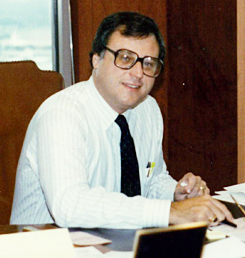
Long before Steve Susman, David Beck, Mike McKool and Mike Lynn left big law firms to start their own litigation boutiques, there was Robin Gibbs.

In 1974, Gibbs was a third year associate at Vinson & Elkins in Houston. He was in court every week defending insurance companies in civil lawsuits before juries. A 1971 graduate of the University of Texas School of Law, Gibbs was well on his way to partnership at the elite Houston full service firm when he got an itch.

“I had this feeling that there was a need for a small law firm that focused exclusively on litigation – a firm that represented businesses and individuals in suing bigger companies,” he says. “It turns out, there was such a demand.”

Gibbs combined two great Texas traits – being an entrepreneurial businessperson and being a great trial lawyer – to become the father of the modern day litigation boutique.

rgibbsLB1The desire to be a trial lawyer was instilled early in his childhood as he would listen to his uncle, who was a great trial advocate in San Antonio, tell stories for hours about cross-examining witnesses, arguing important cases to juries and using the courts to right wrongs.

“The stories fascinated me,” he says. “I was hooked and knew early in my life that I wanted to be a trial lawyer.”

As the founding partner at Houston-based Gibbs & Bruns, he has led his team of 32 lawyers through four decades of extraordinary victories that have scored clients billions of dollars and saved other clients from having to pay billions of dollars. He has represented Waste Management, Kinder Morgan, Chevron and ConocoPhillips.
During the past few years, Gibbs and the firm have represented mutual funds giants Pimco and Goldman Sachs in a series of multibillion-dollar lawsuits against Bank of America, Citigroup, JP Morgan Chase and other financial institutions for their roles in the mortgage-backed securities fiasco.

rgibbsLB3Bank of America has settled for $8.5 billion. The other cases are still being litigated.

Gibbs remembers his first jury trial in 1971 – a property damage case involving a car accident. He defended American General Insurance. Less than $1,000 was at stake.

“I was so nervous waiting for the jury to return with the verdict,” he says. “That anxiety over picking a jury and waiting for the verdict has never gone away.”

The jury ruled unanimously in favor of AGI.

In 1979, he represented a man accused of trade secrets violations. The company sought $25 million, but it got nothing.

Over the next few years, Gibbs won verdicts of $8 million, $60 million and $84 million.

In 1994, Gibbs represented the Apex Mutual Fund in a lawsuit against N-Group Securities over the insurance and sale of $74 million in mortgage revenue bonds used to develop six private prisons in Texas.

During the trial, Gibbs was able to show that a defendant had loaned $50,000 to a key witness in return for the witness testifying to certain facts.

“We found a transcript of questions and answers that accompanied the loan documents to the witness,” he says. “It was a major material factor in the jury awarding our client $84 million in damages.”

In 1995, Colorado Interstate Gas, a subsidiary of Coastal, hired Gibbs to defend the company against allegations that CIG had underpaid royalties to the family landowners. The plaintiffs also alleged breach of contract and fraud and sought $400 million in damages.

“The plaintiff’s lawyer was so confident in a victory that he purchased an apartment in Paris based on money he expected to win,” Gibbs says. “But this case is why the jury system is so unique and must be protected. This was a case in a jurisdiction where many people believe the jury would have been very hostile to our client and favorable to the hometown plaintiffs.”

After six weeks of testimony, evidence and arguments, the jury gave Gibbs’ client a complete victory. The plaintiffs got $0.

Barrett Reasoner, a partner at Gibbs & Bruns, says the Colorado Interstate Gas case in Amarillo is a perfect example of Gibbs showing why he is so successful.

The judge in the trial repeatedly refused to allow Gibbs to introduce to the jury certain evidence that was favorable to the defense.

“Robin kept pushing and pushing, repeatedly showing the judge why the evidence was important in the case,” Reasoner says. “If we had not gotten this evidence to the jury, we would almost certainly have lost the case.

“When other lawyers want to crawl under counsel’s table, Robin always charges on,” he says.[/fusion_text][/fusion_builder_column][/fusion_builder_row][/fusion_builder_container]