[fusion_builder_container hundred_percent=”yes” overflow=”visible”][fusion_builder_row][fusion_builder_column type=”1_4″ last=”no” spacing=”yes” center_content=”no” hide_on_mobile=”no” background_color=”” background_image=”” background_repeat=”no-repeat” background_position=”left top” hover_type=”none” link=”” border_position=”all” border_size=”0px” border_color=”” border_style=”” padding=”” margin_top=”” margin_bottom=”” animation_type=”” animation_direction=”” animation_speed=”0.1″ animation_offset=”” class=”” id=””][fusion_imageframe lightbox=”no” lightbox_image=”” style_type=”none” hover_type=”none” bordercolor=”” bordersize=”0px” borderradius=”0″ stylecolor=”” align=”none” link=”” linktarget=”_self” animation_type=”0″ animation_direction=”down” animation_speed=”0.1″ animation_offset=”” hide_on_mobile=”no” class=”” id=””] 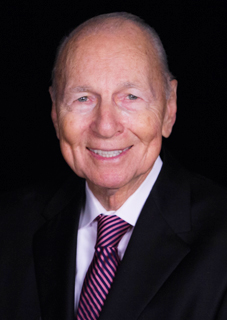 [/fusion_imageframe][/fusion_builder_column][fusion_builder_column type=”3_4″ last=”yes” spacing=”yes” center_content=”no” hide_on_mobile=”no” background_color=”” background_image=”” background_repeat=”no-repeat” background_position=”left top” hover_type=”none” link=”” border_position=”all” border_size=”0px” border_color=”” border_style=”” padding=”” margin_top=”” margin_bottom=”” animation_type=”” animation_direction=”” animation_speed=”0.1″ animation_offset=”” class=”” id=””][fusion_text]By Mark Curriden
(Feb. 23) – Forrest Smith had been a lawyer in the tax department of Magnolia Petroleum (now known as Mobil Oil) for only six months when the company’s assistant general counsel, Roy Ledbetter, approached him about handling a personal case for his family.
The client was an important employee of the Dallas Symphony Orchestra. More importantly, the client was Ledbetter’s daughter’s husband, who had been sued after he rear-ended another car.
“The assistant GC said it was time to get my feet wet in court,” Smith says. “I felt there was a lot of pressure to win.”
Smith argued that the “sudden emergency” doctrine applied because the plaintiff had stopped suddenly without warning and thus contributed to the accident.
“We were thrilled beyond measure when the jury ruled in our favor, especially because this was my trial,” he says. “My happiness didn’t last.”
The lawyer for the plaintiff, David Kidder of Thompson & Knight, filed a motion for a new trial claiming the evidence did not support the verdict. The trial judge agreed.
“Need I say the jury ruled against us this time?” Smith says. “My trial future became quite cloudy.”
Since graduating from the Southern Methodist University School of Law in 1963, Smith has been on a mission to use the law to improve North Texas. In fact, no lawyer has been more community focused.
Smith has chaired the Dallas Economic Development Board, the Parkland Hospital Board, the Texas Youth Commission, the Dallas Better Business Bureau and the Greater Dallas Chamber of Commerce. He helped create the General Counsel Forum and the Committee for a Qualified Judiciary. He’s even served as Honorary Counsel General of Thailand.
Smith has mediated more than 500 disputes. Ninety-eight percent resulted with settlements. He even took a major tax case to the Supreme Court of the United States.
“I learned that lawyers were extremely influential citizens and the practice of law could be used to improve our communities,” says Smith, who is now senior counsel at Friedman & Feiger.
Smith spent the first 35 years of his legal career in-house at Mobil. He handled a lot of employment law matters, including litigating about 50 arbitrations in Texas, Alaska and Wyoming.
“I particularly enjoyed my monthly visits to Mobil’s Beaumont refinery, which is where my father had worked for 40 years and where I had summer jobs,” Smith says. “My representation of the Mobil facility in Beaumont gave me the opportunity to try my first – and last – Admiralty case.”
In 1975, Mobil executives transferred Smith to its tax department in Dallas. He regularly supervised 50 property, sales and income tax cases, including the hiring of local counsel in each of those matters.
“My 35 years with Mobil was very influential in shaping my life – both as an attorney and civic leader,” he says. “Early in my career with Mobil, I had a great interest in public affairs. I made over a 100 speeches to Rotary clubs and other civic organizations demonstrating all of the great things that come from petroleum. This was when oil was $5.00 per barrel.”
Mobil encouraged Smith to “participate in political and civic affairs,” and he did.
“In the late 1970s, it became clear that judges were no longer being elected just on their record,” he says. “I created the Committee for a Qualified Judiciary (CQJ) to help educate the public on which candidates are qualified, irrespective of political party.
“I firmly believe the current system of electing judges does not serve the community,” he says. “The CQJ is still active, but only legislation will change the system.”
While community service was a significant part of his job, Mobil still depended on him to help with all major tax disputes, including one that took Smith to the U.S. Supreme Court as second chair in 1983. The case was Container Corp. v. Franchise Tax Bd.
“During the mid-1970s, the biggest issue facing international corporations was whether states had the ability to tax income of U.S. corporations when the income was earned totally outside of the U.S.,” he says.
“We argued that such tax violated the U.S. Constitution and the 5th amendment,” he says. “The states argued that so long as the tax was measured by the amount of activity generated by the corporation in the state, the tax was permissible.”
In a five-to-three decision, the justices ruled that the corporation had enough activity in the State of California to permit the tax levy.
When Smith retired from Mobil, he joined the Dallas law office of Arter & Hadden and continued his focus on tax law. In the early 1990s, the Dallas County Appraisal District tried to reduce the number of taxpayers claiming that their land was used for agriculture purposes, which entitled them to a lower rate of tax.
“My client owned several thousands of acres in Las Colinas under the agriculture exemption and it would have cost millions of dollars if he lost the agriculture exemption,” he says. “We had a five-day jury trial and were very pleased that the jury supported our theory. The client was also happy.”
During the next two decades, Smith practice at Bell Nunnally and Ryan Law LLP, where he provided state and local tax litigation representation to corporate clients and presided over alternative dispute resolutions in complex legal controversies. But he truly focused on his community service projects, including:
- Helped create the first Minority Counsel program to promote minority attorneys within the corporate community;
- Helped create the Russell Perry Award to honor leaders promoting the free enterprise system and raised more than $5 million dollars last year for Dallas Baptist University scholarships;
- Led in the creation of the Dallas Life Ledgen’s of Service Award, which raises funds to assist the homeless in Dallas; and
- In 2012, the General Counsel Forum created the Forrest Smith Scholarship Award, which provides funds for low-income students at the SMU Dedman School of Law.
In 1997, Smith came up with the idea of creating a non-profit organization for corporate in-house lawyers to share best practices. The result was the creation of what was initially called the Dallas-Fort Worth General Counsel Management Practices Forum.
“Riding the wave of Forrest’s boundless energy, enthusiasm and contacts, the organization swelled into today’s The General Counsel Forum—a state-wide community of more than 700 general counsel and senior managing counsel representing more than 450 companies and organizations,” says Classic Industries General Counsel John Clement. “Forrest is a friend and mentor whose place among the Lions of the Bar is well deserved.”
While the Dallas community has benefited greatly from Smith’s leadership skills, he has received a few bonuses, too. For example, as head of the Chamber, he invited all of the ambassadors from around the world to come to Dallas for a weekend. During one of the visits, Smith became friends with the Ambassador from Greece.
“He told me that Thailand was looking for a representative from Texas and he would like to nominate me,” he says. “I knew little about Thailand, but I was honored to be nominated. About a year later, I was notified that the King had appointed me as his representative and I was now the Honorary Counsel General of Thailand.
“Now, 20 years later, I continue to represent Thailand working with U.S. citizens wanting to travel there and companies who want to do business there,” Smith says. “Some of the 6,000 Thai citizens in DFW are my close friends.”[/fusion_text][/fusion_builder_column][/fusion_builder_row][/fusion_builder_container]
 [/fusion_imageframe][/fusion_builder_column][fusion_builder_column type=”3_4″ last=”yes” spacing=”yes” center_content=”no” hide_on_mobile=”no” background_color=”” background_image=”” background_repeat=”no-repeat” background_position=”left top” hover_type=”none” link=”” border_position=”all” border_size=”0px” border_color=”” border_style=”” padding=”” margin_top=”” margin_bottom=”” animation_type=”” animation_direction=”” animation_speed=”0.1″ animation_offset=”” class=”” id=””][fusion_text]By Mark Curriden
 [/fusion_imageframe][/fusion_builder_column][fusion_builder_column type=”3_4″ last=”yes” spacing=”yes” center_content=”no” hide_on_mobile=”no” background_color=”” background_image=”” background_repeat=”no-repeat” background_position=”left top” hover_type=”none” link=”” border_position=”all” border_size=”0px” border_color=”” border_style=”” padding=”” margin_top=”” margin_bottom=”” animation_type=”” animation_direction=”” animation_speed=”0.1″ animation_offset=”” class=”” id=””][fusion_text]By Mark Curriden