Charles Parker: Changing the Definition of Success

[fusion_builder_container hundred_percent=”yes” overflow=”visible”][fusion_builder_row][fusion_builder_column type=”1_4″ last=”no” spacing=”yes” center_content=”no” hide_on_mobile=”no” background_color=”” background_image=”” background_repeat=”no-repeat” background_position=”left top” border_position=”all” border_size=”0px” border_color=”” border_style=”” padding=”” margin_top=”” margin_bottom=”” animation_type=”” animation_direction=”” animation_speed=”0.1″ class=”” id=””][fusion_imageframe lightbox=”no” lightbox_image=”” style_type=”none” hover_type=”none” bordercolor=”” bordersize=”0px” borderradius=”0″ stylecolor=”” align=”none” link=”” linktarget=”_self” animation_type=”0″ animation_direction=”down” animation_speed=”0.1″ hide_on_mobile=”no” class=”” id=””] [/fusion_imageframe][/fusion_builder_column][fusion_builder_column type=”3_4″ last=”yes” spacing=”yes” center_content=”no” hide_on_mobile=”no” background_color=”” background_image=”” background_repeat=”no-repeat” background_position=”left top” border_position=”all” border_size=”0px” border_color=”” border_style=”” padding=”” margin_top=”” margin_bottom=”” animation_type=”” animation_direction=”” animation_speed=”0.1″ class=”” id=””][fusion_text]By Patricia Baldwin
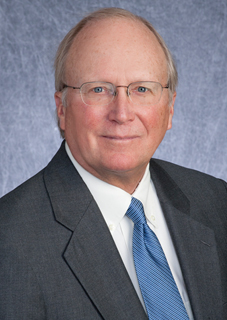
(Nov. 2) – As Charles Parker enters his fifth decade of practicing trial law, he is focused on a trio of priorities that have little to do with traditional measures of success.

First, the partner at Yetter Coleman in Houston said it is important to him to take cases that are “the right thing to do.”

He also is concerned about attacks on the jury trial system. “I have a real belief in the jury system. It works very well,” Parker added.

And, he is determined to mentor fledgling lawyers at the litigation boutique he joined in late 2011 after nearly eight years at Locke Lord. “Law school is a start – a preliminary start,” he noted.

At 67, Parker is a self-described “old school trial lawyer” who hasn’t strayed far from his roots. He’s tried scores of cases to juries across Texas.

He grew up – and continues to live – within five miles of downtown Houston. He attended the University of Texas for his undergraduate degree, but returned home to attend the University of Houston Law Center, where he received his doctor of jurisprudence in 1974.
Like many of his litigation contemporaries, he started his career representing doctors and hospitals in medical malpractice cases. He has defended other professionals, and he has taken the lead in mass tort actions. He has worked for large firms and founded his own firm.

As society and the law became more complicated, so did Parker’s practice, leading to his specialty of complex business litigation. Much of his practice focuses on securities litigation. He’s represented individuals and businesses in regulatory and enforcement matters brought by the U.S. Securities and Exchange Commission. Companies frequently hire Parker to conduct independent internal investigations when the SEC or the U.S. Department of Justice announce they have opened a probe into possible violations of the Foreign Corrupt Practices Act or other state or federal securities laws.

In addition, Parker has represented several clients involved in potential breaches of fiduciary duty involving corporations and corporate executives.

He served as lead counsel for a group of limited partners suing the general partner for putting its interests ahead of the others when the general partner negotiated a mortgage restructuring involving an office building. Parker took the allegations that the general partner breached his fiduciary duties to trial and the jury awarded his clients $60 million.

Parker spent a decade as one of the lead lawyers in the diet drug Fen-Phen litigation against manufacturer Wyeth. A federal judge appointed him as the National Class Counsel for the Multi-District Litigation. The class action settlement ultimately resulted in about $5 billion in payouts.

“I love investigation, solving the puzzle, developing story themes to win,” he said. “My biggest satisfaction is that I’m almost always client based, and I have a strong client relationship.”

Often, Parker said, “My clients want their stories told.”

For example, Parker represented the parents of an 18-year-old who died in a 2004 auto accident. An initial DPS investigation concluded the youth was speeding, lost control of his vehicle and caused the accident that killed three people.

The youth’s grieving parents could not believe the report and called upon Parker to help vindicate their son.

He did just that.

Parker’s additional investigation revealed that the brakes had malfunctioned on the teen’s vehicle – brakes that had been replaced 10 days before the accident. The DPS reopened the case and came to the same conclusion.

A lawsuit against the defendant brake company settled before trial for an excess of $3 million. Parker’s clients gave the money they received to charity.

With a mantra of doing the “doing the right thing,” Parker is committed to mentoring young Yetter Coleman attorneys. He said he believes law associates at large firms have become too focused on billable hours, losing opportunities just to observe trials in action.

His best advice to up-and-coming attorneys?

“Your reputation will be your calling card for the rest of your life.”[/fusion_text][/fusion_builder_column][/fusion_builder_row][/fusion_builder_container]
Jim Cowles: Law Practice has Changed but Not for the Good – Updated

[fusion_builder_container hundred_percent=”yes” overflow=”visible”][fusion_builder_row][fusion_builder_column type=”1_4″ last=”no” spacing=”yes” center_content=”no” hide_on_mobile=”no” background_color=”” background_image=”” background_repeat=”no-repeat” background_position=”left top” hover_type=”none” link=”” border_position=”all” border_size=”0px” border_color=”” border_style=”” padding=”” margin_top=”” margin_bottom=”” animation_type=”” animation_direction=”” animation_speed=”0.1″ animation_offset=”” class=”” id=””][fusion_imageframe lightbox=”no” lightbox_image=”” style_type=”none” hover_type=”none” bordercolor=”” bordersize=”0px” borderradius=”0″ stylecolor=”” align=”none” link=”” linktarget=”_self” animation_type=”0″ animation_direction=”down” animation_speed=”0.1″ animation_offset=”” hide_on_mobile=”no” class=”” id=””] [/fusion_imageframe][/fusion_builder_column][fusion_builder_column type=”3_4″ last=”yes” spacing=”yes” center_content=”no” hide_on_mobile=”no” background_color=”” background_image=”” background_repeat=”no-repeat” background_position=”left top” hover_type=”none” link=”” border_position=”all” border_size=”0px” border_color=”” border_style=”” padding=”” margin_top=”” margin_bottom=”” animation_type=”” animation_direction=”” animation_speed=”0.1″ animation_offset=”” class=”” id=””][fusion_text]By Mark Curriden
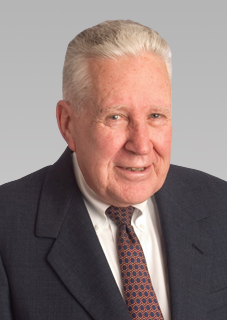
(Dec. 22) – On Jim Cowles’ first day in high school, his dad walked into his bedroom and announced it was time for the 14-year-old to decide what he was going to do for a living.

“Sir, I want to be a lawyer,” Cowles responded.

Sixty-eight years later, he says he hasn’t regretted the decision even for one day. He’s tried nearly 600 cases to a jury verdict, including a dozen trials while he was still in law school.

“I couldn’t wait,” he says. “I would go down to Justice Court, which was a notch above small claims court and represent folks in auto accident cases and other small disputes.”

At age 82, Cowles still loves being a lawyer, but he admits the role of lawyers is not the same as when he started.

“The legal profession has changed dramatically and the changes are not for the good,” he says. “Today, you cannot be sure that opposing lawyer’s word is good as gold.

Litigation today is “a battle of motions and discovery and so much paper and it goes on and on at an enormous cost to the client,” he says.

Cowles first trial in 1960 was an auto accident case in Georgetown, Texas, against a seasoned lawyer. A named partner sat behind Cowles for the entire two-day trial. The jury awarded Cowles’ client a few thousand dollars, which was a big victory.

“On the 30 minute drive back to the office, the partner told me all the things I did wrong in the trial,” he says. “By the time I got back to Austin, I was pretty sure I had actually lost the trial.”

After a short stint in the corporate legal department at Texas Pacific Railroad, Cowles joined a Dallas firm where he tried 18 trials his first year and 22 trials his second year. He won all 40.

“Those were the days before there was this thing called a billable hour,” he says. “We would just sit down at the end of a case and figure out how many days we had work on a case and send the client a bill that we both believed was reasonable.”

Cowles was hired to defend 35 lawyers and four state district court judges in Wichita Falls who had been sued by the region’s former district attorney. The lawyers and judges served on the Texas disciplinary board that had disbarred the prosecutor.

A federal judge handling the lawsuit dismissed the case and the plaintiff’s lawyers appealed to the U.S. Court of Appeals for the Fifth Circuit.

“I had not been paid by the 35 lawyers, but I wrote to them asking them to cover my expenses for traveling to New Orleans for oral arguments,” he says.

A few days later, one of Cowles’ clients wrote back.

“Jim – We agree that you should not be required to pay for your travel to New Orleans. So, we have agreed to have a horse ready for you every 40 miles all the way to New Orleans.”

The plaintiff dismissed the case a week prior to oral arguments.

Cowles is also known for his creativity in court and his efforts to challenge traditional thinking. Five decades ago, Cowles was one of the first lawyers in the U.S. to try to use science to demonstrate the flaws in eyewitness testimony.

In 1966, Gerald Don Dearing hired Cowles to defend him in a car crash case. The family of Richard Nutter sued Dearing, claiming he was at fault in the head-on collision.

The plaintiffs claimed that Nutter was driving his Ford west on Forrest Lane in Dallas about 10 p.m. and that Dearing was traveling east in a Chevrolet when the crash occurred. The evidence showed that the car traveling east was responsible.

The key eyewitness in the trial testified that he saw the Chevrolet driven by Dearing eastbound on the four-lane road. Five police officers sided with Nutter, saying Dearing was eastbound and crossed into on-coming traffic. Dearing suffered serious head injuries from the crash and was hospitalized for 57 days. He had no recollection about whether he was driving east or west.

Facing an overwhelming amount of evidence, Cowles hired a former inspector with the Texas Department of Safety. Using police photographs from the scene of the crash and retracing the paths of the two car drivers that night, the inspector testified that using basic common sense led him to conclude that Dearing could not have been driving east.

The jury ruled unanimously for Dearing. About a year later, the Texas Supreme Court reversed, saying that juries should not use customized evidence based on habits of parties to override the testimony of eyewitnesses.

In 1984, Cowles put his extraordinary courtroom skills on display when he cross-examined a famous doctor expert for the plaintiffs in an asbestosis trial in federal court in Marshall.

The federal judge, Robert Parker, publicly praised Cowles by describing Cowles’ questioning of the expert as “a $600,000 cross-examination.”

When Cowles arrived back at the hotel conference room where all the defense lawyers were working, he was greeted with a standing ovation.

Cowles has always been fast on his feet in court.

In 1992, he represented a physician in a lawsuit brought by the parents of a baby who was born with brain damage at Baylor Medical Center. The judge hearing the case actually struck all of Cowles’ legal defenses before the trial started due to alleged discovery violations.

Despite the severe limitations that were designed to almost guarantee a plaintiff’s victory, Cowles successfully used cross-examination of the other side’s witnesses to prove his case.

The jury returned with an award of $0 against Cowles’ client.

In 1999, Cowles was involved in a trial in which a Fort Worth doctor surgically removed the patient’s wrong lung and left the cancer in the remaining lung.

During the cross-examination of a medical expert, Cowles used a cardboard toilet paper roll to demonstrate the manner in which a bronchial tube could be closed down by a tumor. He showed how the tube could easily be squeezed and closed off, shutting down airflow.

That night, janitors cleaning the courtroom thought the tube was trash. When told of the tube’s disappearance, five jurors brought Cowles toilet paper rolls to court the next morning.

“The jury ruled for my client and I had the judge and the jurors sign the roll, which I still have today,” he says.

Looking back on his 55-year career, Cowles says he still loves the practice of law.

“I did what I told my dad I would do,” he says.


https://youtu.be/vXyWfcinqd4[/fusion_text][/fusion_builder_column][/fusion_builder_row][/fusion_builder_container]

Charles Matthews: The Legal Architect

[fusion_builder_container hundred_percent=”yes” overflow=”visible”][fusion_builder_row][fusion_builder_column type=”1_4″ last=”no” spacing=”yes” center_content=”no” hide_on_mobile=”no” background_color=”” background_image=”” background_repeat=”no-repeat” background_position=”left top” border_position=”all” border_size=”0px” border_color=”” border_style=”” padding=”” margin_top=”” margin_bottom=”” animation_type=”” animation_direction=”” animation_speed=”0.1″ class=”” id=””][fusion_imageframe lightbox=”no” lightbox_image=”” style_type=”none” hover_type=”none” bordercolor=”” bordersize=”0px” borderradius=”0″ stylecolor=”” align=”none” link=”” linktarget=”_self” animation_type=”0″ animation_direction=”down” animation_speed=”0.1″ hide_on_mobile=”no” class=”” id=””] [/fusion_imageframe][/fusion_builder_column][fusion_builder_column type=”3_4″ last=”yes” spacing=”yes” center_content=”no” hide_on_mobile=”no” background_color=”” background_image=”” background_repeat=”no-repeat” background_position=”left top” border_position=”all” border_size=”0px” border_color=”” border_style=”” padding=”” margin_top=”” margin_bottom=”” animation_type=”” animation_direction=”” animation_speed=”0.1″ class=”” id=””][fusion_text]By Mark Curriden

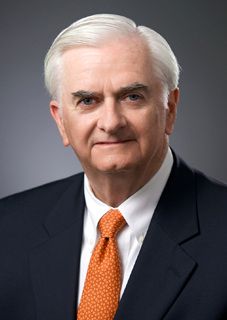
(Nov. 2) – Charles Matthews went to bed the night of March 23, 1989 looking forward to a relaxing Easter holiday weekend.

By the time the Exxon associate general counsel awoke the next morning on Good Friday, his world had been forever changed. About 3,160 miles away, an Exxon oil tanker called the Valdez crashed into Bligh Reef in Prince William Sound at 12:04 a.m. Alaska time or 3:04 a.m. Houston time.

“I got an urgent call telling me to turn on the TV right away. We’ve had a bad accident,” Matthews says. “The general counsel said, ‘I need you on a flight to Alaska as fast as possible.’ ”

Over the two decades that followed, Matthews successfully guided Exxon through one of the most complex and expensive litigations in U.S. history. While Matthews will forever be linked to the Valdez oil spill cases, he is widely viewed as one of the most influential corporate general counsel in history.

“Charles was the consummate general counsel – extremely well respected by senior management, his law department and the outside counsel community,” says current Exxon Mobil General Counsel Jack Balagia. “He has all the qualities of a great lawyer: [he’s] intellectually strong, appropriately tough with a great sense of humor; loyal to his friends and colleagues and devoted to his family.”

Matthews was the first in his family to go to college. He received his bachelor’s degree at the University of Texas and then obtained a law degree in 1970 from the University of Houston.

Humble Oil hired him in 1971 to work in its litigation practice section. Two years later, the company changed its name to Exxon and Matthews was busier than ever.

“We never ran out of slip and fall cases,” he says. “I was able to get a lot of trial experience.”

Matthews’ first big case came in the mid-1970s when the Federal Trade Commission sued all the oil companies on antitrust grounds. The litigation and subsequent settlement discussions lasted for years. The document discovery in the case was massive.

“We negotiated a dismissal of the cases that concluded with us paying no money and we didn’t have to change any operations,” he says.

During the same time period, Exxon’s service stations joined together in a class action against the Irving-based corporation seeking the ability to purchase fuel from any oil supplier, including Exxon’s competitors, while still selling it retail under the Exxon flag. The decade-long litigation ended with a consent decree in which Exxon was successful in all of its goals.

Exxon made Matthews its general counsel for U.S. operations in 1992 and its global GC in 1995.

In 1998, Exxon officials took the bold risk of attempting to merge with one of its top competitors, Mobil Oil, in a deal valued at $83 billion.

“Charles was the legal architect of the largest industrial merger in America at the time, reuniting the two largest components of the old Standard Oil Trust, and creating what is by many measures the largest publicly traded oil company in the world and one of the largest corporations in the world,” Balagia says.

“That job required a hugely coordinated effort, much advocacy, production and review of tens of thousands of boxes of documents, preparation of dozens of witnesses, divestment of assets and 18 months of regulatory approvals from governments around the world,” he says.

Matthews became the GC of the newly combined corporate legal department with 250 lawyers in the U.S. and 200 lawyers outside the U.S. Exxon Mobil paid thousands of lawyers at hundreds of outside law firms to handle various litigation, regulatory, tax and corporate transactional matters.

As Matthews’ public profile grew, public service groups came calling. He served as a director for the National Center for State Courts, Children’s Hospital and the Center for American and International Law. The Southwestern Region of the Boys & Girls Clubs of America made him a national trustee and he was the first corporate GC to serve on the board of directors of the Texas Access to Justice Commission, which is the organization that provides funding for legal services for the poor in the state.

Despite all of his accomplishments, Matthews recognizes that he will forever be linked to his work on the Valdez litigation.

“Nobody knew more facts about the Valdez case than I did,” Matthews says. “The Valdez case was a big chunk of my career. The litigation continued right up until I retired.”

Matthews coordinated all of Exxon’s litigation. He led the oil company’s efforts to settle civil and criminal cases brought by state and federal governments. The company spent about $3.5 billion in clean up costs.

When an Alaska jury in 1994 ordered Exxon to pay fishermen and Alaska natives $5 billion in punitive damages, Matthews was determined to fight on principle.

“Charles was the legal architect of Exxon’s litigation strategy in the aftermath of the Exxon Valdez disaster in Prince William Sound,” Balagia says. “He was, in fact, the first Exxon lawyer to arrive on the scene two days after the accident, and he managed the litigation from that day forward, continuing to guide activity even after becoming general counsel.”

The U.S. Court of Appeals for the Ninth Circuit cut the damage award in half in 2006. In 2008, the Supreme Court of the United States ruled that punitive damages could not be larger than the compensatory damages for actual losses, which calculated to $507.5 million to be divided among the 33,000 plaintiffs.

“We wanted to make new law in limiting punitive damages,” Matthews says. “It was a seminal case and it was very rewarding.”

Matthews retired from Exxon Mobil in 2010. He serves on the corporate boards of Trinity Industries and Frost Bank. He has received scores of awards and honors, including the General Counsel Forum’s Robert Dedman Award for Ethics and Law and the organization’s Lifetime Achievement Award.

“Charlie loves the law,” says Judge Patrick Higginbotham of the U.S. Court of Appeals for the Fifth Circuit. “He has been a great ambassador for the legal profession.”[/fusion_text][/fusion_builder_column][/fusion_builder_row][/fusion_builder_container]