Frank Branson: A Passion for Law, Life & Big Jury Verdicts – Updated

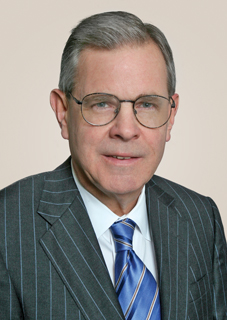
[fusion_builder_container hundred_percent=”yes” overflow=”visible”][fusion_builder_row][fusion_builder_column type=”1_4″ last=”no” spacing=”yes” center_content=”no” hide_on_mobile=”no” background_color=”” background_image=”” background_repeat=”no-repeat” background_position=”left top” hover_type=”none” link=”” border_position=”all” border_size=”0px” border_color=”” border_style=”” padding=”” margin_top=”” margin_bottom=”” animation_type=”” animation_direction=”” animation_speed=”0.1″ animation_offset=”” class=”” id=””][fusion_imageframe lightbox=”no” lightbox_image=”” style_type=”none” hover_type=”none” bordercolor=”” bordersize=”0px” borderradius=”0″ stylecolor=”” align=”none” link=”” linktarget=”_self” animation_type=”0″ animation_direction=”down” animation_speed=”0.1″ animation_offset=”” hide_on_mobile=”no” class=”” id=””] [/fusion_imageframe][/fusion_builder_column][fusion_builder_column type=”3_4″ last=”yes” spacing=”yes” center_content=”no” hide_on_mobile=”no” background_color=”” background_image=”” background_repeat=”no-repeat” background_position=”left top” hover_type=”none” link=”” border_position=”all” border_size=”0px” border_color=”” border_style=”” padding=”” margin_top=”” margin_bottom=”” animation_type=”” animation_direction=”” animation_speed=”0.1″ animation_offset=”” class=”” id=””][fusion_text]By Mark Curriden

(Jan. 23) – Frank Branson and T. John Ward were young lawyers battling in court. Branson represented the victim of medical malpractice, and Ward defended the hospital.

The trial was a heated, take-no-prisoners battle. The attorneys aggressively advocated for their clients. They almost came to fisticuffs several times.

At the end of the trial, Ward approached Branson.

“Do you drink whiskey?” Ward asked.

“I do with friends, but I will make an exception,” Branson replied.

“We went to the Cherokee Club, and I found out that he wasn’t nearly as bad as I thought he was,” Branson said at a CLE program at SMU Dedman Law School in 2016. “The first five or six lawsuits Jim Cowles and I had against each other, one of us asked the other to fight. It was part of the routine, but we were both smart enough that someone else was there to keep us apart.

“Lawyers should be able to fight vigorously for their clients in court, but still be civil to each other. I think that is missing from today’s legal profession.”

While Ward became a federal judge, Branson became one of the most successful trial lawyers in Texas history. Today, they are close friends.

A 1969 graduate of the SMU Dedman School of Law, Branson has tried more than 100 cases to a verdict. His clients are ordinary people who have been horribly injured and business leaders who have been screwed over by unscrupulous partners. Nearly 20 of his trials resulted in multimillion-dollar jury verdicts.

But it didn’t start out that way.

Branson’s first jury trial was in 1970 in Fort Worth. The trial lasted more than three weeks. His client, however, was less than likable. The young lawyer represented one of the defendants in a bizarre murder case that included some strange facts.

Branson’s client dated a woman whose sister’s boyfriend was a homicidal maniac. The defendant got drunk with two girls and passed out in the back of a truck. The sister’s boyfriend woke him up and forced him to steal $12 from a service station attendant, who was a student working his way through college. Then, they stabbed the victim 37 times. But the case, as lawyers involved will tell you, was a lot more complicated than that.

The state sought the death penalty against both men. The morning of the trial, the co-defendant pleaded guilty to nine life-in-prison sentences to be served consecutively. Branson went into the trial with one goal: save his client’s life.

“I was told that I was going to court for a routine docket call, where I would watch and learn from an older lawyer,” he says. “I showed up and the lawyer said to me, ‘Son, it’s time for you to try a case.’

“I ended up putting on most of the witnesses and arguing the case,” Branson says. “I do not recommend trial by fire for your first trial, especially if it is a capital murder case.”

Branson’s defense was simple: His client stabbed the woman under physical threat from the co-defendant. And he picked away at the prosecution’s case whenever he could.

“I got the medical examiner to admit on the witness stand that the victim was stabbed at a right angle,” Branson says. “My client was left handed. It wasn’t much of a defense, but it was all we had.”

The jury deliberated for more than two days before issuing a compromise verdict: his client was found guilty, but received life in prison, not death.

A few more criminal cases came Branson’s way, but he decided to focus on civil litigation. During the early days in his career, he tried scores small-dollar cases. The early jury verdicts were $1,000 to $15,000 for a car wreck injury or a worker’s compensation case.

“Every case is important to our clients,” he says. “The cases we handle today are literally life-changing for many of our clients. They just want justice.”

Branson is the plain-talking son of a Fort Worth football coach. After college at Texas Christian University, he worked as a waiter at Steak & Ale and a claims adjuster to help pay his way through SMU Dedman School of Law, where he received his doctor of jurisprudence in 1969. Four years later, he went back and earned his LL.M. degree in legal medicine.

“As a first-year lawyer, I was sent to county court wearing a brand new poplin suit and I was standing near the probate judge when he spit tobacco all over my suit,” Branson recalls. “He said, ‘Son, let that be a lesson to you. Never get between a judge and his spittoon.’”

His biggest success, he said, was convincing the daughter of an Arkansas Supreme Court justice to marry him.

“Besides being the love of my life, Debbie is my best friend, the mother of my children and the best lawyer and jury consultant I’ve ever worked with. She keeps me focused on what’s important.”

All those courtroom victories are the reason Branson is widely recognized as one of the great plaintiff’s lawyers in the U.S. The Texas Lawbook estimates that the combined jury verdicts and settlements achieved by Branson for his clients approach $1 billion.

“I got my competitive spirit from my father,” he says. “If my dad said it once, he said it 1,000 times, ‘If you are going to do it, do it right.’ As long as I think I can make a difference, I will keep going.”

One of his first big wins came in 1982 when he represented the victims of a truck crash in federal court in Tyler. The driver told police that he dropped a cigarette, which caused him to collide with the van carrying Branson’s clients.

When Branson cross-examined the truck driver under oath, the witness broke down in a Perry Mason-like moment. The driver dramatically confessed that the company made him drive even when he was tired.

“I offered to settle the case before trial for $2 million, but the defense counsel would not even meet with me,” Branson says.

The jury awarded Branson’s clients $5.6 million.

While he was in trial in the truck driver case, he received a call asking him to get involved in the case of two brothers who were thrown from an amusement ride at the State Fair of Texas. One was killed. The other was critically injured.

Branson’s investigation discovered the amusement ride had scores of stress fractures, including some fractures that had been welded over. He negotiated a $10 million settlement for his clients, had the ride banned from being used in the U.S. and convinced the State Fair to institute additional safety measures.

Branson represented a handful of people who were killed or critically injured when Delta Air Lines Flight 1141 crashed at the Dallas-Fort Worth International Airport in 1988. Two years later, he scored $11 million in settlements for his clients.

A decade later, he won a $5.7 million jury verdict for a victim in the 1999 American Airlines Flight 1420 crash at the Little Rock National Airport.

In 2007, Branson represented an 83-year-old widow of a 76-year-old man who died after his vehicle was struck by an 18-wheeler carrying hazardous materials on Interstate 635 in Dallas. The defense attorneys for the environmental waste company initially offered less than $1 million to settle the case, citing the woman’s age. Later, the defendants offered $3 million. The widow, who came to the U.S. after World War II on a liberty boat, said she would accept $5.3 million – an amount the company rejected.

“We showed the jury that the truck driver was on drugs and that he had a long history of being on drugs when he was hired to drive the truck,” he says.

The jury returned a verdict of $20.9 million.

Two years later, Branson scored $34 million in settlements for a Dallas Cowboys coach and scout who were seriously injured when the team’s training facility collapsed in 2009.

That same year, one of the families of 23 nursing home patients who died in a fiery bus crash while evacuating during Hurricane Rita hired Branson to represent them. He helped negotiate an $80 million settlement for all the plaintiffs.

“We learned early on that technology was our friend in demonstrating everything from truck crashes to buildings exploding to jurors,” Branson says. The firm employs a videographer, a computer generated graphics artist and a medical illustrator.

In fact, the Melvin M. Belli Society honored Branson with the 2007 Mel Award, which celebrates lawyers who demonstrate “creative advocacy, spirit of innovation and paradigm-shifting techniques in the presentation of evidence.”

Branson’s most recent courtroom success came last August when he represented two Dallas businesses – Tiburon Land and Cattle and Trek Resources – which sued their business partners who conspired to fraudulently cut them out of a lucrative mineral rights leasing deal.

After a three-and-a-half week trial, the Fisher County jury awarded the plaintiffs $43 million.

Looking back at his nearly five decade long career, Branson remains proud to be a lawye

“The law business has changed a lot,” he says.

Branson points to more diverse jury pools, tort reform, the move away from unanimous juries and the use of technology.

“When we got televisions in the courtroom and we could televise depositions, it made all the difference,” he says. “We are able to graphically recreate truck crashes, medical operations, oilfield explosions or even the complexity of corporate contracts so judges and jurors can better understand them.”

Even opposing lawyers tip their hat to Branson’s abilities.

“Frank Branson is the best trial lawyer I have ever seen in action,” says Gibson Dunn & Crutcher litigation partner Bill Dawson. “He’s always completely prepared. He understands what’s important and he, better than anyone I have ever seen in a courtroom, knows how to communicate that message to the jury.”[/fusion_text][/fusion_builder_column][/fusion_builder_row][/fusion_builder_container]
Mike Wortley – ‘A Rock in the World of Corporate Law’

[fusion_builder_container hundred_percent=”yes” overflow=”visible”][fusion_builder_row][fusion_builder_column type=”1_4″ last=”no” spacing=”yes” center_content=”no” hide_on_mobile=”no” background_color=”” background_image=”” background_repeat=”no-repeat” background_position=”left top” hover_type=”none” link=”” border_position=”all” border_size=”0px” border_color=”” border_style=”” padding=”” margin_top=”” margin_bottom=”” animation_type=”” animation_direction=”” animation_speed=”0.1″ animation_offset=”” class=”” id=””][fusion_imageframe lightbox=”no” lightbox_image=”” style_type=”none” hover_type=”none” bordercolor=”” bordersize=”0px” borderradius=”0″ stylecolor=”” align=”none” link=”” linktarget=”_self” animation_type=”0″ animation_direction=”down” animation_speed=”0.1″ animation_offset=”” hide_on_mobile=”no” class=”” id=””] [/fusion_imageframe][/fusion_builder_column][fusion_builder_column type=”3_4″ last=”yes” spacing=”yes” center_content=”no” hide_on_mobile=”no” background_color=”” background_image=”” background_repeat=”no-repeat” background_position=”left top” hover_type=”none” link=”” border_position=”all” border_size=”0px” border_color=”” border_style=”” padding=”” margin_top=”” margin_bottom=”” animation_type=”” animation_direction=”” animation_speed=”0.1″ animation_offset=”” class=”” id=””][fusion_text]By Mark Curriden
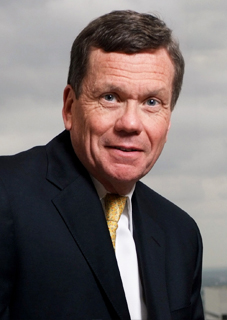
(March 11) – No one ever accused Michael D. Wortley of being a publicity hound. He’s not a regular commentator on television nor does he hold a lot of press conferences to discuss his clients’ business. He doesn’t promote himself on any of the Best Lawyers or Super Lawyers listings.

But seasoned general counsel and veteran business leaders agree that Wortley is one of the best corporate lawyers to ever practice law in North Texas.

During the past four decades, Wortley advised corporate leaders in more than 120 major mergers, acquisitions, joint ventures and initial public offerings – transactions that had a combined value of more than $250 billion.

“Being a lawyer meant advising and helping clients,” he said. “I enjoyed helping build businesses, improve communities, create jobs.”

Wortley represented Goldman Sachs in the initial public offering of Dell Inc. and then he advised Dell in its purchase of Perot Systems. He led the Thompson family in taking the publicly-traded Southland Corp. and 7-Eleven private. He represented real estate and investment firm Trammel Crow in its sale to CBRE.

“The deals that were the most intense, the most complicated and sophisticated, were the ones I enjoyed the most,” Wortley said. “A lot of people think the size of a deal is what is important, but large deals are often easier and simpler.

“Smaller, private transactions can be more complex and challenging, especially if its founder is still involved,” he said.

Clients say Wortley is the epitome of a lawyer acting as a counselor. Businesses large and small turned to him to be their primary outside counsel. To them, he was the essence of stability and confidence.

“Mike has been a rock in the world of corporate law,” said Mark Berg, executive vice president and former chief legal officer at Pioneer Natural Resources. “For business executives and general counsel, he’s always there, always unflappable, a constant.”

Wortley crafted billion-dollar deals for companies involved in many different business sectors. He’s done mega-transactions for deals involving radio stations, the makers of dress pants and semi-conductors, commercial real estate developers, upstream oil companies, midstream gas operations, food processing and private equity firms.

During his 38 years as a lawyer, Wortley helped private companies go public and mid-sized businesses merge to become big. He advised large corporations as they acquired competitors and counseled private equity firms buying public companies to take them private. He represented mega-conglomerates divesting assets in order to be strategically more focused.

“Simply put, Mike Wortley is a legend,” said Rick Lacher, managing partner at the investment bank Houlihan Lokey in Dallas.

Wortley received his bachelor’s degree in political science from Southern Methodist University and his master’s degree in regional planning from the University of North Carolina in 1973.

After a couple years in public development, Wortley went back to school. In 1978, he graduated from the SMU Dedman School of Law.

The Dallas law firm Johnson & Gibbs – later known as Johnson & Swanson – hired Wortley in its corporate law section, where he focused on securities law, mergers, acquisitions and capital markets.

“When I started practicing law in 1978, almost all sophisticated M&A in Texas was handled by New York corporate lawyers,” he said. “The Texas legal market has greatly matured. Lawyers in Texas are every bit as experienced and sophisticated as M&A lawyers elsewhere.”

In 1991, the partnership elected Wortley its chairman and renamed the firm Johnson & Wortley. He remained the firm’s leader until it closed shop in 1995, when he and several of his colleagues joined Vinson & Elkins.

V&E eventually appointed Wortley to its executive committee, chair of its corporate securities section and its chief operating officer.

“I have been honored to have leadership roles at two great law firms,” he said. “I’ve worked with some amazing lawyers.”

Wortley represented two major businesses – Tom Hicks’ HM Capital and Pioneer Natural Resources – for more than two decades. For each, he led several nine-, 10- and 11-digit deals.

One of Wortley’s first big clients ended up being a client for nearly his entire legal career. He represented Parker & Parsley Petroleum in a series of deals, including its acquisition of Canadian-based Chauvco Resources and its hostile takeover of Bridge Oil, which was an Australian energy company.

In 1997, Wortley advised Parker & Parsley Petroleum in its merger with MESA Inc. The newly created oil and gas company was named Pioneer Natural Resources.

Pioneer made Wortley its lead outside counsel and added him to its corporate board of directors. He represented the Irving-based company in a series of shareholder proposals and shareholder activists seeking board seats.

“For Pioneer, Mike is a great fit for our culture,” Berg said. “Mike always thought about Pioneer’s interests first. He doesn’t mind rolling up his sleeves and digging into the details.

”Mike also has the great ability to transition to the big picture, identifying what is important and making sure the issues get the appropriate attention,” he said.

Wortley did even more transactions for Hicks Muse. He was the Dallas private equity firm’s lead legal adviser in its acquisition of meat company Swift Foods, international oil and gas firm Triton International, consumer food maker International Foods and the formation of midstream company Regency Energy Partners.

“Clients stuck with Mike forever, which is the ultimate testimony for a lawyer,” said Jeff Chapman, who worked with Wortley for 30 years and is now a partner at Gibson, Dunn & Crutcher in Dallas.

Robert Kimball, a corporate partner at V&E, who worked with Wortley for 28 years, said his mentor developed strong personal relationships with his clients and always put the client first.

“Mike had a deeper and broader and clearer knowledge of the law than any other lawyer,” Kimball said. “He made sure he knew every detail in a document, even better than the lawyers who drafted the documents.”

Young lawyers who worked for Wortley said he would sit down with them during a deal and go over dozens and dozens of questions he had written down on a legal paid.

“He has those damn checklists that drove us crazy,” Chapman said. “He taught us to dot every ‘i’ and cross every ‘t.’

“Pioneer had the largest prospectus ever – about 2,600 pages – and I guarantee you that Mike knew every word,” he said.

Wortley has certainly seen many changes during his years practicing corporate law. None of those changes had as much of an impact as technology.

“We used to travel to sit in front of the other parties to share a document, or send documents by Federal Express,” he said. “Today, document sharing and getting a response is instantaneous. We have billion-dollar deal closings now in which you don’t even see each other.”

Wortley said the rise of alternative fee arrangements also has changed the practice of law.

“Clients are much more interested in negotiating over fees and are looking more closely at their bills and are inclined to push back,” he said.

“The practice of law is not just about being technicians,” Wortley said. “Today, it is about showing clients that you are adding value.”

Wortley no longer represents multiple businesses. Last year, he officially retired from Vinson & Elkins and became the new chief legal officer at Dallas-based Reata Pharmaceuticals, a biopharmaceutical company that focuses on translating innovative science into breakthrough medicines for intractable diseases.

“I would be bored if I didn’t have something to do,” Wortley said.[/fusion_text][/fusion_builder_column][/fusion_builder_row][/fusion_builder_container]

Richard Mithoff: Million-dollar Verdicts that Save Lives

[fusion_builder_container hundred_percent=”yes” overflow=”visible”][fusion_builder_row][fusion_builder_column type=”1_4″ last=”no” spacing=”yes” center_content=”no” hide_on_mobile=”no” background_color=”” background_image=”” background_repeat=”no-repeat” background_position=”left top” hover_type=”none” link=”” border_position=”all” border_size=”0px” border_color=”” border_style=”” padding=”” margin_top=”” margin_bottom=”” animation_type=”” animation_direction=”” animation_speed=”0.1″ animation_offset=”” class=”” id=””][fusion_imageframe lightbox=”no” lightbox_image=”” style_type=”none” hover_type=”none” bordercolor=”” bordersize=”0px” borderradius=”0″ stylecolor=”” align=”none” link=”” linktarget=”_self” animation_type=”0″ animation_direction=”down” animation_speed=”0.1″ animation_offset=”” hide_on_mobile=”no” class=”” id=””] [/fusion_imageframe][/fusion_builder_column][fusion_builder_column type=”3_4″ last=”yes” spacing=”yes” center_content=”no” hide_on_mobile=”no” background_color=”” background_image=”” background_repeat=”no-repeat” background_position=”left top” hover_type=”none” link=”” border_position=”all” border_size=”0px” border_color=”” border_style=”” padding=”” margin_top=”” margin_bottom=”” animation_type=”” animation_direction=”” animation_speed=”0.1″ animation_offset=”” class=”” id=””][fusion_text]By Mark Curriden
(March 11) – Legendary Houston trial lawyer Joe Jamail walked into the office of his young associate, Richard Mithoff, in 1977 to hand off a case.

“He gave me the case file on Friday. I interviewed the client on Saturday. We went to trial on Monday,” Mithoff says.

The client was Norma Corley, a 35-year-old woman from Cleveland, Texas, who suffered severe medical problems as the result of silicone gel breast implants she received as part of reconstructive surgery following breast cancer. Corley claimed the implants leaked.

The lawsuit accused the maker of the silicone implant, Dow Corning, with manufacturing a knowingly defective product and causing his client’s illnesses. Several other similar cases had gone to trial, but juries had ruled in favor of the defendant every time.

“Dow offered me $5,000 to settle,” Mithoff says. “Dow’s lawyers told me they had never lost a case and that I would never beat them.

“There were no pre-trial depositions. Case files were paper thin,” he says. “All testimony was live.”

After several days of trial, the Houston jury found in favor of Corley and awarded $170,000. It was the first verdict favoring a plaintiff in a silicone breast implant case in the U.S.

rmithoff1“Joe was very good about throwing us into the deep end of the pool to force us to either swim or sink,” Mithoff says. “He also taught me that great trial lawyers lose cases. You need to hate losing, but you cannot be afraid of losing.”

Mithoff handled all aspects of the appeal, including writing each brief on his personal typewriter and making the winning argument at the Texas Supreme Court, which upheld the jury’s verdict.

“Richard is a man you can trust and you know it the minute you meet him,” says famed Houston criminal defense lawyer Richard “Racehorse” Haynes. “Juries and judges respect Richard because he’s honest and he’s a damn good lawyer.”

Even opposing counsel and the judges who hear his cases say that the 70-year-old lawyer is a fearless advocate with extraordinary courtroom talents.

“He wins the old fashioned way – by out-thinking, outworking and outperforming his opposition,” former Texas Supreme Court Chief Justice Tom Phillips said when awarding Mithoff the Texas Law Review’s 2015 Leon Green Award. “Juries and judges soon come to see that his passion for his client’s cause comes from conviction, not performance. He will not promise what he cannot deliver and you can take his word to the bank.”

A 1971 graduate of the University of Texas School of Law, Mithoff has won scores of million-dollar verdicts and settlements for his clients in various personal injury, products liability, commercial and contract disputes.

Mithoff has represented poor and middle-class folks who have been victimized by unscrupulous business owners, financial investors and medical professionals. He represented families of elderly people killed in 2005 on a bus fleeing Hurricane Rita and the families of men killed that same year at the BP Texas City explosion – securing multimillion-dollar judgments for victims in both tragedies.

But he’s also represented J.P Morgan Chase, singer Willie Nelson, the Democratic Party of Texas and ConocoPhillips.

“Now, there’s pressure to win every case – even the longest of long shot cases,” he says.

Mithoff decided to become a lawyer in high school in El Paso when he read To Kill a Mockingbird. After college and law school at UT, he clerked for U.S. District Judge William Wayne Justice after law school.

From the start, Mithoff wanted to work with great lawyers to see in person how they practiced law and tried cases. He originally worked with legendary Texas lawyer Warren Burnett and then joined Jamail, the Texas lawyer who needs no introduction.

“I knew right away that Richard was going to be a great lawyer,” Jamail said in an interview about two months before he died in 2015. “He’s much more of a gentleman than I am, but he’s every bit as good in the courtroom.”

Mithoff says he remembers the first case he took to trial, which was an automobile collision case.

“I was convinced that I had a huge case,” he says. “The defense lawyer, who had lots of experience, offered me $1,500 to settle before trial. We tried the case for three days and the jury came back with a verdict of… $1,500. I became much better at evaluating the value of cases as I became more experienced.”

Mithoff tried to get into court as often as he could. He started taking medical malpractice cases in small towns across Texas against local doctors.

“I would get the jury list a day or two before trial and then take a local county attorney out for dinner and drinks to have them tell me about the jurors,” he says.

In 1983, the parents of Andrea Ferris hired Mithoff to sue the Pasadena Hayshore Hospital after the couple’s child suffered irreparable brain damage as the result of medical malpractice during the birthing process. Little Andrea would never be able to walk or talk or even feed herself as the result of the injuries caused by the hospital’s medical staff.

Rather than face trial, the hospital and its insurance carriers agreed to settle the lawsuit before trial. The Ferris family was awarded $115 million. Mithoff was awarded $1.9 million in legal fees. It was the largest medical malpractice judgment at that point in U.S. history.

The case, which was featured on ABC News’ Nightline program, also led the Texas legislature to change the law regarding hospitals reporting misconduct or malpractice of its physicians.

In 1997, Mithoff represented the family of a Lubbock woman who died during child delivery when the anesthesiologist administering the epidural pierced a large vein that sent the power drugs directly to her heart.

During the case, Mithoff discovered the anesthesiologist had a history of drug problems. The hospital settled for $9.5 million and agreed to reform its internal screening procedures.

In fact, while Mithoff made tens-of-millions of dollars suing doctors and hospitals for medical malpractice, he has been a major contributor to certain medical causes.

In response to a large but undisclosed donation from the Mithoffs, the Harris County Hospital District named its world-class trauma center in 2007 at the Ben Taub Hospital as the “Ginni and Richard Mithoff Trauma Center.”

In 1998, Mithoff represented Harris County and other Texas counties intervening in the historic global tobacco industry settlement in which the cigarette makers agreed to pay the state of Texas $15.3 billion over 20 years to resolve a federal RICO case that was about to start trial.

Hired by the counties, Mithoff intervened in settlement negotiations and convinced the tobacco companies to add an extra $2.3 billion for the 254 counties in the state. As part of the deal, Mithoff also agreed to donate half of the $20 million in lawyer fees he was awarded to the Harris Co. Hospital District to create a children’s health fund.

At age 70, Mithoff shows no signs of slowing down, as the big cases keep pouring in and he keeps scoring big-dollar successes.

“I plan to keep practicing as long as it continues to be fun and as along as I can help people,” he says. “And I can tell you this, I love it just as much today as that first case back in 1971 for $1,500.”[/fusion_text][/fusion_builder_column][/fusion_builder_row][/fusion_builder_container]