

By Mark Curriden
HOUSTON (Feb. 22) – David Beck – only months removed from law school – stood before a Harris County District Court jury. The year was 1965 and he represented an older couple who drove their car the wrong way on a newly built freeway. They collided head-on with another vehicle, causing serious injuries to the driver.
It was Beck’s first trial.
“I argued that it was a dark night and there were no lights and that these people acted reasonably and the accident was unavoidable,” he said. “I was absolutely petrified. I didn’t want the partner to go with me in case I embarrassed myself.”
Beck did just fine. The three-day trial ended with the jury ruling that his clients were not negligent.
“It was a small case, but I knew right then that I wanted to try cases for a living,” he said.
Five decades later, Beck is one of the go-to trial lawyers in the U.S. He’s represented some of the biggest corporations and most prominent individuals – Exxon Mobil, Clear Channel Communications, Enterprise Products, the Bass brothers, for example – in cases in which tens or even hundreds of millions of dollars were at stake.
Corporate general counsel have a short list of lawyers to call when they face bet-the-company litigation. In Texas, the list always includes Beck.
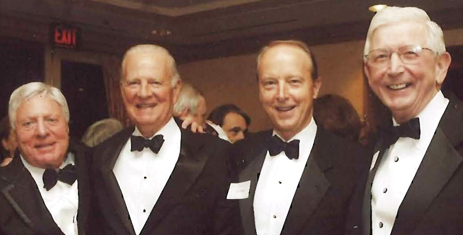
Born in Pittsburgh in 1940, Beck is the oldest of five children. His family moved to Port Arthur when he was 14. His father worked at a refinery and a janitor. His mom was a homemaker.
For college, Beck stayed home, worked as a janitor and studied history and government at Lamar University in Beaumont. In 1962, he headed off to law school at the University of Texas.
“I arrived at UT with a suitcase and a dream,” he said. “Dean Page Keaton told us on the first day of law school that you can spend your whole life as an honest and good lawyer but you can lose that reputation in five minutes.”
Upon graduating from UT in 1965, Beck joined Fulbright & Jaworski’s litigation section.
Five years after the trial involving the elderly couple, Beck was back in Harris County District Court. Seated at the opposing counsel’s table was another young lawyer showing a lot of promise: John O’Quinn.
O’Quinn represented two Houston police officers who were driving in their patrol car with their lights and siren blasting when another vehicle crashed into them at a cross streets. Both officers claimed injuries.
“O’Quinn tried to get the jury excited or prejudiced by telling them that my client jumped out of his car and started screaming obscenities,” Beck said. “What O’Quinn didn’t know is that my client was in a German concentration camp. My client told the jury about the experience and he showed the jury the numbers that the Nazi’s tattooed on his wrist.
“The jury sat in absolute silence,” he said.
Beck offered $1,250 to settle. O’Quinn demanded $3,250. The jury basically split the demands and awarded $2,000.
“I was crushed by the verdict,” Beck said. “I truly thought I would win. I remember walking into the office of the chair of the litigation section of Fulbright and told him that if I couldn’t win that case that I needed to quit the practice of law.”
Beck stayed at Fulbright for another 23 years and eventually became the head of its energy and environmental section.
In January 1992, Beck decided to strike out on his own and formed his own boutique with Joe Redden and Ron Secrest. Together, they built a litigation powerhouse of 42 lawyers.
“I enjoy what I do so much that I still can’t believe they pay me,” Beck said. “I try to stake out the moral high ground. Jurors want to do what’s right.”
In the two-dozen years since starting Beck Redden, the firm’s senior partner has taken more than a hundred cases to trial.
One of Beck’s biggest courtroom victories occurred in 2010 when he represented Memorial Hermann Hospital in a lawsuit brought by a group of Houston physicians who owned a failed hospital. The lawsuit accused Memorial Hermann of using illegal anti-competitive tactics and tortious interference that led to their hospital‘s failure.
The plaintiffs sought hundreds-of-millions of dollars in damages and several million dollars more in lawyer fees.
“We showed that these doctors made a special secret side deal in which they got a rebate or kickback from the insurance company, but never told the patients about it,” Beck said. “I asked the doctors on the witness stand why they didn’t inform their patients, and each one provided a different answer. The jury clearly didn’t think they were telling the truth.”
The Houston jury heard nine weeks of testimony but deliberated less than three hours before it returned with a verdict completely vindicating Beck’s client.
Two years later, Beck was back in trial representing Exxon Mobil. One of the corporation’s executives sued, claiming the Irving-based oil and gas company’s compensation plan was illegal because it restricted or even eliminated stock options if the executive left to work for a competitor.
The executive sought $5 million in damages. Exxon Mobil also realized that a loss in this single case would call into question the oil giant’s worldwide executive compensation program.
Once again, Beck convinced the jury to rule in his client’s favor. The Texas Supreme Court upheld the decision and the ruling set a precedent.
Beck’s list of successes is several pages long. He represented a small oil and gas exploration company in a trade secrets case in which $140 million in damages were at stake. He represented the University of Texas in a legal battle against Ryan O’Neal over the ownership of Andy Warhol’s portrait of Farrah Fawcett, which was valued as much as $12 million.
The case eventually settled, but Beck said lawyers need to show they are willing to go to trial, even in questionable cases.
“Lawyers who don’t lose cases at trial are not trying that many cases,” Beck said. “In hindsight, I wish I had known that the law practice would eventually gravitate toward becoming a ‘business’ as opposed to remaining a true profession. I don’t know that I would have done anything differently, but it would certainly have been a factor in deciding my career path.”
Beck said his only other possible professions would have been teaching or becoming a Catholic missionary priest.
In a recent interview with Young Lawyers Magazine, Beck said there are two lawyers he admires most.
“The first is John Adams, who in 1770 defended British soldiers after the Boston Massacre when anti-British feelings were at their peak,” he said. “Nevertheless, he defended them because he believed in the right to effective counsel for the accused.”
The second hero was a former law partner at Fulbright: Leon Jaworski.
“As the Watergate prosecutor, he clashed with then-President Richard Nixon over the tapes of conversations recorded by the President,” he said. “After Jaworski successfully argued before the U.S. Supreme Court that Nixon was required to turn over the tapes, on August 9, 1974, President Nixon resigned. Jaworski established the principle that not even a President is above the law.
“Leon Jaworski stressed the duty that we lawyers have to serve the profession and make it better,” Beck said. “I have tried to live by that admonition.”