
By Mark Curriden
(Dec. 6) – Forty-eight years ago, George Bramblett picked his first jury and tried his first case.
Out of law school only a little more than a year, Bramblett represented an insurance company refusing to compensate an extraordinarily sympathetic victim of a car crash, for his injuries.
The facts were simple: A University of Texas football player driving on I-35 near Hillsboro fell asleep at the wheel of his vehicle. His car swerved and hit another car driven by a U.S. soldier.
“When I first saw the facts of the case, I understood why other lawyers didn’t want to defend it,” Bramblett told The Texas Lawbook.
Bramblett developed a legal argument and strategy that many thought was risky. He admitted liability. The facts, after all, were clear. But he challenged the plaintiff’s claims for damages.
“Our theory was to agree that the accident was our fault, but that the plaintiff was not injured nearly as severely as he claimed,” he said. “In fact, we demonstrated that he clearly exaggerated his injuries.”
The two-day trial ended with the jury finding for the plaintiff, but it awarded zero damages.
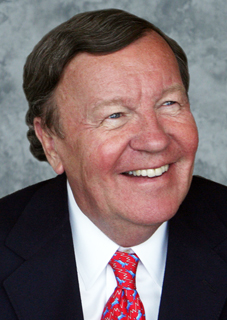
Bramblett passed away in November after five remarkable decades as one of the most successful and respected commercial trial lawyers in the Southwest, which is quite a compliment when you realize that he practiced in an era when trial lawyers reigned as gods in Texas.
“George was the best of what trial lawyers should be,” said appellate law specialist Nina Cortell, who was recruited by Bramblett to join Haynes and Boone. “George loved the law and his love was infectious for all lawyers.”
Cortell and others say Bramblett was successful because he engaged with jurors on a personal level.
“I enjoyed cases that many considered unwinnable or cases that featured unsympathetic clients,” Bramblett said. “Plus, I loved being in court. It was exhilarating.”
As Bramblett racked up courtroom victories, an increasing number of unpopular clients or clients with unpopular causes came calling for his services. He represented Exxon Corp. in part of the Valdez oil spill litigation. He defended the Catholic Diocese of Dallas in cases involving priests abusing children. He advocated for wealthy public school systems in the school finance dispute.
The scores of lawyers he mentored at Haynes and Boone credit Bramblett for the success they’ve witnessed in the practice of law.
“Every trial lawyer at Haynes and Boone enjoyed the George Bramblett dividend,” AT&T General Counsel David McAtee said. “Judges knew that lawyers who worked for George would be expected to know the law, be prepared for the hearing or trial and that their word was credible.
“George is truly one of the best trial lawyers to step foot into a Texas courtroom,” McAtee said.
Bramblett said that younger lawyers are every bit as smart and talented as those in his generation, but that they don’t have the courtroom experiences. He said it is because the number of jury trials has plummeted due to tort reform and the growth of arbitration and mediation.
“We were really in a golden era, when there were a lot of trials and lawyers got along much better,” he said. “We tried a lot of cases, but let’s be fair, they were not life-ending cases. But they allowed lawyers to get good experiences. I lament the passing of that era.
“The legal community is not the same today,” he said. “We don’t see each other. We don’t socialize. We don’t go out to drink with colleagues as much.
“That camaraderie maybe gone for ever,” he said.
Bramblett grew up in El Durado, Ark. – about 15 miles from the Louisiana border. His father operated crematories. In high school, Bramblett spent his summers working at a local radio station, which was owned by the mayor, as a disc jockey who went by the handle “Captain George.” Part of his job was reading news to listeners.
“It was one of the biggest events in my life,” he said. “I loved being a DJ.”
Bramblett’s first taste of the law came in the late 1950s when the local county treasurer claimed he had been robbed. Prosecutors, however, argued that the official, who was a war hero who lost both of his legs during World War II, had actually committed the robbery himself because he was having an affair.
“It was so scandalous at the time,” he said. “The newspapers were filled with the details of the testimony, which were fascinating. The trial focused my attention on the law and lawyers and I was hooked.”
Bramblett attended Southern Methodist University because his uncle was a golf coach at the college. In 1963, he graduated with a bachelor’s degree in history and liberal arts. He spent the next three years at SMU Dedman School of Law, where he was captain of the national moot court team.
Vial Hamilton, a prominent Dallas law firm that focused on insurance defense, recruited Bramblett to its litigation practice and quickly it put him to work.
Bramblett said his early days of practicing law were very different from today. For example, he took 45 cases to trial during his six years at Vial.
“We had a volume practice,” he said. “We handled a lot of small dollar cases. Today, most people would not think the cases were important, but they were important to the insurance companies.
“I’m not here to romanticize the old days,” Bramblett said. “There were very few opportunities for women and minorities. Compensation was not great. School teachers made as much as I did, which was about $550 a month.”
“When I started, the Dallas Bar actually had a fee schedule for lawyers – a fee schedule for hourly rates and how much we could charge for divorces and whatever,” he said. “We eventually learned that it was an antitrust violation, so we had to back off of that. But it shows you how really archaic our system was in terms of fees.”
In 1974, friend and fellow lawyer Mike Boone asked Bramblett to join his young law firm to lead its litigation practice.
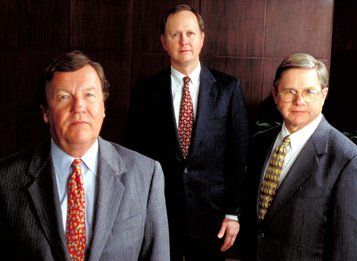 “Hiring George was one of the most important reasons Haynes and Boone became a successful law firm,” Boone said. “George has great judgment – both in the courtroom and in managing a law firm. He knows when to push an issue and when to walk away.”
Boone and others credit Bramblett with the firm’s decision to recruit, hire and promote women lawyers, including Nina Cortell, Lynne Liberato and Anne Johnson, who are widely regarded as three of the most talented appellate lawyers in Texas.
It did not take long for Bramblett and Haynes and Boone to grab the attention of companies and business leaders.
Sunshine Mining Co. hired Bramblett in 1981 to lead litigation over a national tender offer. Sunshine wanted to buy Silver Dollar Mining and two other companies. The leadership of those three companies sued Sunshine Mining to stop it from presenting the offer to Silver Dollar shareholders.
Silver Dollar hired Wall Street’s most preeminent law firm, Cravath, Swaine & Moore. Cravath made a three-pronged argument: Sunshine failed to disclose the size of the reserves of the three companies; Sunshine was actually controlled by Arabs, pointing out that Mediterranean Investors Group were significant investors; and Sunshine’s offer was essentially too low.
During a four-day bench trial in Spokane, Wash., Bramblett told U.S. District Judge Justin Quackenbush that he should only decide whether Sunshine’s “offering statement” adequately and accurately described the facts – not whether the offer should be more or less.
Bramblett also argued that Sunshine was majority-owned and operated by West Texas investors. Mediterranean was only a 22 percent investor, he said.
Then Bramblett went on the offensive. He argued that the management at the three companies, which initiated the litigation, had conflicting interests with those they supposedly represented.
“The plaintiffs have lucrative management contracts,” Bramblett told the judge, according to the Spokane Daily Chronicle. “The plaintiffs are protecting their own personal self-interests.”
Judge Quackenbush rejected all of Cravath’s arguments and handed Bramblett his first high-profile securities litigation victory.
“I’ve had the opportunity to face in court some of the best lawyers in America,” Bramblett said. “Frank Branson. Harry Reasoner. I’ve won some and lost some, but it is always exciting to be asked by clients to represent them in huge cases.”
Exxon Corp. General Counsel Charles Matthews did exactly that in 1993. He asked Bramblett to co-lead the oil giant’s lawsuit against Lloyds of London involving insurance claims resulting from the March 1989 Valdez oil spill in Alaska.
Lloyds denied coverage, claiming that the Valdez oil tanker’s crash into Bligh Reef in Prince William Sound was not an accident. Instead, the insurance conglomerate argued that Exxon was reckless because the company knew that Valdez Captain Joseph Hazelwood had a drinking problem and allowed him to pilot the ship intoxicated.
Bramblett spearheaded the motions for summary judgment, privilege disputes and the charge to the jury.
The jury, after a 10-day trial, found for Exxon and awarded $420 million.
Exxon called Bramblett again in 2004 and again Bramblett delivered. He secured a nationwide injunction prohibiting the environmental group Greenpeace from disrupting the Irving-based company’s annual shareholders meeting and business operations.
“It is always nice when a client keeps coming back to you for help and guidance,” he said.
In 1997, the Catholic Diocese of Dallas hired Bramblett after a jury found the church covered up facts that one of its priests sexually molested children. The jury awarded the children $119 million.
“The bishop wanted me to review the case for a possible appeal but also to see about settling it out of court and avoiding bankruptcy,” he said. “The case was very intense. It was very personal for everyone. The case was difficult and the issues were difficult, but that is what we are hired to do – deal with difficult issues.”
Bramblett negotiated a $24 million settlement. The deal also required the bishop to personally apologize for the abuse and recognize the pain that the victims suffered.
In 2001, a handful of wealthy public school districts in Texas hired Bramblett to sue the state, claiming that the formula used to finance public education unconstitutionally discriminated against the more affluent schools.
“So many people told us that our strategy and effort was hopeless,” he said. “There was very little sympathy for Highland Park, Plano and the richer school districts, which was an element of the case that we had to address.”
Bramblett and his team took the case to the Texas Supreme Court twice and won both times. After a six-week trial in 2004, Travis County District Judge John Dietz declared the state’s school financing formula unconstitutional – a decision upheld a year later by the Texas Supreme Court.
“The Court’s ruling means that the Legislature must build financial capacity into the school funding system so that districts can hire quality teachers and provide the type of programming that communities across our state need and expect,” Bramblett told the news media the day the decision came down. “The Court reaffirmed that the Legislature has a constitutional duty to provide an adequate level of funding for our public educational system and that this duty is enforceable in court.”
The practical effect was that the state increased its funding of public education by $2 billion.
“There’s no better feeling than when you are able to make such a significant contribution to the community,” Bramblett said.
The courtroom successes continued to pile up.
In 2011, several fans who purchased tickets for Super Bowl XLV in Irving at AT&T Stadium sued the National Football League on claims they were displaced from their promised seating or they were given seats with obstructed views. The plaintiffs sought $100 million in damages.
The NFL hired Bramblett. During the next two years, Bramblett and his colleagues at Haynes and Boone convinced the federal judge hearing the case to dismiss the claims by most of the plaintiffs. The judge also struck seven of the eight causes of action sought by the fans who remained in the lawsuit.
In 2015, a jury awarded $76,000 to the plaintiffs – not quite the $100 million they initially wanted.
In April 2016, Bramblett and lawyers from Kirkland & Ellis convinced a federal jury in Dallas to reject claims by a pharmaceutical industry whistleblower that Abbott Labs fraudulently convinced doctors and hospitals to falsely code claims to Medicare. The False Claims Act lawsuit sought hundreds of millions of dollars in damages.
The three-week trial ended with the jury rejecting all claims by the whistleblower.
Bramblett says the Abbott Labs trial may have been his last.
“I’m not sure that I’m going to try any more cases,” he said. “I’m 76 and trials are physically challenging.
“I can tell you this,” he concludes, “it has been a great run.”