

By Mark Curriden
(Aug. 21) – Phil Hardberger was only a few years out of law school when he agreed to represent Jimmy Robinson in a West Texas million-dollar medical malpractice case.
The trial was big news in San Antonio. After all, $1 million was big money in 1972.
Robinson was an addict with a lengthy list of troubles at home and with the law. He had entered a treatment program at San Antonio’s largest and most respected Catholic hospital when a guard at the medical center grabbed him by the leg and threw him to the ground. Robinson sustained a horrific head injury. He was left a paraplegic.
“The testimony during the two week trial was that it sounded like someone dropped a watermelon on the floor,” Hardberger says. “My client was no angel, but he didn’t deserve this.”
Everyone told Hardberger that he had a loser case and that he would never get any money for Robinson.
“The hospital offered us $50,000 to settle, and the judge was a Catholic who prayed at the church every morning before court,” he says. “We had a lot of obstacles to overcome.”
During deliberations, the jury sent a note to the judge asking if they were limited to the $1 million Hardberger sought in damages. The judge said no. The jury awarded Robinson $2 million.
“I quickly amended my complaint between the time the jurors asked the question and when they returned the verdict to seek more than $1 million,” Hardberger says.
Hardberger has had an extraordinary 48-year career. In fact, his commitment to public service, the legal profession and his community is nearly unparalleled. He’s been an Air Force captain, successful trial lawyer, respected and prolific appellate judge, celebrated pilot, wildly popular mayor and maritime aficionado.
At age 82, he’s not done yet.
In 2009, Hardberger joined San Antonio legal powerhouse Cox Smith as a partner in its appellate and public law sections. Last year, Cox Smith merged with Detroit-based Dykema.
Born in Morton, Texas, Hardberger worked in the cotton mills as he attended high school. After graduating from Baylor University in 1955, he joined the Air Force, where he piloted B-47 bombers. He enrolled at Columbia University in 1958, earning a master’s degree in journalism.
In 1960, he moved to Washington, D.C. to become an executive assistant to Peace Corps founder Sargent Shriver. He followed Shriver to the Office of Economic Opportunity, where he served as special assistant.
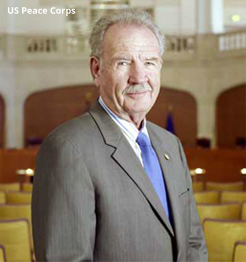 At night, Hardberger started taking classes at Georgetown University Law Center, where he received his doctor of jurisprudence.
The truth is, Hardberger could have had any job he wanted. Large corporate law firms came calling. Prosecutors and government leaders tried to lure him.
“I decided I wanted to be closer to my family and I wanted to try cases,” he says. “I asked everyone I knew who the best lawyer in West Texas was. Everyone said it was Warren Burnett. So, I moved to Odessa. It was amazing training.”
The New York Times described Burnett as a “whiskey-swigging, Shakespeare-quoting” legendary trial lawyer who won cases everyone believed impossible.
Only on the job for a few weeks, Hardberger was riding with Burnett to court when his mentor handed him a file. It was his first case as lead counsel.
“I was excited and then he said, ‘Oh, and its going to trial today,’” Hardberger says. “An hour later, I was picking a jury.”
The civil lawsuit was a worker’s compensation case. The insurance company offered $1,800. Hardberger sought $14,200, which was the most money allowed at the time in worker’s comp disputes.
“I was scared to death,” he says. “The time you wait on the jury deliberating is very stressful.”
To Hardberger’s relief, the jury returned with a compromise verdict: $8,500.
“Every Saturday, Burnett ‘invited’ all the lawyers who worked for him to the office, where he provided beer, liquor and handed out cases for the next week,” he says. “It was an invitation in name only. We all knew we better be there.”
Burnett, he says, pushed his lawyers to take cases to trial.
“I settled one case and it was the only time Warren chewed me out,” he says. “He told me that if he wanted to settle the case, he could have done it himself,” he says. “It was the only case I ever settled while working for Warren.”
Indeed, Hardberger represented clients in more than 100 jury trials during his 25 years as a private lawyer. Four times, including the Robinson case, jurors awarded his clients more money than they sought. After a couple years with Burnett, Hardberger went out on his own.
In 1973, Hardberger was having coffee with fellow West Texas attorney Frank Herrera.
“Phil was operating his law firm out of a phone booth,” Herrera says. “Phil was never known for his fashion sense. He would wear loafers and checkered sox. We were both liberal in our politics and we came from poor origins.”
The duo decided that day to create a law firm they would keep for more than a decade.
“Our office was literally a shoeshine booth,” Herrera says. “Our rent was 50-cents a square foot. We had a great view of the river and we were just across the street from the courthouse.”
Hardberger and Herrera tried their first five cases as partners together. They lost all five.
“One of the judges told us, ‘You guys are good lawyers, but you can’t do shit together,’ ” Herrera says. “You should try cases separately.”
In 1977, Hardberger took a vacation to pilot a single-engine airplane across the Atlantic Ocean. It was the 50th anniversary of the same flight taken by Charles Lindbergh. The FAA later recognized Hardberger with the “Wright Brother’s Master Pilot” award.
Hardberger’s biggest – and possibly his most important – case may have been in 1978 when he was hired by the national Sierra Club, which wanted to sue local, state and federal officials to stop the development of a huge planned community.
The development was being built directly above the main water supply for the city of San Antonio.
“During the progress of the case, lawyers for the [governmental agencies] kept making concessions and promising the developers would not do certain things or would make specific changes – all in an effort to convince the judge to rule their way,” he says.
The trial lasted three weeks. Hardberger sought injunctive relief.
“Phil was a surgeon on cross-examination,” Herrera says. “He would slice up defense witnesses, but he did it in this southern folksy manner. Juries ate it up.”
So did judges.
“At the end of the case, the trial judge ruled that the development could legally proceed, but the judge had written down every concession the defendants made,” he says. “The judge included every one of those concessions in his order, which basically made the project too expensive to proceed.”
The development was eventually abandoned and San Antonio’s water supply was not impacted.
While the Sierra Club case was being fought, Hardberger was hired by the Hispanic political organization LaRaza United to represent the former school superintendent of Crystal City.
Then-Texas Attorney General John Hill charged Angel Noe Gonzalez with eight counts of misusing state funds for political purposes. Hill, who was setting up his campaign for governor, claimed that Gonzalez used the money to compensate political friends with “no-show jobs.”
Others claimed that Hill brought the charges to destroy the LaRaza organization as a political party.
“The newspapers were very hostile toward us. The public was against us. All law enforcement, including the Texas Rangers, were against us,” Hardberger says. “The judge gave me no breaks during the case and he made it clear how he wanted the jury to rule.”
At the end of the two-week trial, Hardberger unveiled a six-foot-tall, 30-foot-long roller paper that stretched across the courtroom.
“I showed jurors every meeting, every phone call, every report submitted, every invoice signed and every activity these two workers did as part of their jobs,” he says.
The jury deliberated for the better part of a day before finding Gonzalez “not guilty” on all counts.
“I didn’t win every case, but I learned to trust the wisdom of the 12 men and women in the jury box,” he says.
In 1992, Gov. Ann Richards appointed Hardberger to the state’s Fourth Court of Appeals in San Antonio. In 1996, voters elected him to serve an additional six years as the appellate court’s chief justice.
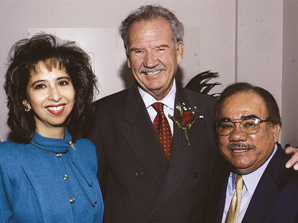 During his decade on the bench, Hardberger was a prolific writer, authoring about 350 majority opinions and more than 1,000 total opinions.
“Phil is a scholar at heart,” Herrera says. “As a judge, he believed that facts matter and that juries were as much a part of the democratic form of government as voting.”
Hardberger will forever be identified by many in the Texas legal profession as the author of a 1998 St. Mary’s Law Journal article titled “Juries Under Siege.” The lengthy exposé chronicled efforts by elected officials to undermine the role and power of juries in civil disputes.
In 2003, Hardberger called it quits. He decided to step away from public life and the law.
“I bought a boat and I planned to sail off into retirement,” he says.
Then, Hardberger’s phone rang again. The San Antonio City Council members had been convicted for bribery. People wanted him to run for mayor. At first, he declined.
No individual had ever been elected mayor of San Antonio without first serving on the city’s governing council. Hardberger had never even been to a city council meeting. But the calls continued and finally he agreed.
“Opponents said I didn’t know where the bathroom was at city hall,” he says. “I admitted that was true but that I would find out where it was pretty quickly.”
Hardberger was 68. His main opponent was Julián Castro, who was 30.
The election was close. Hardberger won 51 percent to 49 percent. During his four years as mayor, he engineered the extension of the River Walk beyond downtown, expanded Main Plaza and helped build the Tobin Center for the Performing Arts.
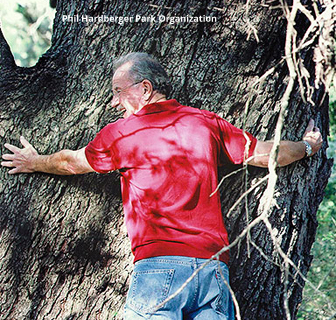 Just weeks after taking office, Hurricane Katrina hit New Orleans. While many other mayors declined to openly invite refugees from the flooding, Hardberger welcomed more than 35,000.
The New Orleans Saints cited Hardberger’s generous assistance to the people of southern Louisiana when it announced it would play half of its NFL games in San Antonio’s Alamodome.
Hardberger received 77 percent of the vote when he was re-elected to a second two-year term in 2007. When he left office in 2009, his approval rating stood at 80 percent.
Once again, Hardberger retired. Once again, it was short-lived. Ten months into his new life on his boat, lawyers at Cox Smith – San Antonio’s largest law firm – called, offering him a job.
“The firm made me a very attractive offer,” he says. “I get to work with younger lawyers and be involved in some of the more interesting appellate cases.
“Most importantly, I get three months of vacation every summer,” Hardberger says.