[fusion_builder_container hundred_percent=”yes” overflow=”visible”][fusion_builder_row][fusion_builder_column type=”1_4″ last=”no” spacing=”yes” center_content=”no” hide_on_mobile=”no” background_color=”” background_image=”” background_repeat=”no-repeat” background_position=”left top” hover_type=”none” link=”” border_position=”all” border_size=”0px” border_color=”” border_style=”” padding=”” margin_top=”” margin_bottom=”” animation_type=”” animation_direction=”” animation_speed=”0.1″ animation_offset=”” class=”” id=””][fusion_imageframe lightbox=”no” lightbox_image=”” style_type=”none” hover_type=”none” bordercolor=”” bordersize=”0px” borderradius=”0″ stylecolor=”” align=”none” link=”” linktarget=”_self” animation_type=”0″ animation_direction=”down” animation_speed=”0.1″ animation_offset=”” hide_on_mobile=”no” class=”” id=””] 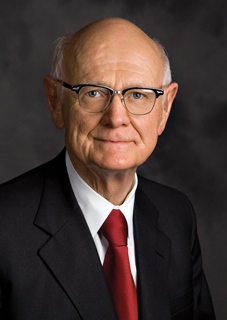 [/fusion_imageframe][/fusion_builder_column][fusion_builder_column type=”3_4″ last=”yes” spacing=”yes” center_content=”no” hide_on_mobile=”no” background_color=”” background_image=”” background_repeat=”no-repeat” background_position=”left top” hover_type=”none” link=”” border_position=”all” border_size=”0px” border_color=”” border_style=”” padding=”” margin_top=”” margin_bottom=”” animation_type=”” animation_direction=”” animation_speed=”0.1″ animation_offset=”” class=”” id=””][fusion_text]By Natalie Posgate
(Jan. 31) – Legendary tax lawyer and Hughes & Luce co-founder Vester T. Hughes, Jr. passed away in late January. He was 88 years old.
A Lion of the Texas Bar, Hughes was known for a multitude of achievements, including his work on re-writing the tax code for federal estate and gift tax law, arguing important cases before the U.S. Supreme Court and appellate courts and advising some of Dallas’ most prominent leaders on their estates. He was also known as a trusted source to top senators and congressmen as they formed their views on tax policy.
Hughes helped rewrite the tax code for federal estate and gift tax law. He was a founder of Hughes & Luce, one of the most prominent law firms in Texas history. At one time, he reportedly handled estate planning for a few of the five wealthiest Americans.
“He was a legend at our firm and the entire legal community, not just Dallas but nationally,” said John Garda, the administrative partner of K&L Gates’ Dallas office. “What he provided more than anything else was a spirit of good will throughout our firm, and he had an incredible impact on the lives of all of us.
“He will obviously be sorely missed, but we will be celebrating his life for generations to come.”
Craig Budner, a partner in K&L Gates’ Dallas office and the firm’s Global Integration and Strategic Growth Partner, said Hughes made an impact on others beyond the legal circle.
“He was a person of incredible grace and wisdom,” Budner said. “He had a kindness about him that allowed him to be an incredible counselor to all sorts of people – clients, friends, partners and family members.
“He never had children of his own, but he had an amazing impact on children and had an incredible connection with them; my kids were just as shaken by the news as I was,” said Budner, who told The Texas Lawbook that he received a text message from his son yesterday afternoon breaking the news of Hughes’ passing.
He clerked for the U.S. Supreme Court and served as a Judge Advocate General for the U.S. Army during the Korean War. He argued two cases before the Supreme Court. He has, of course, been active in a number of charities.
“Never lived a finer man or lawyer than Vester Hughes,” said fellow Lion Darrell Jordan, a former Hughes & Luce colleague. “He was the best example of professionalism I ever saw. He was gracious to people, he was totally dedicated to his clients and he was a great mentor to many young lawyers wanting to be tax practitioners.”
For someone who has represented some incredibly affluent people, including Ross Perot, Jr. and Marshall Sammons, Hughes sure saw some not so prosperous times.
Born in 1928 in San Angelo, Hughes was brought into the world at the onset of the Great Depression. He grew up in the West Texas town of Mertzon, which has a population of 781.
One of Hughes’ earliest memories was President Franklin Roosevelt’s March 3, 1933 inauguration because the government closed the bank that day. Hughes was not yet five years old.
Hughes’ father ran the bank in Mertzon, but also had a ranch. Hughes remembers going to the ranch that day with his father, which he remembers as out of the ordinary because it was a weekday. His father was usually at the bank during the week.
“It was a time of difficulty for many people,” Hughes said during a 2003 interview with the Texas Bar Foundation when he received the Outstanding Fifty Year Lawyers Reward. “No one was in very good shape, but everyone was working to try to survive and a great deal of effort was given to help other people.”
Hughes’ father’s bank fortunately never closed for lacking funds. A bigger concern was the possibility of Hughes’ kidnapping since the Bonnie and Clyde era was occurring and his father was associated with the bank.
“It didn’t take very much money… for the criminal element to be interested in what they could jar loose from a financial institution,” Hughes said.
Hughes went on to receive degrees in math and physics from Rice University in 1949. In 1952, he graduated cum laude from Harvard Law School. Hughes missed the World War II draft since he graduated high school the year the war ended.
But he was old enough when the Korean War came along.
Hughes, not yet admitted to the bar, was clerking for U.S. Supreme Court Justice Tom C. Clark, when the local draft board in San Angelo contacted him. The board said it would defer his deployment if he returned to his family’s ranch, but it would not defer for his clerkship at the Supreme Court.
“Unlike the way people thought about Vietnam and other [situations], I didn’t think it was honest to go back to the ranch if I didn’t intend to be a rancher,” Hughes said in the 2003 interview.
Until very recently, Hughes still came into his 28th floor office at K&L Gates. Leaders at the firm said he will be greatly missed.
Hughes went from the Supreme Court to the Pentagon to see if any lawyers were needed. He got a commission in the Judge Advocate General’s Corps for the U.S. Army, thus was admitted to the bar on a motion. A rule at the time allowed law graduates to be admitted on motion before the second bar exam if they were members of the Armed Forces.
“Instead of going down Massachusetts Avenue from where I lived in Washington to go to the Supreme Court, I started going down Rock Creek Parkway to the Pentagon, where the Judge Advocate General’s Office was,” Hughes said.
During his service, Hughes spent time in Europe to work on Marshall Plan-related military aid and economic aid contracts with the United Kingdom, France, Italy, Denmark and the Netherlands.
Hughes returned to Texas after the war to look for a job. He had offers from Baker Botts, Vinson & Elkins and Fulbright & Jaworski.
But Hughes wanted the chance to work with Paul Jackson, a tax lawyer in Dallas who had great respect on the East Coast – especially in Washington, D.C., where the government knew him from cases he had argued in the Supreme Court
Thus, Hughes joined the firm that became Jackson Walker. He worked closely with Jackson for five years, until he passed away after being terminally ill from cancer.
Hughes greatly credits his career’s success to Jackson.
“He was a person who had a penetrating [insight] into the whole business and what it means, what you do and how you do it,” Hughes said in a 2015 interview with The Texas Lawbook. “He taught me [everything] in the years he was alive. He was a remarkable human.”
Hughes stayed at Jackson Walker until 1976, after a year-long courtship with Tom Luce and other younger attorneys he had assembled to start a new firm. The group was having trouble getting a tax lawyer on board.
They told Hughes every tax lawyer they talked to told them, “You work hard, you do a good job and maybe in five or 10 years you can be another Vester Hughes.”
Hughes, nevertheless, was flattered. He decided to take the plunge, and joined what became Hughes & Luce. The firm thrived until 2007, when it merged with the international law firm K&L Gates.
“I was perfectly happy at Jackson Walker, but the Dallas firms had been run in an old-fashioned way. They would get things to clients when it was convenient,” Hughes said in the 2003 interview. “In New York, Houston and other places, often the law firms had learned that the client really was the person who called the shots. So I decided that it would be interesting to try to build a practice in the new way, but to maintain the old values of law practice.”[/fusion_text][/fusion_builder_column][/fusion_builder_row][/fusion_builder_container]
 [/fusion_imageframe][/fusion_builder_column][fusion_builder_column type=”3_4″ last=”yes” spacing=”yes” center_content=”no” hide_on_mobile=”no” background_color=”” background_image=”” background_repeat=”no-repeat” background_position=”left top” border_position=”all” border_size=”0px” border_color=”” border_style=”” padding=”” margin_top=”” margin_bottom=”” animation_type=”” animation_direction=”” animation_speed=”0.1″ class=”” id=””][fusion_text]By Mark Curriden
 The witness broke down into tears and turned to the talk show host.
 [/fusion_imageframe][/fusion_builder_column][fusion_builder_column type=”3_4″ last=”yes” spacing=”yes” center_content=”no” hide_on_mobile=”no” background_color=”” background_image=”” background_repeat=”no-repeat” background_position=”left top” border_position=”all” border_size=”0px” border_color=”” border_style=”” padding=”” margin_top=”” margin_bottom=”” animation_type=”” animation_direction=”” animation_speed=”0.1″ class=”” id=””][fusion_text]By Janet Elliott