Harold Kleinman – A Pioneer of M&A in Texas – Updated

[fusion_builder_container hundred_percent=”yes” overflow=”visible”][fusion_builder_row][fusion_builder_column type=”1_4″ last=”no” spacing=”yes” center_content=”no” hide_on_mobile=”no” background_color=”” background_image=”” background_repeat=”no-repeat” background_position=”left top” hover_type=”none” link=”” border_position=”all” border_size=”0px” border_color=”” border_style=”” padding=”” margin_top=”” margin_bottom=”” animation_type=”” animation_direction=”” animation_speed=”0.1″ animation_offset=”” class=”” id=””][fusion_imageframe lightbox=”no” lightbox_image=”” style_type=”none” hover_type=”none” bordercolor=”” bordersize=”0px” borderradius=”0″ stylecolor=”” align=”none” link=”” linktarget=”_self” animation_type=”0″ animation_direction=”down” animation_speed=”0.1″ animation_offset=”” hide_on_mobile=”no” class=”” id=””] [/fusion_imageframe][/fusion_builder_column][fusion_builder_column type=”3_4″ last=”yes” spacing=”yes” center_content=”no” hide_on_mobile=”no” background_color=”” background_image=”” background_repeat=”no-repeat” background_position=”left top” hover_type=”none” link=”” border_position=”all” border_size=”0px” border_color=”” border_style=”” padding=”” margin_top=”” margin_bottom=”” animation_type=”” animation_direction=”” animation_speed=”0.1″ animation_offset=”” class=”” id=””][fusion_text]By Mark Curriden
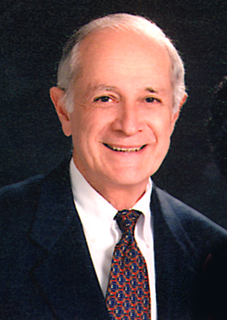
(Feb. 13) – Harold Kleinman was on the job at Thompson & Knight only a couple weeks when he was assigned a case involving a corporate officer of a firm client who had invested in a project that claimed to produce sows with extra ribs.

The dispute was whether a sow was pregnant or not. Only a few hundred dollars were at stake. Kleinman says the evidence was clear.

“The sow was not pregnant, and there were no extra ribs,” Kleinman says. The case settled before trial with the client getting his money back.

Kleinman’s time in litigation was short-lived. He spent two years in the law firm’s tax department before being transferred to mergers and acquisitions.

Six decades later, Kleinman is considered a pioneer of the modern-day corporate M&A law practice in Texas. He has represented Neiman Marcus, Centex, Lone Star Steel, Noble Energy and Lennox International in landmark mergers and acquisitions.

He led Thompson & Knight for decades, making the firm a powerhouse in the energy sector. And he was a founding father of Texas Access to Justice, which provides funding for poor people to have a lawyer.

Kleinman, now 86, sees himself in a much simpler light.

“I was just a lawyer who represented clients and believed everyone deserved a fair shake under the law,” he says.

One of the most prestigious awards honoring lawyers and judges in Texas for their commitment to the legal profession and public service is called the Harold F. Kleinman Award. Former Texas Supreme Court justices Deborah Hankinson, Tom Phillips and Craig Enoch are past recipients of the Kleinman Award.

“It is very nice having that award named after me – an extraordinary honor,” he says.

“Anything worthwhile that I may have accomplished is directly attributable to the culture and talent of the firm I was fortunate enough to join.”

He also readily admits that he wouldn’t have experienced any professional achievements without the support of his wife, Ruth, who he met in college more than six decades ago.

Kleinman was born in Dallas in 1930. His parents, who were immigrants from Eastern Europe, owned and operated a clothing store on Elm Street in Deep Ellum, but moved to West Texas when Kleinman was still a boy. They lived in McCamey, an oil boomtown during the 1930s when Humble Oil operated a refinery there.

He went to college and law school at the University of Texas in Austin, where he received his law degree in 1954. He says it wasn’t difficult getting into law school back then because “all you had to do was show up.”

“Having experienced Austin, I really didn’t want to go back to the small town,” he says.

Kleinman was drafted as the Korean War was winding down. The U.S. Army originally signed him to work with a dental team.

“The dentist found out I was a lawyer and he was furious,” he says. “He walked me over to the Judge Advocate General’s office and told me he was leaving me there.”

hkleinman1He served two years as a Private First Class, spending most of his time at Fort Lee in Virginia.

“I handled all sorts of military matters and business issues involving huge contracts, including some over-billing by contractors,” he says.

In 1956, Kleinman went searching for a job. He was the first lawyer on either side of his family. He wanted to move to Houston, but most of the corporate firms there still didn’t hire many Jews.

The Dallas firm Thompson, Knight, Wright & Simmons – later renamed Thompson & Knight – offered him a lawyer position for $300 a month.

“There was no such thing as billable hours back then,” he says. “We just sent the client a bill that we thought was fair.”

Partners initially assigned Kleinman to work in the firm’s litigation section.

“The idea was that you first had to learn to be a general lawyer and then you could be a specialized lawyer,” he says. “Looking back, it was an excellent idea. Being in litigation taught me what can go wrong if a contract is flawed. I still think law firms should consider doing that.”

The young associate spent two years at the firm in litigation and two years in the tax law department before being assigned permanently to the corporate M&A section.

Kleinman says the corporate law practice blossomed in the 1960s and 1970s as more companies went public.

In 1968, Kleinman helped long-time Thompson & Knight client Neiman Marcus merge with California-based Broadway-Hale Stores. He then advised the combined company when it went public a couple years later.

General Portland, then the second largest cement producer in the U.S., hired Kleinman in 1980 to represent the company against a hostile takeover effort by French cement giant Lafarge Corp. The dispute sparked litigation, but Kleinman eventually helped engineer a settlement between the two corporations.

“We did such a vigorous job representing General Portland that Lafarge hired us to handle its legal matters in the U.S.,” he says. “That is always a nice way to gain a client, when they have learned to respect you as a lawyer against them.”

Kleinman also represented homebuilder Centex and air conditioning and heating giant Lennox International in several M&A and corporate transactions. Accounting firm Arthur Anderson hired him to advise it on a myriad of legal issues.

“Harold was the go-to lawyer for Noble Energy for many years,” says Jeff Zlotky, a former partner at Thompson & Knight who is now general counsel at Dallas-based Natural Gas Partners. “The most iconic company in Texas – Lone Star Steel – viewed Harold Kleinman as their guy, their lawyer. He was a critical adviser to George W. Bush and the Texas Rangers when the team was sold to Tom Hicks [in 1998].

“Harold was the busiest lawyer in Dallas, but he always returned the calls of young lawyers,” Zlotky says.

In 1977, Thompson & Knight partners named Kleinman the firm’s managing partner – a position he held for a dozen years.

“He led the firm during its greatest growth,” Zlotky says.

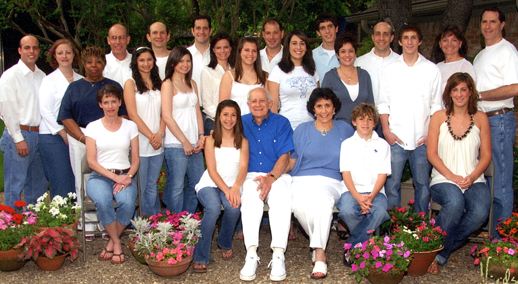
Two of Kleinman’s lasting legacies are his role in the creation of Texas Access to Justice and his five children.
hkleinman2

Two of his sons are lawyers – Pioneer Natural Resources General Counsel Mark Kleinman and Bill Kleinman, who is a corporate law partner at Haynes and Boone. He has three non-lawyer children – Lee is a member of the Dallas City Council, Jay is an executive in the healthcare industry, and Max was a partner at a prominent global consulting firm.

[/fusion_text][/fusion_builder_column][/fusion_builder_row][/fusion_builder_container]
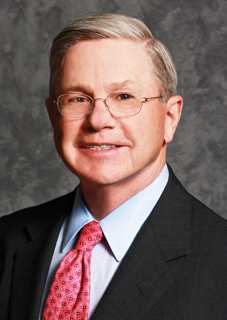
Mike Boone is a ‘Counselor in the True Sense’ – Updated

[fusion_builder_container hundred_percent=”yes” overflow=”visible”][fusion_builder_row][fusion_builder_column type=”1_4″ last=”no” spacing=”yes” center_content=”no” hide_on_mobile=”no” background_color=”” background_image=”” background_repeat=”no-repeat” background_position=”left top” hover_type=”none” link=”” border_position=”all” border_size=”0px” border_color=”” border_style=”” padding=”” margin_top=”” margin_bottom=”” animation_type=”” animation_direction=”” animation_speed=”0.1″ animation_offset=”” class=”” id=””][fusion_imageframe lightbox=”no” lightbox_image=”” style_type=”none” hover_type=”none” bordercolor=”” bordersize=”0px” borderradius=”0″ stylecolor=”” align=”none” link=”” linktarget=”_self” animation_type=”0″ animation_direction=”down” animation_speed=”0.1″ animation_offset=”” hide_on_mobile=”no” class=”” id=””] [/fusion_imageframe][/fusion_builder_column][fusion_builder_column type=”3_4″ last=”yes” spacing=”yes” center_content=”no” hide_on_mobile=”no” background_color=”” background_image=”” background_repeat=”no-repeat” background_position=”left top” hover_type=”none” link=”” border_position=”all” border_size=”0px” border_color=”” border_style=”” padding=”” margin_top=”” margin_bottom=”” animation_type=”” animation_direction=”” animation_speed=”0.1″ animation_offset=”” class=”” id=””][fusion_text]By Mark Curriden
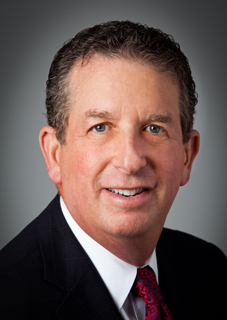
(April 26) – Michael Boone was 24 years old and sitting through a corporate securities class at SMU Dedman School of Law when the professor asked him to stay after class.

“I thought I was in trouble,” Boone says. “I had no idea what he wanted, but he completely shocked me.”

Professor Richard Haynes, who was 35, said he wanted Boone to join him in starting a law firm.

Boone graduated that fall of 1967 and joined Haynes in a two-person firm. They focused on helping businesses raise money through initial public offerings.

In early 1968, Boone and Haynes represented Oklahoma-based Comptran Corp., an information technology firm that handled billing and receivables for business clients. Weeks later, a Garland-based parts supplier for microchips turned to the duo to handle its IPO.

“Companies would go public at $5 per share and quickly shot to $20,” says Boone. “During the first two years, we did between 15 and 18 IPOs. We worked 24/7 – hundreds of hours a month. It was very exciting.

“My hourly rate was $25 an hour,” he says. “Our total revenues were not quite $200,000. Rent was cheap and we didn’t need a lot of space.”

Five decades later, Boone charges $995 an hour. The firm now has 530 lawyers, $375 million in annual revenues, 12 offices in the U.S. and outposts in Mexico City and Shanghai. And the firm occupies six floors at One Victory Park near the American Airlines Center in downtown Dallas.

“A great deal has changed about being a lawyer during the past five decades,” Boone told a CLE program at the SMU Dedman School of Law in 2016 hosted by The Texas Lawbook. “Lawyers today approach the law totally different. We never see the lawyers on the other side of a deal.”

Haynes passed away in 2006 and Boone, who is 75, stepped away from firm management a few years ago There is little doubt, however, that he is still recognized as one of the go-to lawyers for corporate deal-making in North Texas.

“Mike is a lawyer-counselor in the true sense,” says AT&T General Counsel David McAtee. “He is trusted by everyone. His character as a person and a lawyer is above reproach. CEOs and general counsel call Mike for advice on much more than just legal issues.”

Boone helped negotiate the location of the Ray Nasher museum in the Dallas Arts District. He represented the Dallas Mavericks and Stars in their contract talks with the American Airlines Center. He was part of the legal negotiations that brought thoroughbred horse racing to Grand Prairie.

And he was Southern Methodist University’s point man in convincing the Bush Foundation to locate the George W. Bush Presidential Library at the school.

Despite practicing law for 50 years, Boone has no immediate plans to retire.

“I’m going to keep going until my brain stops working,” he says. “I’m involved in a multibillion-dollar transaction for a client right now. I love being a lawyer. I love being able to help people and companies solve their problems.

“The greatest high is when someone says that you help save his or her company,” he says.

Boone worries about the future of the legal profession.

“We do not have a good reputation as lawyers,” he says. “We are seen as takers – not as givers. Since 2000, productivity has gone down. We are working less hours, but we are making it up by raising rates at an incredible rate.

“If you are a good lawyer, the money will take care of itself,” he says.

Born in a farmhouse, Boone’s family moved to Dallas when he was five. He attended Highland Park High School and SMU for college (graduating with an accounting degree) and law school.

Boone worked so hard and was so quickly successful that Haynes made him a partner in 1970 after only two-and-a-half years on the job.

“Dick initially paid me $450 a month and an extra $50 to teach his daughters to swim,” he says. “Most law firms had three to six names in their title, but Dick wanted only two names on the door, as they did it in London.”

Seven of the companies that went public during those first two years remained firm clients for many years, including Triton Oil & Gas Corp, which later became Hess Corp.

In 1972, Boone landed First National Bank of Dallas as a client. Forty-four years later, it is “still a huge client,” he says, but it goes by the name Bank of America.

‘Visionary’ Leader

Boone says the firm made several critical decisions that proved to be hugely successful, and a few choices that didn’t turn out so well, too. He regrets not opening a New York office long before 2004. By contrast, he thinks the firm was right to implement a “no jerk policy” when hiring lateral lawyers.

“Getting George Bramblett to join us in 1974 was huge – a game changer for us,” he says.

Bramblett, another Lion of the Texas Bar who died in 2016, graduated from SMU Law School a year before Boone and tried about 45 trials during the seven-plus years he was a lawyer at Vial Hamilton.

Boone, Bramblett and Robert Wilson, a corporate transactional lawyer who joined the firm after graduating from SMU Law in 1969, created a trifecta that drove the firm to grow.

“The three were fraternity brothers who truly complemented each other,” says Tim Powers, the firm’s current managing partner. “Mike was the visionary. He saw the direction the legal profession was going back in the 1970s and 1980s and understood what law firms needed to do to prepare.”

The second critical decision the firm made, according to Boone, was recruiting women at the University of Texas School of Law in the mid-1970s.

“We couldn’t compete with the big law firms at UT for the top men, but those firms were not hiring the top women lawyers,” he says. “We noticed this and we decided we could take advantage of this. We went after Nina first. Nina was obviously brilliant. She was on law review. We were so lucky to be able to get Nina.”

“Nina” is Nina Cortell, a 1976 graduate of UT law. She was the first woman lawyer hired at Haynes and Boone.

The decision to hire Cortell proved enlightened. She immediately became a rock star in the litigation community and the firm promoted her to partner in 1982. Today, she is widely viewed as one of the best appellate lawyers in Texas.

Boone and the firm didn’t stop with Cortell. During the few years that followed, Haynes and Boone hired Janice Sharry, Lynn Liberato, Anne Johnson and Kit Addleman, to name a few of the women who have experienced significant success and taken leadership roles at the firm.

In the early 1980s, Haynes relinquished management to Boone, Bramblett and Wilson.

“By 1985, we determined that North Texas was going to be a magnet for U.S. companies and that many corporate headquarters would relocate here,” Boone says. “Based on that, we developed a firm strategic plan to guide us for the next two decades.”

Meanwhile, clients kept turning to Boone for assistance in billion-dollar transactions. He represented the Perot family in its acquisition of Dell Inc., and he advised ClubCorp when it purchased KSL Partners.

As the firm was growing, Boone became more and more involved in community efforts. He served on the boards of the Dallas Citizens Council, the Salvation Army and the Boys Club of Dallas.

Advocate for Education

Those efforts, however, were secondary to his commitment to education. For seven years, he sat on the Highland Park School Board and he served for two years on the Texas Association of School Boards’s special committee on public funding.

In 2000, he took on a pro bono project that would occupy his time for half a decade. He agreed to represent Highland Park schools challenging the state’s financing formulas and advocating for equality.

“Public education is one of the key reasons why I have been successful,” he says. “There’s nothing more important for us to invest in than children. We should never turn our backs on public schools.”

Lawyers at Haynes and Boone say Boone devoted thousands of hours for free on the school finance litigation.

“No one in Texas understands public school finance better than Mike,” Bramblett said in an interview with The Texas Lawbook in 2016. “He’s truly passionate about the subject.

Boone’s commitment to education extends to his alma mater. He currently serves as chair of the SMU Board of Trustees and previously served on the SMU Dedman Law School’s executive committee.

As the administration of President George W. Bush winded down, SMU President Gerald Turner approached Boone to lead the university’s efforts to land the Bush Presidential Library.

“It was the longest and one of the most complicated deals I have ever handled,” he says. “There were extremely complex tax and property law issues involved.

“I told Turner that we know the Bushes and they know us, but this must be an arm’s length deal,” says Boone, who was the effort’s chief negotiator but not its official legal counsel. “I told Turner I would fight for everything SMU needs and deserves in the deal, but that I would not be paid for my work and that [SMU] would need to hire independent outside counsel.”

Boone hired the Winstead law firm for the legal work. He dedicated thousands of hours to the project, but never received a penny for his efforts.

Boone says he’s been blessed throughout his career.

“I was at the right place at the right time,” he says.

Corporate leaders say Boone is so successful because money is never his driving force.

“Mike is a great lawyer and friend to so many business, political and educational leaders,” says former American Airlines General Counsel Gary Kennedy, who currently is on the board of directors at investment firm PIMCO. “Mike is a true counselor. Maybe one of the last great counselors still practicing law.”[/fusion_text][/fusion_builder_column][/fusion_builder_row][/fusion_builder_container]

The More Complex the Deal, the More Fun for Gil Friedlander

[fusion_builder_container hundred_percent=”yes” overflow=”visible”][fusion_builder_row][fusion_builder_column type=”1_4″ last=”no” spacing=”yes” center_content=”no” hide_on_mobile=”no” background_color=”” background_image=”” background_repeat=”no-repeat” background_position=”left top” hover_type=”none” link=”” border_position=”all” border_size=”0px” border_color=”” border_style=”” padding=”” margin_top=”” margin_bottom=”” animation_type=”” animation_direction=”” animation_speed=”0.1″ animation_offset=”” class=”” id=””][fusion_imageframe lightbox=”no” lightbox_image=”” style_type=”none” hover_type=”none” bordercolor=”” bordersize=”0px” borderradius=”0″ stylecolor=”” align=”none” link=”” linktarget=”_self” animation_type=”0″ animation_direction=”down” animation_speed=”0.1″ animation_offset=”” hide_on_mobile=”no” class=”” id=””] [/fusion_imageframe][/fusion_builder_column][fusion_builder_column type=”3_4″ last=”yes” spacing=”yes” center_content=”no” hide_on_mobile=”no” background_color=”” background_image=”” background_repeat=”no-repeat” background_position=”left top” hover_type=”none” link=”” border_position=”all” border_size=”0px” border_color=”” border_style=”” padding=”” margin_top=”” margin_bottom=”” animation_type=”” animation_direction=”” animation_speed=”0.1″ animation_offset=”” class=”” id=””][fusion_text]By Mark Curriden
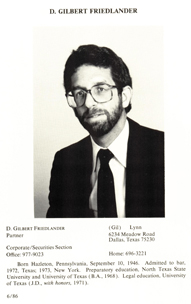
(June 14) – In the world of business transactional law, Gil Friedlander has done it all. He’s represented high-profile corporate clients in some of the largest and most complex transactions ever.

He handled the $4.9 billion leveraged buyout of 7-Eleven during a stock market crash and the $1.3 billion sale of Chuck E. Cheese. He negotiated an unprecedented $3.2 billion IT contract with Xerox and led the $500 million acquisition of A.T. Kearney, the world’s fourth largest management consulting firm.

And then there was the mother of all complex corporate transactions – the “split-off” of Plano-based Electronic Data Systems from General Motors in a transaction valued at $25 billion.

As the general counsel of EDS, he also got to fire two of his own CEO bosses – a task that Friedlander says it is not as much fun as it sounds.

“I would love to tell you that I enjoyed every minute of it, but I can honestly say I’ve enjoyed most of it,” he says. “There have been some extraordinary times and successes, but the practice of law naturally brings disappointments and failures and frustrations – and even some scary times.”

Friedlander was born in Hazelton, PA. His father was a traveling salesman of various goods, including shoes and aluminum roofs. While in college at the University of Texas, he thought about becoming a dentist, but concluded that he hated using tools and chose law school instead.

“Law school was eye-opening for me when it came to competition,” he says. “Most importantly, law school taught me critical thinking.”

After getting his law degree from the UT in 1971, Friedlander went to work at Dewey Ballantine, a white-shoe corporate law firm based in New York.

gfriedlander1“I think I was only the second southerner to ever work at Dewey,” he says.
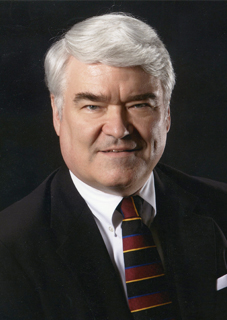
In 1974, Friedlander moved to Dallas and joined Hewlett, Johnson & Swanson as the firm’s 18th lawyer. He was assigned to its corporate section, where he was made partner in only five years.

“The firm grew quickly and truly became a transformative model for other corporate law firms in Texas,” he says. “We were the first law firm to approach the law practice as a business.”

The firm represented First National Bank, the Hunt family businesses and SBIC Funds, a financial firm where leveraged buyout businessman Tom Hicks got his start.

Friedlander and his group represented issuers and underwriters in securities offerings.

In 1987, JT Acquisition, a private equity firm owned and operated by Southland Corp. Chairman John Thompson and the Thompson family, hired Friedlander to lead an effort to take Southland private. The Thompson family, through the private equity firm, possessed the controlling interest in Southland, which included 7-Eleven Stores as a subsidiary.

“It was a completely leveraged buyout – no real equity involved,” he says. “The family believed there would be more longer-term growth opportunities if the company was private.”

In July 1987, the parties reached a deal. JT Acquisition proposed to pay $77 a share for Southland for a total of $4.2 billion. The Thompson family planned to finance the transaction with a $2.73 billion bank loan, the proposed sale of $1.5 billion in junk bonds and a $600 million bridge loan from Goldman Sachs and Salomon Brothers.

Many Wall Street analysts viewed the proposed transaction as high-risk and over-leveraged – and that was before Oct. 19 occurred.

Black Monday.

The stock market crashed. The Dow Jones lost nearly 23 percent of its value in a matter of hours. Southland’s stock price and value plunged with it.

“It was a very scary time for everyone, including the banks and investment banks involved in this deal,” Friedlander admits.

The market crash added severe pressure on the transaction. JT was unable to raise the $1.5 billion through the sale of junk bonds because they could find no buyers even with an 18 percent coupon.

The deal team, however, developed a variety of financing features and asset sales that allowed the transaction to close in mid-December, although the price tag increased to $4.9 billion due to the expensive nature of the financing.

“The more complex the transaction, the more fun it is,” Friedlander says.

The Southland deal, according to Friedlander, “was the beginning of the end for investment banks to issue ‘highly confident letters’ to companies” – letters that give assurance to a corporate board of the ability to finance a transaction.

About 18 months later, Friedlander was part of the Johnson & Swanson team that represented the Thompson family when JT Acquisitions filed for protection under Chapter 11 of the U.S. Bankruptcy Code.

In 1991, Friedlander met with EDS officials at the Crescent Club, where he was offered the job of general counsel – a position he could not refuse.

“EDS was growing and it was a great opportunity to jump in-house,” he says.

Friedlander’s first five years on the job at EDS were crazy busy. He negotiated an unprecedented $3.2 billion IT contract with Xerox, purchased New Zealand’s Databank Systems for $100 million and guided the $500 million acquisition of A.T. Kearney, the world’s fourth largest management consulting firm.

“Being the GC of a large corporation is a 24-hour-a-day, seven-day-a-week job,” he says. “There were always huge legal and business decisions that needed to be made.”

General Motors bought Ross Perot’s EDS in 1984 for $2.5 billion. As a subsidiary of GM, EDS revenues exploded over the next 10 years. The company’s value skyrocketed to $21 billion by 1994.

“The management and cultural styles at EDS, an IT services company, and GM, a Rustbelt manufacturer, often clashed,” Friedlander says. “The two companies had different growth trajectories and different compensation systems. Executives at EDS wanted to separate or exit from GM to accelerate its growth and GM executives were unhappy with EDS’ leadership.”

Friedlander says bad feelings lingered after the clashes between GM CEO Roger Smith and Perot, who served on GM’s board.

A perfect example, according to Friedlander, was EDS’ efforts in 1994 to negotiate multibillion-dollar mergers with Sprint Corporation and British Telecomm, which did not get finalized in significant part due to GM.

While EDS was a fully owned subsidiary of GM, auto manufacturer issued a public “tracking stock” known as GME when it acquired EDS. The use of GME stock, the value of which rose and fell on the results of EDS’ performance and not that of GM, created tension for GM’s board’s in fulfilling its fiduciary duties to its own stockholders and those who owned GME.

In addition, EDS had its own board of directors.

There were also other complications, including the fact that GM accounted for nearly one-third of EDS’ business. This relationship prevented EDS from seeking business contracts with GM’s competitors.

In the summer of 1995, the GM board officially gave its approval for representatives of the two companies to begin negotiations to severe ties with EDS. Meanwhile, the world’s largest automaker faced its own emerging issue – a huge unfunded pension liability for its union workers.

Friedlander turned to Baker Botts to advise on the transaction. The deal team worked nearly non-stop for six months to develop the terms. ERISA lawyers at Baker Botts came up with a proposal that gave about 40 percent of the new shares of EDS stock to the GM pension fund. EDS also agreed to make a one-time $500 million “dividend” payment to GM.

The deal hinged on obtaining an IRS ruling about whether these kind of “split-offs” – not to be confused with a “spin-off,” which is what happens when companies distribute shares to stockholders instead of exchanging them for new shares in the company – was tax-free for GM.

In early 1996, the IRS gave the thumbs up and the transaction closed in April of that year. The GM board, in conjunction with the “split-off,” also awarded EDS a 10-year, multibillion-dollar information technology services contract.

“It was a pretty extraordinary transaction that unlocked a lot of value for EDS,” Friedlander says.

The lawyers involved in the deal are amazed to this day that Friedlander was able to make it work.

“The EDS-GM deal was clearly one of the most difficult and most complex deals I have ever been involved in,” says Andy Baker, who is now managing partner at Baker Botts. “Gil faced a hire-wire act. He had to take into account the interests of many different stakeholders. He demonstrated extraordinary emotional intelligence. He understood what people needed and he maintained credibility with all of them.”

In the months that followed, Friedlander oversaw numerous billion-dollar contract agreements, including one with the U.S. Navy, which wanted EDS to revamp its entire IT system.

There were some not-so-pleasant times at EDS, too.

In August 1998, EDS Board Chairman James Baker, now a lawyer at Baker Botts, approached Friedlander with news that they were about to fire CEO Les Aberthal, who had nearly quadrupled revenues at EDS during his 12-year tenure. Aberthal was well-liked, but EDS stock had underperformed.

“The general counsel reports to the CEO and to the board and GCs have to know how to balance those duties,” Friedlander says. “It was tricky waters. My job was to negotiate their exit packages.”

Five years later, in 2003, EDS pushed out its second CEO, Dick Brown, and the company’s board again turned to Friedlander to handle the details.

“Helping get rid of your boss is not nearly as enjoyable as most people might think,” he says.

Friedlander retired from EDS in 2004 and joined Weil, Gotshal & Manges as a partner, where he was involved in several major mergers, including representing Chuck E. Cheese in its $1.3 billion sale to Apollo Management in January 2014.

In Oct. 2014, Friedlander joined Sidley Austin’s office in Dallas. His practice focuses primarily on internal investigations regarding corporate governance matters.

“The practice of law has changed greatly,” he says. “The billable hour provides perverse incentives for lawyers. The practice of law is depersonalized. It’s horrible for clients. The relationship between clients and lawyers is suffering. Many times, you never meet opposing counsel and sometimes you don’t even meet your own client.

“The law as a profession is not dead yet, but it is in critical condition,” Friedlander concludes.[/fusion_text][/fusion_builder_column][/fusion_builder_row][/fusion_builder_container]

Nathan Hecht’s Supreme Judicial Career – Updated

[fusion_builder_container hundred_percent=”yes” overflow=”visible”][fusion_builder_row][fusion_builder_column type=”1_4″ last=”no” spacing=”yes” center_content=”no” hide_on_mobile=”no” background_color=”” background_image=”” background_repeat=”no-repeat” background_position=”left top” hover_type=”none” link=”” border_position=”all” border_size=”0px” border_color=”” border_style=”” padding=”” margin_top=”” margin_bottom=”” animation_type=”” animation_direction=”” animation_speed=”0.1″ animation_offset=”” class=”” id=””][fusion_imageframe lightbox=”no” lightbox_image=”” style_type=”none” hover_type=”none” bordercolor=”” bordersize=”0px” borderradius=”0″ stylecolor=”” align=”none” link=”” linktarget=”_self” animation_type=”0″ animation_direction=”down” animation_speed=”0.1″ animation_offset=”” hide_on_mobile=”no” class=”” id=””] [/fusion_imageframe][/fusion_builder_column][fusion_builder_column type=”3_4″ last=”yes” spacing=”yes” center_content=”no” hide_on_mobile=”no” background_color=”” background_image=”” background_repeat=”no-repeat” background_position=”left top” hover_type=”none” link=”” border_position=”all” border_size=”0px” border_color=”” border_style=”” padding=”” margin_top=”” margin_bottom=”” animation_type=”” animation_direction=”” animation_speed=”0.1″ animation_offset=”” class=”” id=””][fusion_text]By Mark Curriden
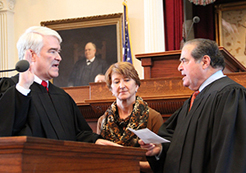
(Jan. 23) – Nathan Hecht has been on the Supreme Court of Texas for more than 10,000 days over the past 29 years – longer than any other justice in state history.

And he’s promising he will not put down the gavel for at least eight more years.

Now chief justice, Hecht has been elected to the state’s highest court a record six times and another three times to lower courts. He has authored nearly 400 opinions.

Legal experts say Hecht’s biography of achievements is impressive. He played a crucial role raising juror pay from $6 to $40 a day. He pushed the state legislature to significantly increase funds for legal aid for the poor. He led the way in establishing a statewide electronic court filing system, and he helped create legal assistance programs for veterans.

Most importantly, appellate court analysts say Hecht engineered a dramatic and historic shift at the Supreme Court, making it more conservative, more pro-business and much more skeptical of large damage verdicts issued by Texas judges and juries.

At the same time, he has on his agenda efforts to make legal services more accessible to the middle class and small businesses. And he is working closely with leaders at the new University of North Texas School of Law to ensure the institution is successful in its mission of producing young lawyers with considerably less debt.

No single lawyer has made a bigger impact on the legal system in Texas than Nathan Lincoln Hecht, according to legal historians.

“Being on the Texas Supreme Court is the greatest honor of my life,” Hecht says. “I have enjoyed every minute of being a lawyer and being a judge. It is a position that comes with tremendous responsibilities and challenges.”

Now at age 67, Hecht says he has no plans to retire when his current term ends in 2020. Instead, he plans to stay on the bench until he turns 75, which will be 2024.

“I can’t imagine not practicing law,” he says. “If I had the talent, I’d be a pianist. And if I had the patience, a minister or teacher.”

nhecht1Hecht’s fellow justices recognize the importance of his tenure on the court, as well as his leadership role in reshaping Texas courts to be more conservative in addressing civil litigation but more progressive in their approach to social justice needs.
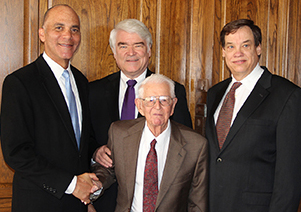
“He’s the psuche of the Supreme Court – unrivaled intellect, cracker-jack writing, mastery of all things rule and administration-related and a steadfast commitment to ensuring court access for low-income Texans,” Justice Don Willet said in a previous interview with The Texas Lawbook.

Hecht studied philosophy at Yale University, where he graduated with honors. He then earned a doctor of jurisprudence from SMU Dedman School of Law in 1974.

“I thought I was good in math and I went to college to be an engineer,” Hecht says. “But I quickly learned that I wasn’t as good in math as I thought, and I switched my major.”

After a one-year clerkship with Judge Roger Robb of the U.S. Court of Appeals for the DC Circuit, Hecht served as a lieutenant in the U.S. Naval Reserve Judge Advocate General Corps at the Corpus Christi Naval Base, where he tried his first cases as a lawyer.

Life as a Lawyer

Hecht represented a Seaman First Class who was charged with failure to go to his duty station, failure to obey the commanding officer and numerous other counts.

“My client was asleep in his bunk when a second seaman urinated on him,” Hecht says. “The next day, someone whacked the second seaman with a broom handle, though no one would admit to seeing it.

“The commander was tired of disciplinary issues and threw the book at my client,” he says. “My client faced being dishonorably discharged, loss of pay and about 20 years in the brig.”

The military court consisted of six officers and six enlisted men. Hecht argued that the charges and sentence were unfair, that there were no witnesses to prove the prosecution’s case and that the captain who brought the charges had barely met with the seaman.

“The charges were trumped up,” he says. “The court was out only 30 minutes before rejecting nearly all the charges and simply gave him a dishonorable discharge, but allowed him to keep his pay.”

nhecht2In 1975, he joined the litigation practice of Dallas-based Locke Purnell Boren Laney & Neely, which is now known as Locke Lord.
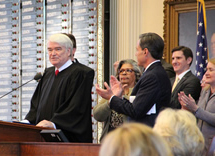
The law firm threw Hecht into the fire during his first year as an associate by making him second chair in a multimillion-dollar antitrust trial.

Hecht and the Locke Purnell team represented Pat Zachry and his huge construction company in a lawsuit brought by a small concrete business.

“The plaintiff claimed that our client and other concrete providers conspired to put him out of business,” he says. “I was responsible for witness preparation and preparing the charge to the jury.”

A handful of defendants settled their cases before trial, but the Locke Purnell team was confident in its argument. The two-week trial ended with the jury giving Hecht and the defense a complete victory.

‘Always Wanted to be a Judge’

Locke Purnell made Hecht a shareholder in 1980, but he wasn’t there long. In 1981, Texas Gov. Bill Clements appointed Hecht to the state district court in Dallas.

“I always wanted to be a judge, but the offer was still a surprise when it came,” he says.

A year later, Dallas County residents voted to keep Hecht on the bench. In 1986, he ran for and won a seat on the Texas Court of Appeals for the Fifth District in Dallas.

In 1988, three justices on the Supreme Court of Texas retired. No registered Republican had been elected to the state’s highest court since Reconstruction.

At age 39, Hecht threw his hat into the ring. His timing was perfect. Three Republicans – Hecht, Tom Phillips and Eugene Cook – were elected, marking the start of a huge shift at the state’s highest court.

Asked to identify what he believes to be the most important opinion he’s authored during his 28 years on the Texas Supreme Court, Hecht points to a 1991 decision in which he set new rules for when Texas judges can issue sanctions against parties in a litigation and how severe those sanctions can be.

The case pitted Houston-based TransAmerican National Gas Corp. against Toma Steel Supply. TransAmerican sued Toma, claiming pipes it purchased from the Colorado business were defective. Toma counter-sued when TransAmerican refused to pay for the pipes.

The litigation, then, took a weird turn when TransAmerican and its outside counsel repeatedly cancelled the deposition of the company’s president and then declined to make the executive available to Toma’s lawyers within the discovery deadline set by Harris County District Judge William R. Powell.

At the request of Toma, Judge Powell issued an order imposing severe sanctions for discovery abuses against TransAmerican, including striking all of TransAmerican’s pleadings and issuing default judgment in favor of Toma.

TransAmerican filed a mandamus petition, asking the Texas Supreme Court for relief.

Writing for the court, Hecht held that that “a direct relationship must exist between the offensive conduct and the sanction imposed” when judges issue tough sanctions against parties in a case.

“This means that a just sanction must be directed against the abuse and toward remedying the prejudice caused the innocent party,” he wrote. “The point is, the sanctions the trial court imposes must relate directly to the abuse found.”

Hecht also noted that “sanctions must not be excessive” and “should fit the crime.”

“A sanction imposed for discovery abuse should be no more severe than necessary to satisfy its legitimate purposes,” he wrote. “It follows that courts must consider the availability of less stringent sanctions and whether such lesser sanctions would fully promote compliance.”

In reversing Judge Powell’s ruling, Hecht stated, “Sanctions which are so severe as to preclude presentation of the merits of the case should not be assessed absent a party’s flagrant bad faith or counsel’s callous disregard for the responsibilities of discovery under the rules.”

Hecht’s landmark opinion in TransAmerican has been cited thousands of times by judges in Texas and across the U.S. as a landmark decision.

Similarly, Hecht’s opinion in Gammill v. Jack Williams Chevrolet has been cited by courts more than 3,000 times. The justice wrote that the opinions of experts should be treated the same as other testimony based on specialized or technical knowledge.

“The trial court is not to determine whether an expert’s conclusions are correct, but only whether the analysis used to reach them is reliable,” Hecht wrote in 1998.

‘Becoming Chief Justice’

In 2014, Texas Gov. Rick Perry appointed Hecht to the position of chief justice, replacing Wallace Jefferson, who stepped down to return to the practice of law.

Legal experts say Hecht’s impact on the state’s courts and civil litigation has been enormous – and very pro-business. They say he has pushed the Supreme Court to aggressively enforce tort reform laws that limit people’s rights to win large damage awards against corporations and insurance companies.

nhecht3Hecht’s opinions also come at a time when the Texas Legislature has been codifying civil rules and procedures, a task previously handled by judges in the state.

“Fewer cases involve the common law — judge-made law, like negligence and other torts, property rights, and contracts,” Hecht told the Texas Legislature in 2015. “More involve statutory interpretation. In these cases, courts do not decide for themselves what the law should be; rather, their responsibility is to give effect to the intent of the legislative body as expressed in the statutory text.”

But Hecht also has been an aggressive advocate of funding legal aid for those who cannot afford a lawyer.

“Access to justice and legal aid is not a Republican issue, and it isn’t a Democratic issue,” Hecht says. “It is about ensuring basic fairness and access to everyone.”

Hecht says the state needs to look at further limiting or tailoring discovery in civil disputes, especially in the area of electronic discovery, which is very expensive. He also wants to work with the law schools in Texas to make curricula more practice-focused.

“The civil justice system is just too expensive,” he says. “We have to look at the whole structure of the justice delivery system in our state. Most people simply cannot afford to access our justice system.”

Hecht says his 28 years as a Texas Supreme Court justice have been amazing.

“I got to meet Queen Elizabeth in May 1991 when she visited the Governor’s Mansion,” he says. “We were told to not engage in conversation or to make any sudden moves toward her and to simply take her hand and say ‘Your Majesty’ if she offered it.

“But Justice Raul Gonzalez couldn’t contain himself and wanted to give her a hug, but the protocol folks jumped in to stop it,” Hecht says.

The chief justice also remembers a handful of strange moments at the court. One lawyer, who had been up all night preparing for oral argument, passed out as she stepped to the lectern. Justice Hecht doesn’t remember whether she won or lost the case.

And then there’s the issue of cell phones, which are supposed to be turned off in the courtroom.

“Right in the middle of oral argument, a cell phone starts ringing and just kept ringing,” Hecht said. “We all looked around the courtroom to see whose phone it was.

“It was the chief justice’s,” he said with a laugh.

Photos courtesy State Bar of Texas


[/fusion_text][/fusion_builder_column][/fusion_builder_row][/fusion_builder_container]

Mike McKool is on ‘Every Corporation’s Shortlist’

[fusion_builder_container hundred_percent=”yes” overflow=”visible”][fusion_builder_row][fusion_builder_column type=”1_4″ last=”no” spacing=”yes” center_content=”no” hide_on_mobile=”no” background_color=”” background_image=”” background_repeat=”no-repeat” background_position=”left top” hover_type=”none” link=”” border_position=”all” border_size=”0px” border_color=”” border_style=”” padding=”” margin_top=”” margin_bottom=”” animation_type=”” animation_direction=”” animation_speed=”0.1″ animation_offset=”” class=”” id=””][fusion_imageframe lightbox=”no” lightbox_image=”” style_type=”none” hover_type=”none” bordercolor=”” bordersize=”0px” borderradius=”0″ stylecolor=”” align=”none” link=”” linktarget=”_self” animation_type=”0″ animation_direction=”down” animation_speed=”0.1″ animation_offset=”” hide_on_mobile=”no” class=”” id=””] [/fusion_imageframe][/fusion_builder_column][fusion_builder_column type=”3_4″ last=”yes” spacing=”yes” center_content=”no” hide_on_mobile=”no” background_color=”” background_image=”” background_repeat=”no-repeat” background_position=”left top” hover_type=”none” link=”” border_position=”all” border_size=”0px” border_color=”” border_style=”” padding=”” margin_top=”” margin_bottom=”” animation_type=”” animation_direction=”” animation_speed=”0.1″ animation_offset=”” class=”” id=””][fusion_text]By Mark Curriden
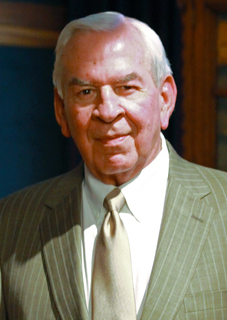
(May 31) – Corporations call it the “McKinsey effect.” It describes decisions business leaders make when hiring outside experts to advise them when the future of the company is at stake.

Executives and corporate board members, when placed in “bet-the-company” situations, hire elite advisers no matter their costs, such as management consulting firm McKinsey to guide on strategic planning or bankruptcy lawyers from Kirkland & Ellis or Weil, Gotshal & Manges to handle their restructuring.

Even if they fail, executives can say they hired the best.

When it comes to monumental patent disputes, Mike McKool is that lawyer.

“Mike is on the short list of every major company’s legal department,” says former American Airlines General Counsel Gary Kennedy. “Mike and his lawyers know patent law. They understand technology. They work hard to know the client’s business.

“Mike is the epitome of what it means to be a good lawyer,” says Kennedy, who is on the board of investment management firm PIMCO.

McKool has practiced law for 42 years. He’s tried more than 100 cases to juries, resulting in verdicts and judgments far exceeding $1 billion. Out-of-court settlements added another billion dollars in the pockets of his clients.

Some of the world’s biggest corporations, including Exxon Mobil, Freddie Mac, Lockheed Martin, EDS and American Airlines, have hired McKool to prosecute patent infringements or defend them against such allegations.

Billion Dollar Patents

One of those huge businesses is Ericsson. The world’s largest maker of wireless network technology hired McKool in 2013 to lead its billion-dollar litigation against Samsung, the globe’s biggest manufacturer of mobile phones.

Sweden’s largest corporation accused the South Korean giant of infringing its huge mobile-technology patent portfolio by refusing to reach a licensing agreement with Ericsson.

“The issue is duty that contractually is undertaken by all parties who participate in standard setting that they will license the technology on fair, reasonable and non-discriminatory terms” – also known in patent circles as FRAND, McKool says. “There was no playbook in 2013.”

Courts are required to “look at patents as a portfolio in order to make a FRAND determination,” he says. “You don’t license these patents individually but as a portfolio.”

McKool asked an administrative law judge of the International Trade Commission to issue an order prohibiting Samsung from importing its products into the U.S.

Before the ITC could issue its opinion, Ericsson and Samsung settled the case in December 2013. The terms of the deal were confidential, but Ericsson said publicly that it added $652 million in revenues for the company during the fourth quarter of 2013.

At age 66, McKool still loves going to court and arguing cases – especially patent disputes – to juries.

“Lawyers make more of a difference in a patent case than other kinds of cases,” he says. “Jurors drive cars. If you have a fender bender, the jurors want lawyers to get out of the way so they can hear the witnesses. In patent cases, they don’t have a clue about what happens inside of a cell phone. Lawyers can be a teacher and a persuader.”

McKool’s expertise in intellectual property law is known around the globe. Only a month ago, Japanese leaders considering significant reforms to the nation’s patent system asked McKool to be a guest lecturer.

“It’s a long trip, but I am honored to be asked for my thoughts,” he says.

Getting an Early Start

Law is genetic for McKool.

His parents were Lebanese immigrants. He attended Dallas’ Jesuit High School, where he served as student body president and thrived in debate. His father, Mike McKool Sr., was a trial lawyer who specialized in eminent domain law and was involved in Democratic Party politics, including serving as a state senator.

“He made me go to work with him every day during summers from the time I was eight years old,” McKool says. “I hated it. My buddies were playing baseball and I was going to the courthouse. I spent a lot of time in the courtroom. That was ultimately of great benefit to me. I was never afraid of the courtroom. It always seemed very familiar to me. That was an advantage.”

McKool says his father, who passed away in 2003, is still his hero.

“We cannot hardly say hello in a brief in less than 50 pages,” he says. “I never saw anything he wrote longer than five pages. It’s something I should imitate more.”

Majoring in anthropology, he graduated magna cum laude from University of Notre Dame. From there, he went to the University of Texas School of Law, where he graduated in 1974.

McKool planned to join his father in his legal practice, but he was invited to a reception hosted by Hewitt, Johnson, Swanson & Barbee, which later grew to be the largest full service firms in Dallas. He was so impressed by those he met that he changed his career plans.

“Hewitt Johnson was a great firm with great lawyers,” he says.

McKool was Hewitt Johnson’s 16th lawyer. His first jury trial came only days after he learned that he had passed the bar exam. He represented First National Bank of Dallas, which later became First Republic, on a note for $24,000.

“It was fun,” he says. “There wasn’t a lot of pressure.”

McKool says half of his 100 jury trials came during the first five years of his career in cases where the potential damages were small.

“It wasn’t going to make a huge difference in the world if you won or lost. You got to make every mistake in the book,” he says. “There’s so much pressure today. Some of the companies could go out of business if we lose.

“Changes in technology have made the practice of trial law more expensive.”

McKool says computers and the Internet changed litigation.

“Email seems like such a small thing, but it is not,” he says. “The documents are a large multiple of what we used to have. Not ten times, but a thousand times because of email.

“I like the old days when you had only 30 pieces of paper as evidence,” he says. “Today, the banker’s boxes of documents line the walls of the courtrooms. We all want to win and we all think the next fax out of the 17 million is the one that wins the case.

“I’m nostalgic for the old days.”

McKool represented the company that came out with the first fax machine in the 1970s.

“We did a demonstration in the court and every juror’s mouth was open,” he says. “Everyone thought it was the cutting edge of technology.”

Building a New Firm

In August 1991, McKool and Baker Botts trial lawyer Phil Smith joined forces to start a new litigation firm with nine other lawyers.

McKool said that Susman Godfrey opened several years earlier and provided a basic blueprint for how to start a national litigation boutique. Even so, McKool said there were times when he “had no idea what we were doing.

“We made every mistake you could make running a business,” he says.

Despite this, McKool built one of the nation’s largest IP-focused firms with 185 lawyers in eight cities in the U.S.

One of the firm’s first big cases had nothing to do with IP law, but it was very high profile.

In 1993, Trammel Crow managing partner Joel Peterson hired McKool to represent him in a multimillion-dollar lawsuit against his employer.

The case “involved his interests in a series of real estate partnerships,” McKool says. “Each one had its own agreement and was quite complex. Those contracts determined his interests.”

But like so many complicated business lawsuits, the question for the jury was much simpler: Who was the good guy and who was the bad guy?

“A lot of young trial lawyers don’t understand that you can get so absorbed into the details of your case that you lose an appreciation for what will actually persuade a jury that is coming new to the case,” he says. “Juries are human. They can intake only so much information.”

Trammel Crow Companies realized it was a battle they didn’t want to fight and the case settled on the eve of trial.

McKool says most of the cases he handles today have at least $100 million at stake.

“It costs so much to try patent cases,” he says. “The expert fees are several million dollars.

“The courts – at the same time that they are really wanting to get costs down, they are demanding more in terms of patent proof and especially damages proof,” says McKool, who points out that it can cost as much as $30 million preparing the most complex and high-dollar cases for trial.

McKool says the case that was the most fun for him personally came last year when he represented Alcoa Power and Gas, a subsidiary of the aluminum giant founded in Pittsburgh.

North Carolina officials sued Alcoa in 2012 over the ownership rights of a 40-mile stretch of the Yadkin River in the central part of the state, where Alcoa operated four hydroelectric dams and an aluminum smelting plant.

Alcoa countered that it obtained the rights or deeds to the disputed stretch of the river a century ago when it agreed to build and operate dams prior to World War II. As a result of the agreement, Alcoa purchased land along the river to build its operations.

North Carolina claimed that the deed did not include the riverbed of the Yadkin River, which the state claimed it owns.

The big legal issue, according to McKool, was whether the river “was navigable upon statehood in 1789,” which could have resulted in Alcoa’s ownership or deeds being voided and Alcoa’s property transferred into public trusts for the state.

“I’m a history buff. It was great for me,” he says. “Almost all of our experts were historians – historians on the river and experts in boat construction.”

In September 2015, U.S. District Judge Terrance Boyle gave McKool’s client a complete victory that was worth billions of dollars for Alcoa.

“Why isn’t this like some banana republic that confiscates property?” the judge said. “This is really a thinly veiled power grab.”

McKool says that his plan has been to practice indefeinitely and that he never even thought about retiring until “very recently.”  He says he is still having fun, enjoys the challenge of the litigation and believes he has several more years as a full-time, active lawyer.

Like many of the great Lions profiled — Harry Reasoner, Steve Susman and Carol Dinkins, to name a few — McKool says he has learn to adjust the intensity of his practice as he has gotten older. Gone, he and the others say, are the days when he could work 18-hour days for three or four weeks in a row. Instead, he says you learn your limits.

“Time waits for no man and age catches up with you,” McKool says, echoing the comments of many of the other Lions.

“The Bataan Death March that I’ve done and imposed on others is not something I want to be doing forever,” he says.[/fusion_text][/fusion_builder_column][/fusion_builder_row][/fusion_builder_container]

Walter Umphrey: 50 Years of Looking out for the Little Guy

[fusion_builder_container hundred_percent=”yes” overflow=”visible”][fusion_builder_row][fusion_builder_column type=”1_4″ last=”no” spacing=”yes” center_content=”no” hide_on_mobile=”no” background_color=”” background_image=”” background_repeat=”no-repeat” background_position=”left top” hover_type=”none” link=”” border_position=”all” border_size=”0px” border_color=”” border_style=”” padding=”” margin_top=”” margin_bottom=”” animation_type=”” animation_direction=”” animation_speed=”0.1″ animation_offset=”” class=”” id=””][fusion_imageframe lightbox=”no” lightbox_image=”” style_type=”none” hover_type=”none” bordercolor=”” bordersize=”0px” borderradius=”0″ stylecolor=”” align=”none” link=”” linktarget=”_self” animation_type=”0″ animation_direction=”down” animation_speed=”0.1″ animation_offset=”” hide_on_mobile=”no” class=”” id=””] [/fusion_imageframe][/fusion_builder_column][fusion_builder_column type=”3_4″ last=”yes” spacing=”yes” center_content=”no” hide_on_mobile=”no” background_color=”” background_image=”” background_repeat=”no-repeat” background_position=”left top” hover_type=”none” link=”” border_position=”all” border_size=”0px” border_color=”” border_style=”” padding=”” margin_top=”” margin_bottom=”” animation_type=”” animation_direction=”” animation_speed=”0.1″ animation_offset=”” class=”” id=””][fusion_text]By Mark Curriden

(June 2) – Walter Umphrey stood at the side of a conference room at the Doubletree Hotel in Austin in January 1998 as the press conference began.

Then-Texas Attorney General Dan Morales unveiled a huge cardboard check from the nation’s largest cigarette makers to state officials for $15.3 billion – the single largest settlement of a civil lawsuit in U.S. history.

“The true heroes are these great lawyers right here,” Morales said, pointing to Umphrey and a handful of others. “These lawyers took great risks, worked thousands of hours and spent millions of their own dollars to make this day possible.”

Umphrey, a physically large man with a perpetually stern look, simply nodded in appreciation of the recognition but declined to step to the podium or make any public comments.

Nearly two decades later, Umphrey remains nearly as reticent to discuss the historic tobacco litigation.

“It was the biggest and most important case of my life,” says Umphrey, who has practice law for more than 50 years. “The case was about public health and punishing an industry that made billions and billions of dollars at the expense of public health.

“And yes, we made a lot of money, too,” he admits.

Indeed. Umphrey and four other lawyers were later awarded $3.3 billion to split.

Now 80 years old, Umphrey has lived an extraordinary life and achieved amazing success – all because of his passion for the law and for seeking justice for the working middle class.

During his five-decade legal career, he’s won billions of dollars for thousands of people made seriously ill by asbestos. He’s won multimillion-dollar verdicts and settlements against negligent trucking companies whose fleets killed innocent drivers. He’s earned hundreds and hundreds of millions of dollars in contingency fee cases. And he’s donated hundreds of millions to his favorite charities.

Walter and Joe

Umphrey even tried two cases with his old plaintiff’s lawyer buddy, Joe Jamail.

“Walter is a great lawyer and a truly good hearted man,” Jamail said in an interview a few weeks before his death last year. “But what I like most about Walter is that he, like me, enjoys waking up in the morning and kicking some arrogant, asshole corporate executives in the ass because they deserve it.”

Umphrey and Jamail teamed up to try a case in which a crash involving a commercial tractor-trailer caused a police officer to lose his leg. The trucking company offered $300,000 to settle the case before trial. Umphrey and Jamail politely refused – actually, Jamail threatened to shove the offer up the defense lawyer’s ass. They convinced the jury to award $16 million in damages.

Umphrey grew up poor in South Texas. He says he stayed that way for many years.

“When I finished law school, everything I owned could fit in the back of my car,” he says.

Umphrey played football in high school and was good enough to be awarded a scholarship to play at Southern Methodist University. After a couple years, he transferred to Baylor University to finish his bachelor’s degree in business administration in 1959.

”I worked for a while as an insurance adjuster in Port Arthur, but I got tired of seeing the lawyers get all the money,” he says.

After graduating from Baylor Law School in 1965, Umphrey joined the Jefferson County District Attorney’s office as an assistant prosecutor. During his three-and-a-half years there, he tried scores and scores of cases and eventually rose to the position of chief felony prosecutor.

“There is no greater experience than being a state prosecutor if you want experience trying cases,” he says.

Rags to Riches

In 1969, Umphrey and David Provost joined forces and opened Provost Umphrey Law Firm, which focused on representing individuals in personal injury and products liability litigation.

Umphrey scored big in his first jury trial in federal court in 1972 with a $4 million verdict. At the time, he thought it might be the most money he would ever win for a client.

He was wrong. Way wrong.

Less than 30 miles from Umphrey’s office, another lawyer named Ward Stephenson in nearby Orange, Texas, filed a lawsuit on behalf of his client, Clarence Borel. The complaint accused 11 corporations, including Fibreboard Paper Products and Johns-Mansfield Products, of manufacturing a deadly product without providing enough warning.

Umphrey didn’t realize it at the time, but the Borel case would wildly change his career and personal life.

The jury ruled in favor of the Borel family and the U.S. Court of Appeals for the Fifth Circuit, in an opinion written by Judge Minor Wisdom, upheld the verdict.

The decision triggered a tidal wave of litigation against the asbestos makers and their insurance companies – a wave that Umphrey and his team would ride for more than two decades.

Umphrey got his first asbestos case in 1974 when a friend of a business partner became a client. Realizing the problem could be widespread, Umphrey began having union workers at the Port Arthur Refinery and Chemical Co. tested for asbestos. By the mid-1970s, he had signed several hundred clients who tested positive for cancer or other asbestos-related diseases as clients and was taking the cases to trial.

In 1986, Umphrey was the lead trial lawyer in a certified class action called Jenkins v. Raymark, representing 741 asbestos victims. Then-U.S. District Judge Robert Parker conducted a 25-day trial that resulted in a $130 million settlement.

Four years later, Umphrey took a second class action, Cimino v. Raymark Industries, to trial before Judge Parker. This second case involved about 2,300 plaintiffs. The verdict: $1 billion.

The victory earned Umphrey the title, “King of Asbestos Litigation.”

“Walter knows what it means to be the little guy with no money,” says Houston lawyer Harry Potter, a former assistant state attorney general who worked with Umphrey during the tobacco litigation. “Walter is extraordinarily passionate about fighting for the rights of the average worker against corporations that have caused them ill or harm.

Potter says Umphrey “always speaks his mind if he thinks you are wrong,” but he does so in a “respectful manner.”

“In court, Walter is great at cutting to the heart of a complex matter,” he says.

Potter says that Umphrey’s success in the asbestos litigation was the key reason why he was selected to lead Texas’ efforts against the cigarette makers.

“Walter knew what it was like to challenge and defeat the biggest and most powerful corporations in the world and their armies of lawyers,” Potter says.

Giving Back

Umphrey is also known as an excellent businessman. He once owned a bank and a three million acre ranch in Australia – both of which he reportedly sold for a solid profit.

But Umphrey also has a reputation as an extraordinarily generous giver to public causes.

In 2000, he donated $10 million to help build the Sheila and Walter Umphrey Law Center on the banks of the Brazos River at Baylor University. In 2009, Umphrey provided the finances for the construction of the Sheila Umphrey Recreational Sports Center at Lamar University in Beaumont. Umphrey and his firm also gave $4 million to Lamar for the construction of Provost«Umphrey Stadium for football.

And the newest cancer institute in Southeast Texas was named the Walter Umphrey Cancer Center, which is the result of years of dedicated support and several million dollars in donations.

“Much has been given to me,” he says. “I am pleased that I am able to give back.”[/fusion_text][/fusion_builder_column][/fusion_builder_row][/fusion_builder_container]