

By Mark Curriden
(Jan. 12) – Lawyers in small towns and rural areas are usually generalists. They have to know multiple kinds of law. They defend drug dealers one day and sue businesses for products liability or slip-and-fall cases the next. They operate in criminal court in the morning and bankruptcy court that same afternoon.
Lawyers, judges and corporate general counsel say the lawyer to see in East Texas no matter the predicament, is F.R. “Buck” Files. .
A 1963 alum of the Southern Methodist University Dedman School of Law, Files has won just about every legal honor the profession has to offer. The Criminal Justice Section of the State Bar of Texas named him Lawyer of the Year in 2004 and gave him the Lifetime Achievement Award in 2012. The Texas Criminal Defense Lawyers Association inducted Files into its Hall of Fame in 2011.
During his five decades in the law, Files has represented hundreds and hundreds of individuals and corporations in cases before juries and judges. Wearing his signature three-piece blue suit, he has taken cases from Justices of the Peace to the Supreme Court of the United States.
He has represented clients charged with white-collar fraud and drug conspiracies to those involved in the possession of child pornography. Corporate counsel have hired him to represent them in criminal regulatory matters against OSHA, EPA, USDA and INS.
Court TV featured several of Files’ high-profile trials.
“I have loved both aspects of practicing law – being an advocate for clients involved in disputes and being a counselor to help clients avoid disputes,” he says. “I have always had the philosophy that I should learn what led my clients to be in the criminal justice system. Most of the time, the reason is drugs or alcohol. So, I try to get them the help they need to address the root causes of their problems.”
In one of his highest profile cases, Files represented Randy Paroline, who was convicted of possessing child pornography. His client agreed to plead guilty, but one of the victims pictured in the pornography asked the federal trial judge to order Paroline to pay $3.5 million in restitution to cover the victim’s lost income and future counseling costs.
Files won the case at the U.S. District Court, but it was reversed at the U.S. Court of Appeals for the Fifth Circuit. Files brought Houston attorney Stan Schneider into the case. The pair filed the appeal to the Supreme Court and Schneider argued the case to the justices on Jan. 22, 2014 with Files seated beside him.
In a majority opinion written by Justice Anthony Kennedy, the Supreme Court adopted the argument by Files and Schneider that there must be a strong connection between the conduct of the victim and the negative impact of the victim and that such a connection did not exist in the Paroline case.
Files grew up in Kilgore, where his father owned a small trucking business. His dad also served as a non-lawyer judge in Rusk County.
Files received his Bachelor of Arts degree from Austin College in 1960, where he continues to give anti-hazing seminars to students at the university.
Three years later, he received his law degree from SMU Dedman.
During his third year at SMU, Files earned his commission as a 2nd Lieutenant in the U.S. Marine Corp on Sept. 1, 1962. He began active duty on Dec. 28, 1963, and served at duty stations in Virginia, Hawaii, Okinawa and the Republic of Vietnam until August 14, 1967. He attained the rank of Captain.
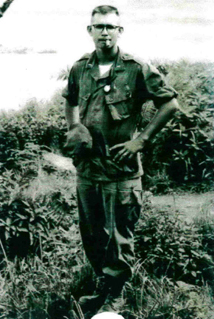
“It was an amazing experience,” he says. “I was prosecuting cases one day and defending cases the next.”
In Vietnam, Marine Corps lawyers were not JAG officers, but were unrestricted line officers assigned primarily legal duties. Files was based near DaNang but moved in and out of all but three Marine line battalions in Vietnam, where he interviewed witnesses and provided legal assistance to troops in the field.
“I realized right away, during my first case, that I loved everything about being in trial,” he says.
Files represented a Marine in October 1964 who, acting in defense of his wife, attacked three Army soldiers with a knife. The Marine faced multiple counts of assault. After a daylong trial in which Files argued self-defense, the military court found his client not guilty.
“Every lawyer remembers his first not guilty and that was mine,” he says
Less than a year later, Files prosecuted the first general court martial in Vietnam for the Marine Corps in August 1965. A young Marine killed a fellow Marine with a .45-caliber weapon. Opposing counsel was a major who had a decade of trial experience.
It took only a couple days for Files to obtain a conviction.
When Files retired from the military, he accepted a position as a prosecutor in the Smith County Criminal District Attorney’s Office in Tyler, where he worked for more than three years.
“It was an amazing experience, because I was able to spend so much time in court actually trying cases,” he says. “There is no job that gives a lawyer more experience in the courtroom. Nearly everyday, I was arguing motions, picking juries, cross-examining witnesses and presenting evidence to juries.”
In 1970, Files became a criminal defense lawyer and later expanded his practice to handle civil rights cases and some regulatory matters. In fact, he had barely set up his law office on his first day on the job when a judge appointed him to defend a capital murder defendant.
“My client was found guilty,” Files says, “but he wasn’t executed, and he considered that a victory.”
Some cases, he says, are simply tougher or more challenging.
In 2004, Files defended Deanna Laney, a 39-year-old mother who killed her two sons – ages eight and six – and seriously injured a third son, who was 15-months-old by smashing them in the head with a rock on Mother’s Day. The state charged her with two counts of murder and one count of attempted murder.
“It is impossible for the average person to comprehend how a mother could do this,” Files says. “She was a faithful member of her church and she started hearing voices. God was telling her to do things.”
Files announced he would argue that Laney was insane.
“Every Sunday, I would take a handkerchief to the jail and she would cry and cry throughout our meetings,” he says. “She was a client who was hurting. I was her lawyer, but I also was there to listen to her and help her.”
During the trial, Smith County District Attorney Matt Bingham told jurors that Laney knew what she was doing when she bludgeoned the heads of her three sons.
“The last thing that Joshua and Luke Laney ever saw on this Earth was their Mama holding a rock over her head,” he said. “And the last thing they felt was that rock crashing down on them.”
Files knew he had to address his client’s delusions with the jury. He said Laney believed that God told her the world was going to end and “she had to get her house in order,” which included killing her children.
“You will hear that she was a sick person on a quest to be closer to her Lord,” he told the jurors. “The dilemma she faced is a terrible one for a mother. Does she follow what she believes to be God’s will, or does she turn her back on God? It destroyed her ability to discern the wrongness of her act.”
Files says there were two basketball referees on the jury and they proved crucial in the verdict.
“The referees told the other jurors that they had to put aside their own emotions and follow the rules the judge provided them, and that meant they had to find her not guilty by reason of insanity,” Files says. “No doubt, it was the toughest case of my life.”