

By Mark Curriden
(Feb. 13) – During his four and a half decades as a lawyer, Royal Furgeson has had some great jobs. He spent a quarter a century as a trial attorney and two decades as a federal district court judge. Now, he is dean of the University of North Texas College of Law.
Furgeson is also the unofficial lead cheerleader for the legal profession.
“I’m as excited about the law today as I was 45 years ago,” he says.
Furgeson is a fierce supporter of the American jury system. He publicly praises prosecutors who work tirelessly to uncover political corruption and corporate fraud. He salutes public defenders and criminal defense lawyers for defending those who are the scourge of society.
He promotes corporate lawyers who sacrifice their time and resources to support pro bono services. And he heaps accolades on judges and educators who step away from highly compensated jobs to do their duty for God and country.
For decades, he’s been telling others and now it is time for the legal profession to return the favor.
“Royal is a truly great American,” says Paula Hinton, a partner at Winston & Strawn in Houston and a leader in the Litigation Section of the State Bar of Texas. “Royal is more than a lawyer or judge, he’s a leader of the legal profession.
The oldest of four children, Furgeson grew up in Lubbock. His father, a child of the depression, was the only one of 11 siblings to graduate from college and was elected District Clerk of Lubbock County for 20 years.
Furgeson’s mother did not work outside the home, except for the four years his father was in the Army during World War II, when she took over her husband’s job as District Clerk.
As a boy, Furgeson saw lawyers and judges on a regular basis.
“Lawyers and judges were in and out of our home as I grew up and I really liked being around them,” he says. “I thought that they were interesting and fun. Because my father so admired lawyers, I decided to go to law school.”
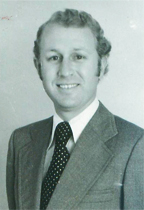 Furgeson went to college at Texas Tech because of his father’s fondness for the school. Tech did not have a law school at the time, so he went to the University of Texas School of Law.
“State-supported education was incredibly affordable during those years (1960-67),” he says. “I graduated with seven years of higher education in Texas without any debt.”
Furgeson’s father moved from the District Clerk’s Office to the County Auditor’s office and retired in that position after another 20 years.
After graduating in 1967 from UT School of Law, Furgeson served in the U.S. Army for nearly three years, including one year in Vietnam, where he rose to the rank of captain.
“Being in Vietnam was really intense,” he says. “My best friend didn’t come back.”
After one year as an assistant county attorney in Lubbock, Furgeson clerked for U.S. District Judge Halbert Woodward of the Northern District of Texas.
“As a judicial clerk, I watched 30 jury trials and I knew right away that is what I wanted to do,” he says.
In 1970, he joined the El Paso law firm Kemp Smith.
Furgeson’s first jury trial came in early 1971 when he was appointed to represent Fredric Brown, who was charged with robbery. The trial lasted two-and-a-half days.
“My client had a rap sheet that was two arms long,” he says. “The district attorney said I made a real horse race out of the trial, which was a great compliment.”
Furgeson says the jury “did the right thing” by finding Brown guilty and sentencing him to a lengthy prison sentence.
“I loved being in court,” he says. “Because I wanted to get into court as much as possible, I asked my firm if I could handle all criminal appointments coming to lawyers in the firm. They agreed and I ended up handling several hundred appointments over the next several years.
“The overall experience was a reality check for me, because I saw how often the criminal justice system falls disproportionately hard on the poor and disadvantaged,” he says. “That is another reason that I got heavily involved in activities like the United Way, because I understood there was such need for services in El Paso’s poorer communities.”
Furgeson’s first big case came in 1975 when he represented Arlington-based American Excelsior Co., a subsidiary of Texstar, in a lengthy and highly complex antitrust lawsuit brought by International Air Industries and Vebco, a New Mexico-based distributor of heating and air conditioning equipment, including cooler pads.
Vebco sued in El Paso seeking several hundred thousand dollars.
Furgeson handled most of the direct and cross-examination of witnesses during the trial, which ended with a verdict in his client’s favor.
The plaintiffs appealed to the U.S. Court of Appeals for the Fifth Circuit. Furgeson handled the briefing for the three-judge panel, which upheld the lower court’s decision.
Throughout the 1980s and early 1990s, the courtroom victories for Furgeson kept rolling in. He won an $800,000 jury verdict in a breach of contract case and obtained a huge defense win for the FDIC against a bank that had been involved in “some stupid decision-making,” including investing in a fraudulent scheme.
“Truthfully, we were prepared for a big loss, but the jury returned with a defense verdict after five hours of deliberations,” he says. “It taught me that juries can turn on a dime.”
In 1994, President Bill Clinton appointed Furgeson to fill a newly created federal judgeship in the U.S. District Court in the Western Division of Texas.
Furgeson handled hundreds of criminal and civil cases during his two decades on the federal bench, but the case that stands out most is Ernest Ray Willis v. Texas Department of Criminal Justice.
Willis was charged by Pecos County officials in 1987 with setting fire to a house in Iraan, Texas that killed Elizabeth Belue and Gail Allison, who died of smoke inhalation. During the trial, Willis testified that he was sleeping on the couch in the living room when he was awaken by the smell of smoke.
Prosecutors claimed that Willis poured a liquid accelerant on the floor of the house and set it on fire.
The jury found Willis guilty of murder and sentenced him to death. The Texas Court of Criminal Appeals upheld the verdict and the Supreme Court of the United States denied certiorari.
The case finally made it to Judge Furgeson when Willis’ lawyers filed a federal habeas petition.
“I worked on the case for three years,” he says. “I sweated bullets on this one. It was pretty clear to me that justice was not done.”
In a 100-page opinion issued on Aug. 9, 2004, Judge Furgeson found that Texas officials had administered antipsychotic drugs to Willis during the trial without informing the defense counsel or the jury.
During closing arguments and the sentencing phase of the trial, “the prosecution seized upon Willis’s demeanor… asking the jury to draw inferences of guilt and future dangerousness from Willis’s lack of apparent feeling or emotion.”
“Defense counsel never learned that the State was administering high doses of antipsychotic medication to Willis during his incarceration in the Pecos County jail both before and during the trial,” Judge Furgeson wrote.
Judge Furgeson also found that the state’s theory was flawed regarding how the fire started and Willis’s conduct the night of the fire. He also found that prosecutors withheld key evidence from defense lawyers and that Willis received ineffective assistance of counsel.
“I wrote the decision as carefully as anything I have ever done,” he says. “I was worried that the state would try to find some flaw in appealing the opinion to the Fifth Circuit.”
Judge Furgeson’s worries were unfounded. His decision was so solid that prosecutors didn’t even appeal.
In 2013, the judge moved into phase three of his career when he announced his retirement from the federal bench and agreed to be the first dean of the newly created University of North Texas School of Law, which is intended to be a low cost alternative to the traditional legal education.
“This is a whole new challenge, but we can do really great work here and have a major impact on the practice of law and our communities in North Texas,” he says.
Dean Furgeson built UNT Law School from scratch. He hired deans for academics, admissions and students, faculty for the classrooms, librarians and support staff. He promotes the law school, raises funds and recruits students and faculty.
“This law school has the opportunity to do so much good,” he says. “It is a lot of work, but I am loving every minute of it.”
Judge Furgeson says the legal profession has changed significantly during his years as a lawyer.
“We don’t try lawsuits anymore. That is one of the giant changes. We are lesser for it because of it,” he says. “I have great respect for juries and I think it is the best way to resolve disputes. With juries, you get verdicts, appeals and development of the law. The jury is the democracy of our whole judicial system and it starts the development.”
Lawyers have taken good care of the law, but young attorneys face many great challenges, he says. One of them is diversity.
“We are the whitest profession in America,” Judge Furgeson says. “Last census [shows that] 90 percent of lawyers are white – 81 perfect in Texas are white. Forty-four of our population is white. It goes against the American dream. We have a great challenge. We have to figure that out.”