
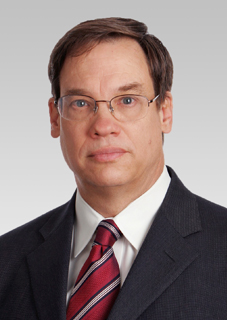
By Mark Curriden
(Oct. 5) – Lots of lawyers say they knew they wanted to practice law when they were kids, but I never met someone who claimed they dreamed of being a judge – until now.
Tom Phillips’ grandmother was a deputy county clerk in Dallas’ Old Red Courthouse.
“I spent a lot of time in court watching the cases and I saw that the judge was the most important person,” Phillips says. “As a teenager, I found that telling people I wanted to be a lawyer or a judge got a lot more positive response than if I told them I wanted to be a cowboy.”
Not only did Phillips make it to the bench, he became one of the longest serving chief justices in Texas history. Many legal experts say he successfully guided the Supreme Court of Texas through a tumultuous time when the court’s integrity and independence was under serious attack.
Phillips, who is 66, was a political science major at Baylor University, even though his dad wanted him to study accounting.
“My father always wanted me to have a job at the end of the tunnel,” he says. “I had to convince him to fork over $2,100 a year so I could go to Harvard Law School, instead of $100 for me to go to the [University of Texas School of Law].”
Phillips clerked for the state Supreme Court and then joined the trial section at Baker Botts.
“Archibald Cox taught us at Harvard that all real lawyers are trial lawyers,” he says.
Only a few months after joining the firm, Phillips got his first taste of the courtroom as the third chair of a high-profile trial. Baker Botts represented Houston Sports Authority, the public entity that owned and operated the Astrodome.
“The Astrodome was built with 20,000 skylights,” Phillips says. “When it rained, those skylights leaked. Games had to be canceled due to rain, which wasn’t supposed to happen in a domed stadium.”
The HSA sued the architect, supplier and builder. Phillips wrote briefs and witness outlines for the lead lawyer, whose name was also Tom Phillips.
“I basically carried his bags, but at least he always remembered my name,” he says.
The jury ruled in favor of the HSA and awarded millions of dollars.
In 1981, Texas Gov. William P. Clements appointed Phillips to the 280th state District Court in Harris County. He won elections in 1982 and 1986.
As a trial judge in Houston, Phillips played a major role in converting the state district courts in Houston from a general trial docket to individual trial dockets. The reform put pressure on the individual judges to move cases along faster.
Not all of Phillips colleagues on the bench favored the transition. One senior judge at a meeting spoke out against the plan: “Our young Harvard friend has baked a hasty pudding,” he said, referring to the Harvard theatrical club.
In 1986, the Republican judges in Harris County decided to campaign for re-election jointly under the theme that they were tougher on crime than their Democratic opponents. Phillips refused to participate.
In January 1988, Clements appointed Phillips to the Supreme Court of Texas, making him the youngest chief justice in the state’s history. He joined the court one year after 60 Minutes broadcast its exposé called “Justice for Sale,” which highlighted campaign contributions to the justices on the state’s highest court by lawyers who practice before them.
Phillips used his position to criticize Texas’s method of selecting judges through partisan elections. While he was never able to convince state officials to reform judicial elections, court followers say his leadership provided a sense of renewed respect and dignity to the Supreme Court as an institution.
During nearly 17 years as chief justice, he authored several groundbreaking decisions. In 1988, he wrote a dissenting opinion arguing that Texas laws capping damages in medical malpractice cases were constitutional – a result the Texas Legislature adopted years later through a Constitutional Amendment.
In 1992, he led a majority of justices in clarifying the standard about when a trial judge has so abused her or his authority that it justifies mandamus relief. The next year, he wrote a widely cited concurring opinion stating that the free speech provision of the Texas Constitution could be interpreted more broadly or more narrowly than the First Amendment of the U.S. Constitution. In 1995, he authored the opinion that upheld controversial worker’s compensation reforms.
In 2004, Phillips returned to Baker Botts as a leader in its appellate section. In the decade since he left the Supreme Court, he has authored more than 80 briefs and argued a dozen cases (seven wins, two losses, one tie, one settlement and one case still pending) before the justices. He’s also argued cases before just about every court of appeals in Texas.
In 2014, the Texas Oil and Gas Association hired Phillips to challenge the city of Denton’s efforts to ban hydraulic fracturing in the municipality. Facing a certain defeat in court at the hands of Phillips, Denton officials repealed the ordinance in 2015.
“I didn’t become an accountant, as my dad wanted, but I have loved every minute of being a lawyer and judge,” Phillips says.