[fusion_builder_container hundred_percent=”yes” overflow=”visible”][fusion_builder_row][fusion_builder_column type=”1_4″ last=”no” spacing=”yes” center_content=”no” hide_on_mobile=”no” background_color=”” background_image=”” background_repeat=”no-repeat” background_position=”left top” border_position=”all” border_size=”0px” border_color=”” border_style=”” padding=”” margin_top=”” margin_bottom=”” animation_type=”” animation_direction=”” animation_speed=”0.1″ class=”” id=””][fusion_imageframe lightbox=”no” lightbox_image=”” style_type=”none” hover_type=”none” bordercolor=”” bordersize=”0px” borderradius=”0″ stylecolor=”” align=”none” link=”” linktarget=”_self” animation_type=”0″ animation_direction=”down” animation_speed=”0.1″ hide_on_mobile=”no” class=”” id=””] 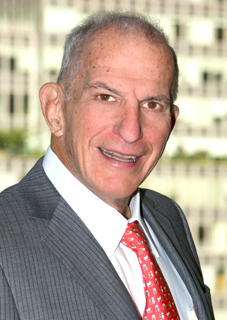 [/fusion_imageframe][/fusion_builder_column][fusion_builder_column type=”3_4″ last=”yes” spacing=”yes” center_content=”no” hide_on_mobile=”no” background_color=”” background_image=”” background_repeat=”no-repeat” background_position=”left top” border_position=”all” border_size=”0px” border_color=”” border_style=”” padding=”” margin_top=”” margin_bottom=”” animation_type=”” animation_direction=”” animation_speed=”0.1″ class=”” id=””][fusion_text]By Janet Elliott
(Oct. 6) – Ten years ago, when he turned 65, noted Houston trial lawyer Stephen Susman saw many of his contemporaries at law firms face mandatory retirement. Some took to the golf course and downsized their lifestyles.
Not Susman, who loves being a trial lawyer rock star.
“I didn’t want to retire, I wanted to upsize,” he says. “I wanted a bigger life, bigger airplane, bigger everything.”
Desiring to spend more time with his three grandchildren in New York, Susman hired a secretary and opened a small office. As has happened so often in his legal career, Susman’s move coincided with an opportunity – the financial crisis.
“What began as my old-age frolic suddenly became an incredible opportunity for our firm,” he says. “It totally reinvigorated me to come up here and really start from scratch.”
Susman Godfrey now has almost 20 lawyers in its New York office and 70 more in offices in Los Angeles, Seattle, and Houston, where son Harry Susman is a partner.
Susman describes his career as entrepreneurial and risk-taking. In the mid-1970s, he took a leave of absence from his partnership at Fulbright & Jaworski to be a law professor at the University of Texas. Unsure what to do next, he credits his wife with pushing him back into practice just as a commercial litigation boom was hitting Houston.
Susman soon found himself at the center of the huge Corrugated Container price-fixing case after he was selected to lead the plaintiffs’ steering committee. After a three-month trial in 1980, the plaintiffs won a jury verdict quantified at $700 million, which was the largest at the time. The case settled for $500 million.
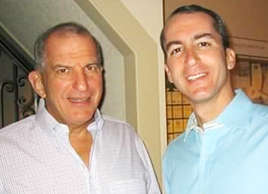
“Right at the beginning of my entrepreneurial career, I had a case which allowed me to be the ultimate entrepreneur. It allowed me to get my name out there,” he says.
He built his practice representing clients in contingency fee commercial litigation cases, and the payoff was often great in pre-tort-reform Texas. “I was lucky that my firm got going in the Golden Age of the trial lawyers in Texas,” Susman says. “We’re now in the Dark Ages.”
When the Texas Supreme Court threw out his verdicts and the state legislature restricted lawsuit damages, Susman diversified his firm’s practice to include hourly-fee defense work. One of his biggest wins was a $1.1 billion settlement for Texas Instruments in a 1996 breach of contract and fraud case brought by Samsung.
This fall, Susman began another new enterprise, teaching New York University law students how to try jury cases. He also directs NYU’s Civil Law Project, which seeks to save jury trials from near extinction. The project’s website says civil jury trials in Texas dropped from 3,369 in 1997 to fewer than 1,200 in 2012.
Susman thinks back four decades to a time when three of the world’s six largest law firms were in Houston.
“How much has changed?” he says. “Now none of those firms are among the largest in the world. The Texas firms have gone from being the giants and it is largely because, I think, there has been a great decline in litigation in Texas.”
Steve Susman says that he was able to become one of the giants of the trial bar because he was practicing in Texas at a time when jury trials were plentiful. The opportunity to try dozens of cases is unlikely for younger generations of litigators like his son.
“It would be very difficult for him to accomplish what I’ve accomplished as a trial lawyer in a world where trials are disappearing and trial lawyers are no longer recognized as rock stars,” says Susman.[/fusion_text][/fusion_builder_column][/fusion_builder_row][/fusion_builder_container]