[fusion_builder_container hundred_percent=”yes” overflow=”visible”][fusion_builder_row][fusion_builder_column type=”1_4″ last=”no” spacing=”yes” center_content=”no” hide_on_mobile=”no” background_color=”” background_image=”” background_repeat=”no-repeat” background_position=”left top” border_position=”all” border_size=”0px” border_color=”” border_style=”” padding=”” margin_top=”” margin_bottom=”” animation_type=”” animation_direction=”” animation_speed=”0.1″ class=”” id=””][fusion_imageframe lightbox=”no” lightbox_image=”” style_type=”none” hover_type=”none” bordercolor=”” bordersize=”0px” borderradius=”0″ stylecolor=”” align=”none” link=”” linktarget=”_self” animation_type=”0″ animation_direction=”down” animation_speed=”0.1″ hide_on_mobile=”no” class=”” id=””] 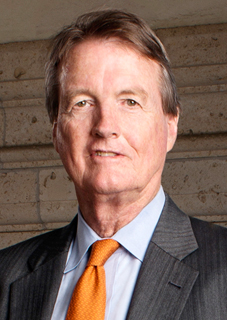 [/fusion_imageframe][/fusion_builder_column][fusion_builder_column type=”3_4″ last=”yes” spacing=”yes” center_content=”no” hide_on_mobile=”no” background_color=”” background_image=”” background_repeat=”no-repeat” background_position=”left top” border_position=”all” border_size=”0px” border_color=”” border_style=”” padding=”” margin_top=”” margin_bottom=”” animation_type=”” animation_direction=”” animation_speed=”0.1″ class=”” id=””][fusion_text]By Mark Curriden
(Oct. 2) – No one has a résumé like Bill Powers.
He served three years in the Navy. He’s taught jurisprudence, legal process and torts to thousands of students. He’s argued 50 cases before the Texas Supreme Court and the state appellate courts. He served five years as the dean of the University of Texas School of Law and another decade as the institution’s president.
Powers is the co-reporter for the Restatement (Third) of Torts: Liability for Physical Harm and he was the co-reporter on the Restatement (Third) of Torts: Apportionment of Liability. He has authored scores of law review articles that have been published in the most prestigious journals.
He will forever be linked to the 2002 investigation into the fraud and corruption at Enron Corporation, as the final findings are identified as the “Powers Report.” The critique was in-depth and hard-hitting.
“Mostly, I like being known as a teacher,” says Powers, who holds the Hines H. Baker and Thelma Kelley Baker Chair in Law. “Legal education today needs much more experimental learning through clinics, internships and a lot more interdisciplinary studies.”
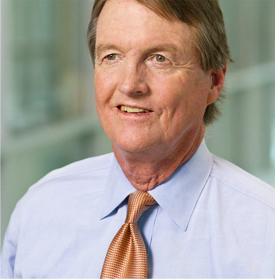 Those who know Powers best say he is a big fan of Homer – actually both Homers: the blind Greek poet and the animated patriarch in “The Simpsons.”
“It’s the best written material on television,” Powers told the Austin American-Statesman in 2005. “At the end of the day, you may notice that Homer, much as he just doesn’t get it, chooses life and chooses his family. It’s a very interesting and complex text in my opinion.”
After graduating magna cum laude from Harvard Law School in 1973 and clerking for a judge on the U.S. Court of Appeals for the Ninth Circuit for a year, Powers taught at the University of Washington School of Law for three years when UT came calling.
“I was teaching in Seattle and it was one of those gray, drab days when a best friend called about me applying for a position in Austin,” he says. “I remember my first day at Texas because it was the day Elvis died.”
Thirty-eight years later, Powers’ impact on UT is undeniable. He made diversity a priority and implemented policies and practices that quadrupled the number of minority students in the law school. In addition, he has been “very involved” in the defense of Fisher v. University of Texas, a lawsuit that challenged the university’s use of ethnicity as a factor in admissions. Powers directly participated in the selection of defense counsel.
“A diverse student body brings educational benefits that include a full exchange of ideas and thoughts when all the students come together, whether it is in the classroom or at campus events,” he says.
In 2015, Powers undertook a new effort: he joined the Dallas-based law firm Jackson Walker as counsel. He continues teaching full-time at UT, but he also works 10 hours a week with the firm’s appellate lawyers and with the younger lawyers on professional development.
“The law is still a noble profession,” he says. “It is our duty to make sure that the younger generations understand what that means.”[/fusion_text][/fusion_builder_column][/fusion_builder_row][/fusion_builder_container]