[fusion_builder_container hundred_percent=”yes” overflow=”visible”][fusion_builder_row][fusion_builder_column type=”1_4″ last=”no” spacing=”yes” center_content=”no” hide_on_mobile=”no” background_color=”” background_image=”” background_repeat=”no-repeat” background_position=”left top” border_position=”all” border_size=”0px” border_color=”” border_style=”” padding=”” margin_top=”” margin_bottom=”” animation_type=”” animation_direction=”” animation_speed=”0.1″ class=”” id=””][fusion_imageframe lightbox=”no” lightbox_image=”” style_type=”none” hover_type=”none” bordercolor=”” bordersize=”0px” borderradius=”0″ stylecolor=”” align=”none” link=”” linktarget=”_self” animation_type=”0″ animation_direction=”down” animation_speed=”0.1″ hide_on_mobile=”no” class=”” id=””] 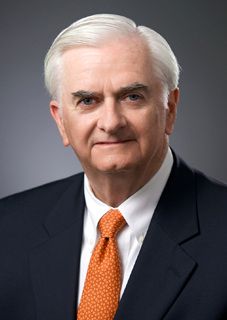 [/fusion_imageframe][/fusion_builder_column][fusion_builder_column type=”3_4″ last=”yes” spacing=”yes” center_content=”no” hide_on_mobile=”no” background_color=”” background_image=”” background_repeat=”no-repeat” background_position=”left top” border_position=”all” border_size=”0px” border_color=”” border_style=”” padding=”” margin_top=”” margin_bottom=”” animation_type=”” animation_direction=”” animation_speed=”0.1″ class=”” id=””][fusion_text]By Mark Curriden
(Nov. 2) – Charles Matthews went to bed the night of March 23, 1989 looking forward to a relaxing Easter holiday weekend.
By the time the Exxon associate general counsel awoke the next morning on Good Friday, his world had been forever changed. About 3,160 miles away, an Exxon oil tanker called the Valdez crashed into Bligh Reef in Prince William Sound at 12:04 a.m. Alaska time or 3:04 a.m. Houston time.
“I got an urgent call telling me to turn on the TV right away. We’ve had a bad accident,” Matthews says. “The general counsel said, ‘I need you on a flight to Alaska as fast as possible.’ ”
Over the two decades that followed, Matthews successfully guided Exxon through one of the most complex and expensive litigations in U.S. history. While Matthews will forever be linked to the Valdez oil spill cases, he is widely viewed as one of the most influential corporate general counsel in history.
“Charles was the consummate general counsel – extremely well respected by senior management, his law department and the outside counsel community,” says current Exxon Mobil General Counsel Jack Balagia. “He has all the qualities of a great lawyer: [he’s] intellectually strong, appropriately tough with a great sense of humor; loyal to his friends and colleagues and devoted to his family.”
Matthews was the first in his family to go to college. He received his bachelor’s degree at the University of Texas and then obtained a law degree in 1970 from the University of Houston.
Humble Oil hired him in 1971 to work in its litigation practice section. Two years later, the company changed its name to Exxon and Matthews was busier than ever.
“We never ran out of slip and fall cases,” he says. “I was able to get a lot of trial experience.”
Matthews’ first big case came in the mid-1970s when the Federal Trade Commission sued all the oil companies on antitrust grounds. The litigation and subsequent settlement discussions lasted for years. The document discovery in the case was massive.
“We negotiated a dismissal of the cases that concluded with us paying no money and we didn’t have to change any operations,” he says.
During the same time period, Exxon’s service stations joined together in a class action against the Irving-based corporation seeking the ability to purchase fuel from any oil supplier, including Exxon’s competitors, while still selling it retail under the Exxon flag. The decade-long litigation ended with a consent decree in which Exxon was successful in all of its goals.
Exxon made Matthews its general counsel for U.S. operations in 1992 and its global GC in 1995.
In 1998, Exxon officials took the bold risk of attempting to merge with one of its top competitors, Mobil Oil, in a deal valued at $83 billion.
“Charles was the legal architect of the largest industrial merger in America at the time, reuniting the two largest components of the old Standard Oil Trust, and creating what is by many measures the largest publicly traded oil company in the world and one of the largest corporations in the world,” Balagia says.
“That job required a hugely coordinated effort, much advocacy, production and review of tens of thousands of boxes of documents, preparation of dozens of witnesses, divestment of assets and 18 months of regulatory approvals from governments around the world,” he says.
Matthews became the GC of the newly combined corporate legal department with 250 lawyers in the U.S. and 200 lawyers outside the U.S. Exxon Mobil paid thousands of lawyers at hundreds of outside law firms to handle various litigation, regulatory, tax and corporate transactional matters.
As Matthews’ public profile grew, public service groups came calling. He served as a director for the National Center for State Courts, Children’s Hospital and the Center for American and International Law. The Southwestern Region of the Boys & Girls Clubs of America made him a national trustee and he was the first corporate GC to serve on the board of directors of the Texas Access to Justice Commission, which is the organization that provides funding for legal services for the poor in the state.
Despite all of his accomplishments, Matthews recognizes that he will forever be linked to his work on the Valdez litigation.
“Nobody knew more facts about the Valdez case than I did,” Matthews says. “The Valdez case was a big chunk of my career. The litigation continued right up until I retired.”
Matthews coordinated all of Exxon’s litigation. He led the oil company’s efforts to settle civil and criminal cases brought by state and federal governments. The company spent about $3.5 billion in clean up costs.
When an Alaska jury in 1994 ordered Exxon to pay fishermen and Alaska natives $5 billion in punitive damages, Matthews was determined to fight on principle.
“Charles was the legal architect of Exxon’s litigation strategy in the aftermath of the Exxon Valdez disaster in Prince William Sound,” Balagia says. “He was, in fact, the first Exxon lawyer to arrive on the scene two days after the accident, and he managed the litigation from that day forward, continuing to guide activity even after becoming general counsel.”
The U.S. Court of Appeals for the Ninth Circuit cut the damage award in half in 2006. In 2008, the Supreme Court of the United States ruled that punitive damages could not be larger than the compensatory damages for actual losses, which calculated to $507.5 million to be divided among the 33,000 plaintiffs.
“We wanted to make new law in limiting punitive damages,” Matthews says. “It was a seminal case and it was very rewarding.”
Matthews retired from Exxon Mobil in 2010. He serves on the corporate boards of Trinity Industries and Frost Bank. He has received scores of awards and honors, including the General Counsel Forum’s Robert Dedman Award for Ethics and Law and the organization’s Lifetime Achievement Award.
“Charlie loves the law,” says Judge Patrick Higginbotham of the U.S. Court of Appeals for the Fifth Circuit. “He has been a great ambassador for the legal profession.”[/fusion_text][/fusion_builder_column][/fusion_builder_row][/fusion_builder_container]