
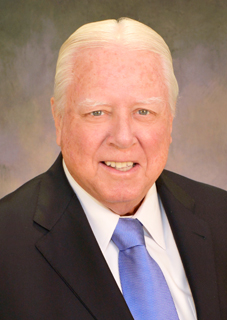
By Patricia Baldwin
Jan. 9, 2017 – Darrell Jordan graduated from the University of Texas and received his LL.B. degree from Southern Methodist University Dedman School of Law. He got his street smarts as a lawyer, however, from the so-called Henry Wade University – the moniker assistant prosecutors once gave the workplace of the long-serving, late Dallas District Attorney.
“It’s important work,” Jordan said of the D.A.’s office, where he not only launched his legal career, but also discovered the gratification of public service.
Service to others is reflected in the Diamond McCarthy partner’s receipt in 2015 of the Texas Bar Foundation’s Outstanding 50 Year Lawyer Award. He has collected numerous such honors – Texas Appleseed’s Good Apple Award, SMU Dedman School of Law’s Distinquished Alumni Award, Dallas Bar Association’s Justinian Award and Texas Equal Access to Justice Commission’s Stars of Justice Award – and served in many non-profit leadership roles, but he finds most satisfying the human results that occur when he rolls up his sleeves.
At 77, Jordan is widely viewed in Dallas and across Texas as a senior statesman. He used his position as head of litigation at Hughes & Luce in the 1980s to support candidates for judicial seats. While Jordan considers himself an old fashion Barry Goldwater Republican, he openly campaigned for some Democrats. For example, he led election efforts for Dallas lawyer Ron White to be one of the first African-American judges elected countywide.
Jordan ran for Dallas mayor, but lost narrowly to Ron Kirk, who was the first African-American mayor in the city. Kirk and Jordan became friends and have supported each other’s civic efforts.
“Darrell is not only a damn good lawyer, he’s a friend and I appreciated his counsel while I was mayor,” Kirk said. “Darrell has done far more than his fair share for the community and for the legal profession.”
Jordan’s commitment to public service was on full display when he led the defense of the state’s use of legal trust fund interest to help pay for legal services for the poor.
In March 2003, the U.S. Supreme Court ended a nine-year legal battle by ruling in favor of the Interest on Lawyer’s Trust Accounts (IOLTA) Program. Lawyers familiar with the case say Jordan donated thousands of billable hours and tens-of-thousands of dollars out of his own pocket toward the IOLTA effort, which has benefited tens-of-thousands of low-income Texans who needed legal representation.
As part of his efforts, he achieved a legal objective that few lawyers – even most great trial lawyers – accomplish: he briefed and presented oral arguments to the Supreme Court.
“There’s no question,” Jordan said. “IOLTA began the process of having influential people – legislators, judges, others – understand the importance of funding legal services for the poor.”
Under the IOLTA program, the interests collected from the various trust accounts from lawyers across the state that temporarily hold payments by clients is combined by the banks and given a special, higher interest rate. That money is then paid to the Texas Access to Justice Foundation, which funds various legal aid projects across the state. A 2014 survey by the University of North Texas estimated that Texas lawyers annually provide the equivalent of $500 million of free or indirect services to the poor.
Jordan finds litigation “intellectually stimulating.” That doesn’t mean stuffy.
His “most fun case” grabbed media headlines as a “cold war.”
Jordan and colleagues at Hughes & Luce, where he spent 24 years, represented Haagen-Dazs when Baskin-Robbins sued the Pillsbury Co. subsidiary for trademark infringement.
In fact, Baskin-Robbins had trademarked the name Pralines ‘N Cream when Haagen-Dazs introduced Pralines & Cream.
“You have to police your trademark,” Jordan explained. He sent paralegals around the country to buy Pralines ‘N Cream from many other ice cream stores.
Haagen-Dazs prevailed, although Jordan noted, “We all gained 10 pounds.”
Jordan’s client list is envied by many in the legal profession. He represented Citibank in multiple litigation matters, including a class action regarding the business’s lending practices. The city of Arlington hired him to lead an investigation into allegations of corruption within its police department and municipal court system. He successfully defended a Dallas TV reporter who was sued by a pair of Dallas Cowboys football players.
A huge proponent of the American jury system, Jordan said he fears that the right to trial by jury is slowly eroding. He points to recent data published by The Texas Lawbook showing that the number of civil jury trials in Texas has plummeted from 3,600 in 1996 to only 1,200 last year.
“The ability to have our civil disputes decided by our peers is a fundamental right in our Constitution,” he said. “It is a cherished right that should be vigorously preserved.”
Jordan’s penchant for mentoring young lawyers once earned him the nickname of “Uncle Darrell.” The humorous tag stuck.
“Everyone knows and gets along with Uncle Darrell,” said Mark Sales, who has worked with Jordan for a couple decades and is his law partner at Diamond McCarthy. “Darrell is unique in that he is a superb lawyer, a strong advocate for his clients and is respected by opposing counsel and members of the judiciary.
“Darrell is truly one of the great trial lawyers and legal statesmen of our generation,” Sales said.
Jordan is philosophical about his two unsuccessful Dallas mayoral campaigns, noting he learned a lot about himself when the “good voters twice elected me to stay in the private sector.”
Jordan is an acknowledged “people person.” And it was people – former colleagues and friends – who convinced him to join Diamond McCarthy about a year ago.
“It’s a natural fit,” he said. “I enjoy helping them build.”
He also enjoys building support for the Salesmanship Club’s Momentous Institute, a grade school in Oak Cliff.
“Without exception, our kids graduate from high school. Many go to college,” he said.
Jordan is proud of his leadership in establishing the Dallas Bar Foundation’s Sarah T. Hughes Diversity Scholarship for minority law students at SMU. Since its inception in 1981, the program has awarded $1.9 million to more than 50 recipients who agree to practice in Dallas.
Jordan dismissed queries about retirement: “Naw. Why? I enjoy coming to work every day.”